Skip to content
Briefings are running a touch slower this week while we rebuild the foundations.See roadmap
Iran Conflict 2026
11MAY

GL-U Sanctions Cliff in Nine Days

2 min read
14:01UTC

OFAC / US Treasury

ConflictDeveloping
Key takeaway

GL-U expiry is the first economic cliff the ceasefire must clear.

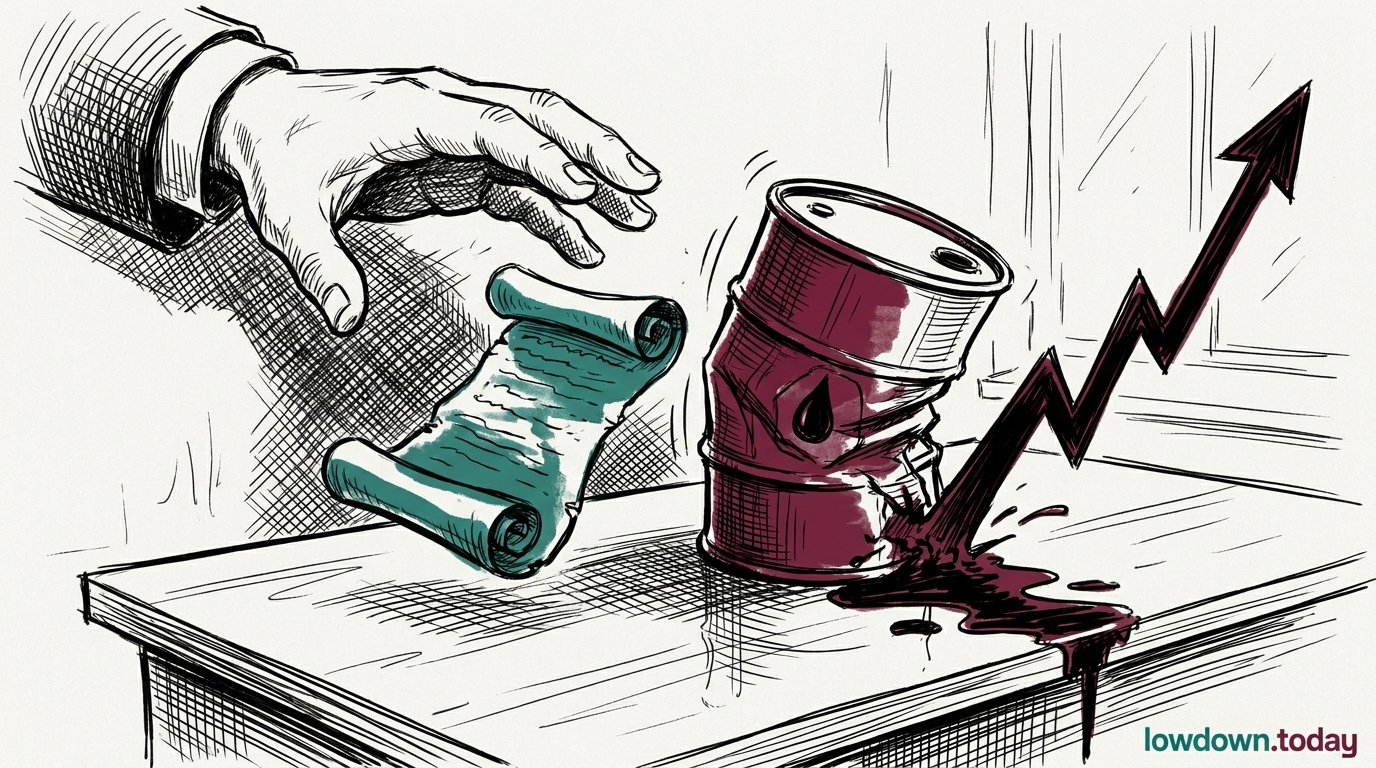
OFAC (Office of Foreign Assets Control) General License U expires on 19 April with no Treasury renewal signal issued. GL-U was the first broad US authorisation of Iranian-origin crude since sanctions began . Its expiry was built into the instrument; the question is whether the ceasefire creates political pressure for renewal. Treasury's silence so far is ambiguous: it may reflect deliberate leverage (renewable on demand) or indifference (the ceasefire will collapse before it matters).

GL-U lapses on 19 April; ceasefire ends 22 April. Tanker operators face a three-day window of legal exposure where the cargo is recriminalised but the political situation remains in flux. The 325 tankers stranded inside the Gulf would face simultaneous maritime and sanctions legal jeopardy. Insurers will not cover that exposure without formal renewal.

Renewal would signal US flexibility on sanctions and support the ceasefire's economic architecture. Non-renewal would force tanker operators to choose between legal exposure and abandoning cargo, three days before the political deadline that was supposed to resolve everything.

Deep Analysis

In plain English

There is a legal permit called General License U that lets ships carry Iranian oil without breaking US sanctions law. It expires in nine days. 325 oil tankers are stuck waiting to know if they can deliver their cargo legally. No one in the US government has said whether they will renew it. If they do not, those ships' oil becomes illegal to sell — three days before the ceasefire itself is even supposed to end.

Deep Analysis
Root Causes

GL-U exists because the ceasefire announcement created an immediate legal problem: 325 tankers loaded with Iranian crude before the ceasefire were suddenly in transit without legal authorisation. Treasury issued GL-U as a temporary fix, not a permanent policy shift.

Its 30-day life span was built in; renewal requires a positive decision that the ceasefire has been extended or formalised. The silence signals no such decision has been made.

What could happen next?
  • Risk

    GL-U non-renewal recriminalises 325 stranded tankers' cargoes three days before the ceasefire ends, creating simultaneous maritime and sanctions legal jeopardy that insurers will not cover.

  • Consequence

    Treasury's decision on GL-U is the first concrete economic signal of the ceasefire's viability — renewal signals flexibility, lapse signals maximum pressure is unchanged.

First Reported In

Update #64 · Islamabad talks open already cracked

Washington Post· 10 Apr 2026
Read original
Different Perspectives
Israel
Israel
Israeli strikes on Hezbollah positions in Lebanon continued through the weekend, maintaining the secondary front. The IDF has publicly named Mojtaba Khamenei as an assassination target; his courier-governance mode complicates targeting but does not remove him from the order.
Russia
Russia
Putin told a Moscow press conference that Washington, not Tehran or Moscow, killed the Russia-custody uranium arrangement by demanding US-territory-only storage. Neither Tehran nor Washington has corroborated the account, which appeared in second-tier outlets only, consistent with a trial balloon rather than a formal position.
United Kingdom
United Kingdom
HMS Dragon was redeployed from the Eastern Mediterranean to the Middle East on 9 May, the first physical European platform commitment to the Gulf. The Ministry of Defence called it "prudent planning" while publishing no rules of engagement, no tasking order, and no vessel name, committing a named asset to a conflict zone before the political instrument authorising it exists.
United Arab Emirates
UAE air defences intercepted two Iranian drones over its territory on 10 May, a kinetic escalation six days after the Fujairah oil terminal strike that drew no formal protest. The three-state simultaneous operation, not the severity of individual strikes, appears to have crossed the threshold at which the GCC states collectively began responding.
Saudi Arabia
Saudi Arabia
Riyadh issued the first formal Gulf-state protest of the conflict on 10 May, demanding an "immediate halt to blatant attacks on territories and territorial waters of Gulf states", ending 10 weeks of channelling displeasure through OPEC+ quota discussions. The protest forecloses Saudi Arabia's preferred quiet-channel role and reduces the functioning back-channel architecture to Pakistan alone.
Qatar
Qatar
Doha is simultaneously a strike target, the site of the Safesea Neha attack 23 nautical miles offshore, and an active MOU mediator: Qatar's prime minister met Rubio and Vance in Washington the same weekend. Whether Qatar issues its own formal protest or maintains its dual role is the critical escalation indicator for the week of 11 May.