Skip to content
Welcome, thoughtbot's Giant Robots listeners!Start here
Iran Conflict 2026
10MAY

UAE names IRGC over two ADNOC ships

3 min read
14:22UTC

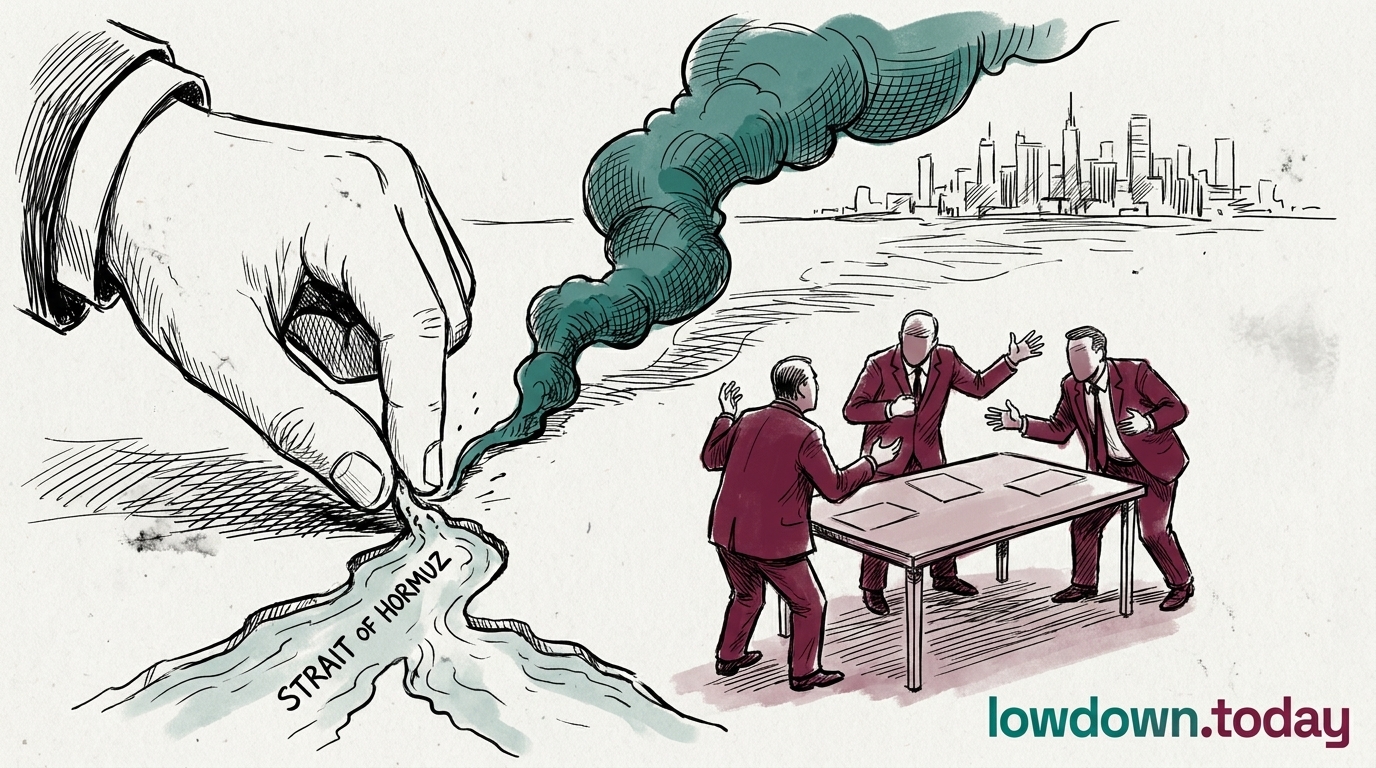
Abu Dhabi called an attack on two state-owned tankers an act of piracy by the Iranian Revolutionary Guard Corps, five days after leaving an almost identical incident unattributed.

ConflictDeveloping
Key takeaway

The UAE named the IRGC directly for the first time and called the attack piracy.

Two vessels belonging to ADNOC (Abu Dhabi National Oil Company), the Emirati state producer, came under attack while crossing the strait of Hormuz on the night of Thursday 13 August. Nobody was hurt. The United Arab Emirates (UAE) foreign ministry, in a statement carried by the state news agency WAM, called it "an act of piracy by the Iranian Revolutionary Guard Corps" and a violation of UN Security Council Resolution 2817 on freedom of navigation⁠1. Bahrain condemned the attack separately. Tehran has claimed nothing.

Five days earlier Abu Dhabi said an Iranian missile had targeted a single ADNOC ship and stopped there, leaving the attacker unnamed and the vessel unidentified. Thursday's statement names the force, cites a Security Council instrument and reaches for a word with specific legal weight. Piracy under the law of the sea means violence committed for private ends, and a state's armed force does not meet that test, which is why the choice reads as political rather than legal.

What the word does buy Abu Dhabi is a category every shipowner and underwriter already prices. A firm chartering a tanker this week reads a Gulf government saying the IRGC (Islamic Revolutionary Guard Corps) is firing on that government's own ships inside the waterway, and the most exposed hull is the one carrying no Iranian tie to trade on. That reading sits underneath the week's transit collapse rather than beside it.

Abu Dhabi's account remains the only one on the record. No independent confirmation of the attack exists, no vessel names have been released, and the UAE has not said what damage the two ships took.

Deep Analysis

In plain English

ADNOC is the United Arab Emirates' state oil company. Two of its ships were attacked in the strait of Hormuz on 13 August, the second such attack in under a week. This time the UAE government directly blamed Iran's Revolutionary Guard Corps (IRGC), an elite military and security force separate from Iran's regular army, and called the attack an act of piracy, backing that up by citing a UN Security Council resolution on freedom of navigation. In the earlier attack, five days before, the UAE had blamed only "an Iranian missile" without naming who fired it. That shift, from a vague description to a direct, formal accusation, is itself a signal: the UAE is running out of quieter options.

Deep Analysis
Root Causes

The UAE's diplomatic adviser Anwar Gargash warned days earlier that the region is trapped "between neither war nor peace", a complaint from a government that has already spent its influence: it helped talk Trump out of an August strike, yet cannot direct what leaves an Iranian launcher or deter attacks on its own fleet.

Naming the IRGC and citing Resolution 2817 is one of the few tools left once quiet diplomacy has been exhausted and the attacks keep coming regardless.

What could happen next?
  • Consequence

    A formal piracy characterisation backed by a named UN resolution gives the UAE a stronger basis to seek international insurance, legal or Security Council action than the vaguer 8 August statement did.

  • Risk

    Two attacks on ADNOC shipping within a week, with no Iranian acceptance of responsibility, raises the chance of a third incident before any diplomatic or legal response can take effect.

First Reported In

Update #170 · The ships Iran does not control are leaving Hormuz

The National· 14 Aug 2026
Read original →
Different Perspectives
Office for Budget Responsibility
The OBR's 28 October forecast assumed $82 oil for 2026 and 2027, from market prices for the ten working days to 19 August, and blamed dearer wholesale energy on the war without naming Iran. It expects CPI inflation close to 4% in early 2027 even at that price.
Hengaw, Kurdish rights group
Hengaw reported the 3 November hangings of Amirhossein Maleki and Amirhossein Ebrahimi in Isfahan, saying Ebrahimi was tortured into confessing and that nine of 12 people sentenced to death in the case have now been hanged. Iran's judiciary holds that the defendants killed members of the security forces.
FINTRAC, Canada's financial intelligence unit
FINTRAC worked with the US Treasury on the 6 November designation of eight money services businesses in British Columbia, Ontario and Quebec. Treasury says the businesses still operate, some under new names, so closing them falls to Ottawa.
Abdul Qadir al-Dakhil, Governor of Nineveh
Al-Dakhil cancelled three Mosul International Airport contracts on 7 November over alleged links to armed groups, after meeting Prime Minister Ali al-Zaidi in Baghdad. He named no group or company, and said the contracts will go to international companies.
Kuwait
Kuwait
Kuwait condemned the Houthi missile fired towards the Madinah region on 5 November and restated its support for Saudi Arabia, the Qatar News Agency reported. Its state tanker company, Kuwait Oil Tankers Company, is among the Gulf state fleets on Iran's expanded Hormuz list.
Scott Bessent, US Treasury Secretary
Treasury designated an alleged Chandigarh false-flag network on 4 November and eight Canadian exchangers on 6 November, while State sanctioned alleged MANPADS intermediaries. None of the actions touches an oil buyer; they target the paper, cash and procurement around Iran's trade.

Written with AI from Lowdown's published reporting. Not individually reviewed by an editor. Editorial standards.
