Skip to content
Welcome, thoughtbot's Giant Robots listeners!Start here
Iran Conflict 2026
10MAY

Hormuz clears a record 20m barrels

2 min read
14:22UTC

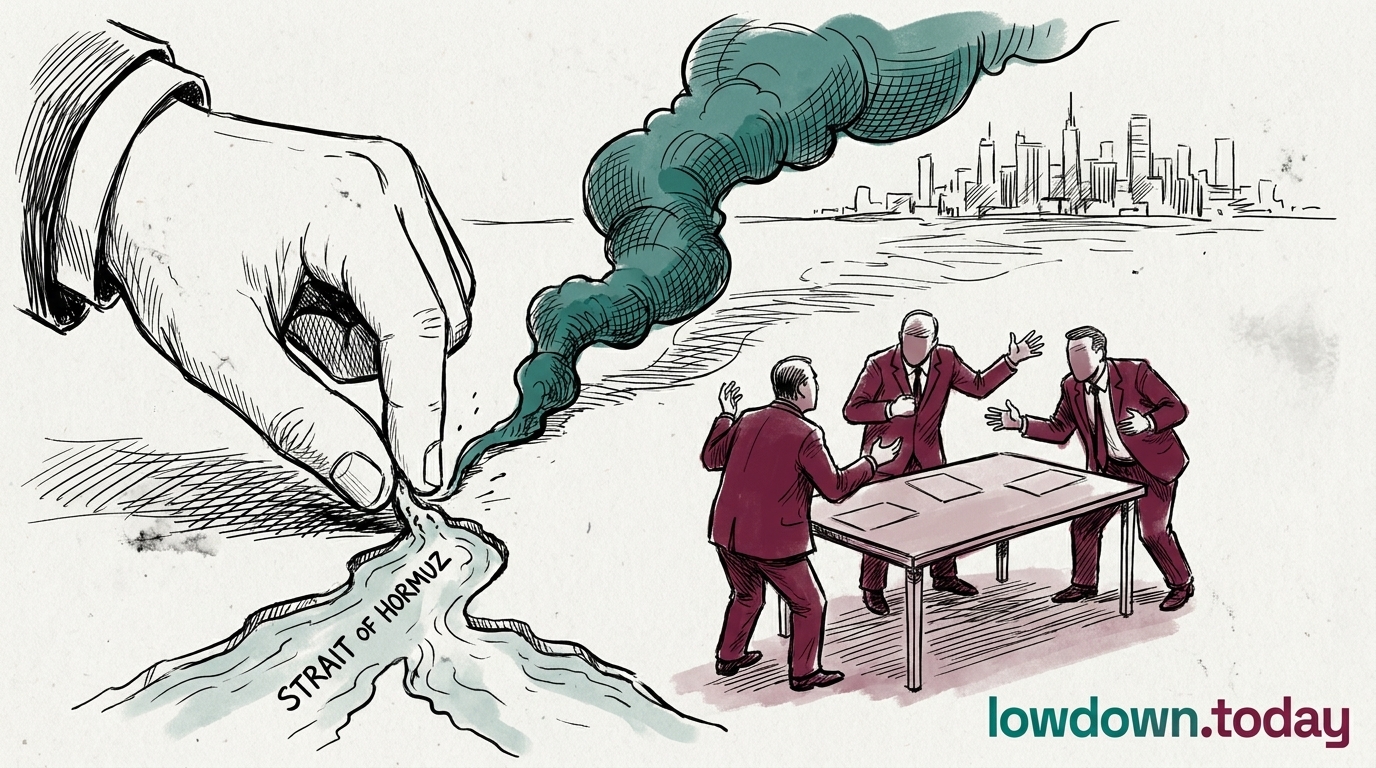
The Strait of Hormuz moved roughly 20 million barrels of oil in 24 hours on 25 June, a single-day crisis record confirmed by US Energy Secretary Chris Wright, hours before the IRGC struck inside the corridor.

ConflictDeveloping
Key takeaway

Hormuz cleared a record 20 million barrels the day before the IRGC struck inside it.

The Strait of Hormuz moved roughly 20 million barrels of oil in 24 hours on 25 June, a single-day record for the crisis period. US Energy Secretary Chris Wright confirmed the figure.⁠1 the strait is The Gulf chokepoint through which about a fifth of the world's seaborne oil passes.

That volume matched the pre-crisis norm of 18 to 21 million barrels a day. Weeks earlier the spring blockade had the strait all but closed; the Oman-IMO corridor was now clearing oil at full capacity. London war-risk premiums had halved to 2 per cent the same week, a further signal that the market believed throughput was recovering.

The IRGC struck M/V Ever Lovely inside that corridor at the moment of peak flow, then rejected the corridor framework later the same day. Other traffic, including a Korean-flagged convoy, kept moving through unharmed. Iran timed the attack to the busiest day rather than a quiet one, claiming control of the strait at the very moment it looked to be working.

Deep Analysis

In plain English

the strait of Hormuz is a narrow waterway in The Persian Gulf that roughly one in five barrels of globally traded oil passes through. On 25 June, ships moved about 20 million barrels of oil through it in a single day, matching the amount that flowed through before the conflict began. US Energy Secretary Chris Wright confirmed it as the highest single-day total of the crisis. What makes this notable is that Iran's Revolutionary Guards attacked a ship inside the corridor that same day. They chose to strike at the moment when the corridor was working at full capacity, not when traffic was low. Analysts are watching whether the record transit was a temporary recovery that the Guards then deliberately disrupted, or whether the Guards can selectively target individual vessels without collapsing the overall flow.

What could happen next?
  • Meaning

    The IRGC's decision to strike at peak corridor throughput rather than at a low-volume moment reveals a strategic preference for demonstrating selective enforcement over achieving maximum economic disruption: 20 million barrels flowed through while a single vessel was struck, signalling the Guards can switch individual ships off without closing the corridor.

  • Risk

    Oil markets pricing the 20-million-barrel throughput as a lead indicator over military exchange create a structural mispricing risk: if the IRGC shifts from selective vessel targeting to corridor-wide enforcement, the rapid reversal of the war premium that has driven Brent from $100+ to $71.99 would also reverse rapidly.

First Reported In

Update #140 · US bombs Iran, and the oil market shrugs

HormuzStraitMonitor· 28 Jun 2026
Read original →
Different Perspectives
Office for Budget Responsibility
The OBR's 28 October forecast assumed $82 oil for 2026 and 2027, from market prices for the ten working days to 19 August, and blamed dearer wholesale energy on the war without naming Iran. It expects CPI inflation close to 4% in early 2027 even at that price.
Hengaw, Kurdish rights group
Hengaw reported the 3 November hangings of Amirhossein Maleki and Amirhossein Ebrahimi in Isfahan, saying Ebrahimi was tortured into confessing and that nine of 12 people sentenced to death in the case have now been hanged. Iran's judiciary holds that the defendants killed members of the security forces.
FINTRAC, Canada's financial intelligence unit
FINTRAC worked with the US Treasury on the 6 November designation of eight money services businesses in British Columbia, Ontario and Quebec. Treasury says the businesses still operate, some under new names, so closing them falls to Ottawa.
Abdul Qadir al-Dakhil, Governor of Nineveh
Al-Dakhil cancelled three Mosul International Airport contracts on 7 November over alleged links to armed groups, after meeting Prime Minister Ali al-Zaidi in Baghdad. He named no group or company, and said the contracts will go to international companies.
Kuwait
Kuwait
Kuwait condemned the Houthi missile fired towards the Madinah region on 5 November and restated its support for Saudi Arabia, the Qatar News Agency reported. Its state tanker company, Kuwait Oil Tankers Company, is among the Gulf state fleets on Iran's expanded Hormuz list.
Scott Bessent, US Treasury Secretary
Treasury designated an alleged Chandigarh false-flag network on 4 November and eight Canadian exchangers on 6 November, while State sanctioned alleged MANPADS intermediaries. None of the actions touches an oil buyer; they target the paper, cash and procurement around Iran's trade.

Written with AI from Lowdown's published reporting. Not individually reviewed by an editor. Editorial standards.
