Skip to content
Welcome, thoughtbot's Giant Robots listeners!Start here
Iran Conflict 2026
10MAY

Brent hits two-month low on deal bets

3 min read
14:22UTC

Brent crude traded near $87.33 on 12 June, a near-two-month low, as futures markets priced roughly an 80 per cent chance the Iran deal closes.

ConflictDeveloping
Key takeaway

Traders priced an 80 per cent chance of an unsigned deal, leaving Brent exposed to a sharp rebound.

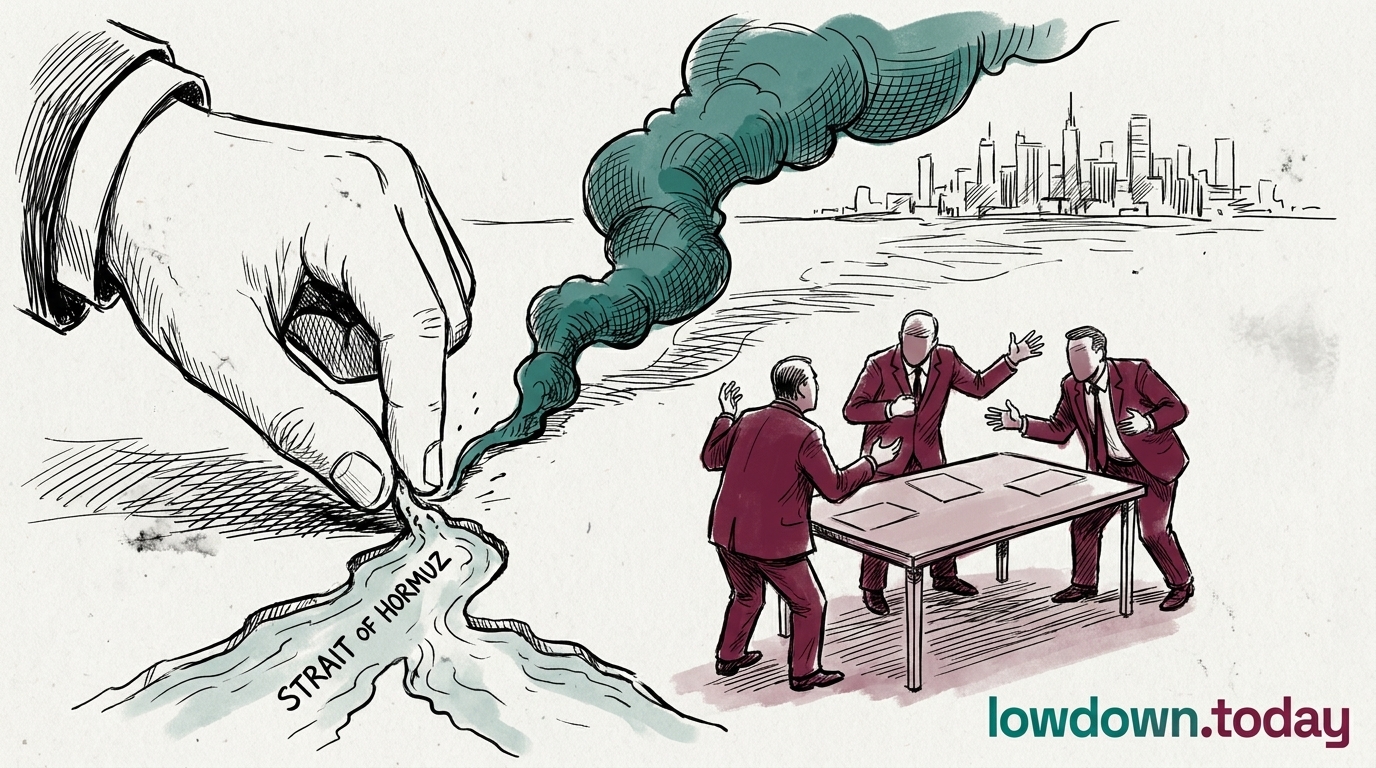
Brent Crude, the global oil benchmark, traded near $87.33 on 12 June, a near-two-month low and down about 6 per cent on the week, even as The White House register the market is betting on showed no signature.⁠1 Futures traders are pricing roughly an 80 per cent chance the Iran deal closes, a senior US official's figure, which means they are discounting the unsigned register almost entirely.⁠2

The fall was a step-down, not a slide: $96.34 on 10 June, $94.71 on 11 June, $89.25 on 12 June, now below $88. In three sessions the benchmark gave back the entire high it set on Hormuz risk. Traders, not diplomats, are the most confident actors that a deal they cannot see will close, discounting the blockade, the drone combat and the IRGC's review hedge on a bet that Hormuz reopens soon.

The confidence cuts one way. A near-two-month low feeds through to softer fuel and freight costs for importers within weeks if the move holds. But with 80 per cent already in the price, the market holds little cushion: a Vahidi re-suspension or a slipped signing would reprice Hormuz risk sharply and snap Brent back above $90, because the good news has been spent before the paper exists.

Deep Analysis

In plain English

Oil is priced on expectations as much as on actual supply. When traders think a conflict that has been disrupting Middle East oil supply is close to ending, the price falls before a single extra barrel flows. On 12 June, with news of a possible deal circulating, the price of Brent Crude, the main global oil benchmark, fell to around $87.33, its lowest in nearly two months. Markets were pricing in about an 80 per cent chance the deal would close and the strait of Hormuz would reopen. But that calculation rests on an unsigned document and unresolved disagreements: where Iran's enriched uranium goes and whether Iran's most powerful military force, the IRGC, has agreed to the deal at all. If those problems cause a delay, the price will jump back up sharply.

What could happen next?
  • Risk

    Brent near $87.33 on an unsigned deal means a single negative signal, a Vahidi re-suspension or a public IRGC contradiction, would produce a $5-$8 upward snap in one trading session.

    Immediate · Assessed
  • Opportunity

    If Hormuz fully reopens and Iran's 67 million stranded barrels clear, Brent could settle in the $80-$83 band within six to eight weeks, reducing fuel and freight inflation across oil-importing economies.

    Medium term · Suggested
  • Consequence

    Lloyd's of London has not de-listed Hormuz from its war-risk register despite the price drop; insurance premiums remain elevated and shipping diversions at 139 vessels continue regardless of futures pricing.

    Short term · Reported
First Reported In

Update #126 · The weekend signing that never reached paper

oilprice.com· 13 Jun 2026
Read original →
Causes and effects
This Event
Brent hits two-month low on deal bets
Traders have priced a deal the White House register has not confirmed. With 80 per cent already in the price, the downside is asymmetric: a slipped signing snaps Brent back above $90.
Different Perspectives
Office for Budget Responsibility
The OBR's 28 October forecast assumed $82 oil for 2026 and 2027, from market prices for the ten working days to 19 August, and blamed dearer wholesale energy on the war without naming Iran. It expects CPI inflation close to 4% in early 2027 even at that price.
Hengaw, Kurdish rights group
Hengaw reported the 3 November hangings of Amirhossein Maleki and Amirhossein Ebrahimi in Isfahan, saying Ebrahimi was tortured into confessing and that nine of 12 people sentenced to death in the case have now been hanged. Iran's judiciary holds that the defendants killed members of the security forces.
FINTRAC, Canada's financial intelligence unit
FINTRAC worked with the US Treasury on the 6 November designation of eight money services businesses in British Columbia, Ontario and Quebec. Treasury says the businesses still operate, some under new names, so closing them falls to Ottawa.
Abdul Qadir al-Dakhil, Governor of Nineveh
Al-Dakhil cancelled three Mosul International Airport contracts on 7 November over alleged links to armed groups, after meeting Prime Minister Ali al-Zaidi in Baghdad. He named no group or company, and said the contracts will go to international companies.
Kuwait
Kuwait
Kuwait condemned the Houthi missile fired towards the Madinah region on 5 November and restated its support for Saudi Arabia, the Qatar News Agency reported. Its state tanker company, Kuwait Oil Tankers Company, is among the Gulf state fleets on Iran's expanded Hormuz list.
Scott Bessent, US Treasury Secretary
Treasury designated an alleged Chandigarh false-flag network on 4 November and eight Canadian exchangers on 6 November, while State sanctioned alleged MANPADS intermediaries. None of the actions touches an oil buyer; they target the paper, cash and procurement around Iran's trade.

Written with AI from Lowdown's published reporting. Not individually reviewed by an editor. Editorial standards.
