Skip to content
Briefings are running a touch slower this week while we rebuild the foundations.See roadmap
Iran Conflict 2026
8MAY

Cluster missiles breach Israel defences

4 min read
11:07UTC

Eleven Iranian warheads reached central Israeli towns for the first time, scattering submunitions over residential areas and exposing a gap in the layered defence architecture Israel has spent decades building.

ConflictDeveloping
Key takeaway

Iran demonstrated cluster munition reach into central Israel while deliberately withholding mass casualties — capability shown, consequences held in reserve.

Iran fired a missile barrage at Israel on Friday. For the first time in this conflict, 11 Iranian cluster missiles reached central Israeli population centresShoham, Holon, and Rishon LeZion, all within the greater Tel Aviv metropolitan area. Haaretz analysis found one warhead dispersed 70 submunitions over a residential neighbourhood. A building fire in Shoham forced 30 residents to evacuate. Sirens sounded across Tel Aviv, Jerusalem, the West Bank, and as far north as Metula. No injuries were reported. The IDF stated it is "investigating" the gap — language that acknowledges the penetrations fell outside acceptable performance.

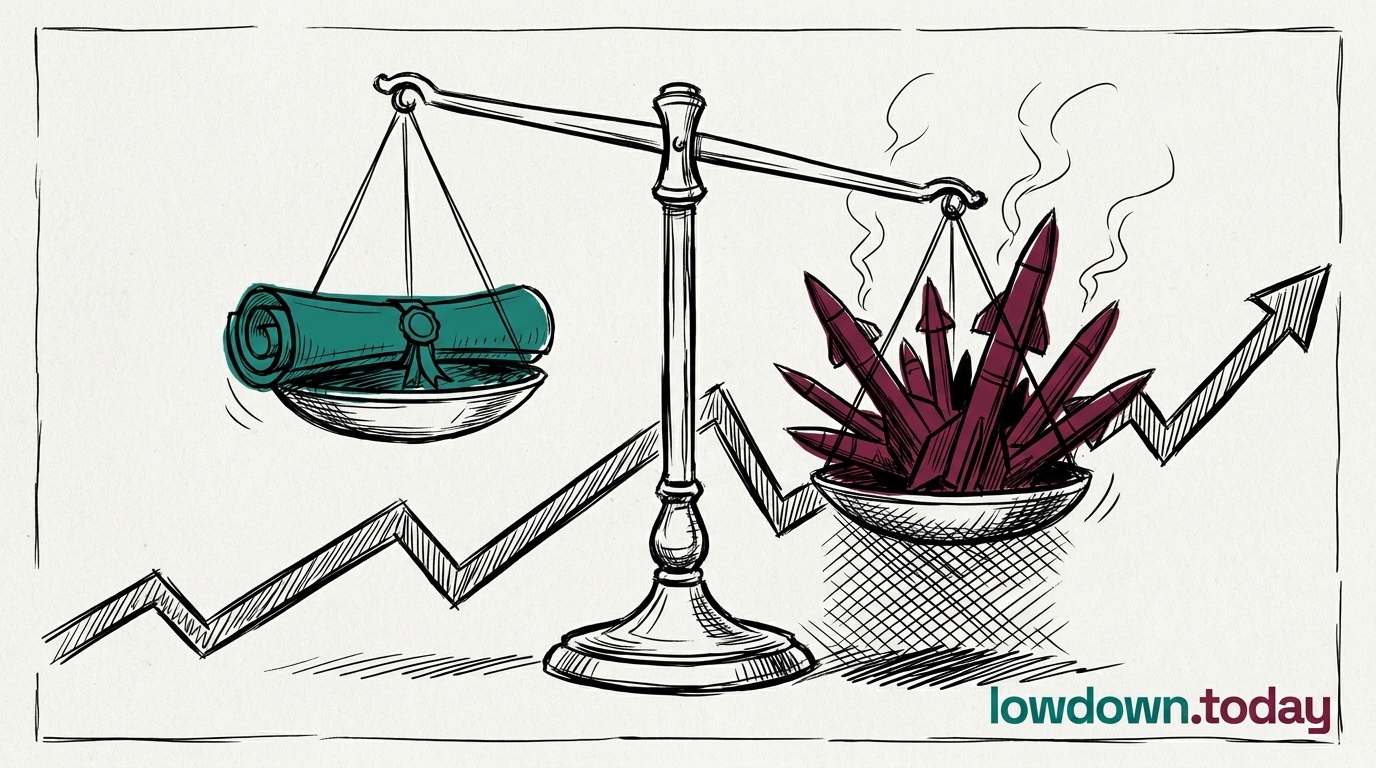
The penetrations follow the IRGC's doctrinal shift announced on 8 March, when Air and Space Force commander Majid Mousavi declared all future strikes would carry warheads exceeding one tonne . Friday's barrage paired that mass with cluster submunitions — a combination that attacks Israeli defences on two axes simultaneously. Heavy unitary warheads stress kinetic interceptors such as Arrow 2 and David's Sling, which must match the incoming object's energy to destroy it. Cluster variants that scatter dozens of bomblets at altitude create a different problem: multiple simultaneous small targets appearing inside Iron Dome's engagement envelope, where the system was designed to track and intercept single projectiles on predictable trajectories.

Israel's layered architecture — Arrow 3 for exo-atmospheric threats, Arrow 2 and David's Sling for mid-course, Iron Dome for terminal defence — was engineered against unitary warheads arriving on ballistic arcs. A cluster munition that opens above a city and releases 70 independent submunitions defeats the geometry of point defence. Each submunition falls on its own path; intercepting all of them requires an engagement ratio Iron Dome's battery density in any given sector may not support. That 11 warheads reached residential neighbourhoods without causing casualties owes more to low population density in the impact zones than to any property of the weapons themselves — submunitions are indiscriminate across the area they cover.

Amnesty International and Human Rights Watch hold that cluster munitions use in populated civilian areas violates customary International humanitarian law regardless of whether the firing state has signed the Convention on Cluster Munitions. Iran has not publicly addressed the legal objection. The immediate military question is whether Friday's penetrations reflect a structural limitation — the architecture cannot handle area-saturation weapons at current battery density — or an incidental gap that redeployment can close. If structural, Israel's vulnerability calculus changes: Iran has found a weapon class that reaches cities the defence network was built to protect.

Deep Analysis

In plain English

Israel has some of the world's most advanced layered missile defence — Iron Dome for short-range rockets, David's Sling for medium missiles, Arrow for long-range ballistic threats. Think of each layer as a goalkeeper. They are very effective against individual shots. Cluster missiles defeat this logic: one missile flies toward you, then splits into dozens of smaller bomblets before it can be intercepted. You would need dozens of interceptors per incoming missile. Israel's systems were not designed for that ratio — they are point-defence systems, built to stop one thing at a time. That is why 11 got through to the suburbs of Tel Aviv. Nobody was hurt this time, but the architecture of the defence has been exposed.

Deep Analysis
Synthesis

Zero injuries from 11 penetrations across densely populated suburbs is statistically improbable at full cluster warhead explosive capacity. The most analytically coherent explanation is that Iran used submunition variants with reduced or incendiary rather than high-explosive payloads — demonstrating penetration capability while avoiding the mass-casualty threshold that would compel maximum Israeli retaliation. This is calibrated coercive signalling, not a failed maximum-effort strike. Iran has shown it can reach central Israel with area-effect munitions; it has chosen not to kill yet.

Root Causes

Iran's cluster munition development reflects deliberate vulnerability analysis of Israeli defence architecture, not opportunistic capability acquisition. The Iron Dome/David's Sling/Arrow layered system is designed around single high-value intercept problems. Cluster submunitions are optimised to defeat exactly this architecture by multiplying terminal intercept requirements beyond system capacity. The design logic — pairing heavy warheads for kinetic defeat with area submunitions for saturation — suggests systematic study of Israeli defence performance data, potentially including IRGC reverse-engineering of system behaviour from prior engagements.

Escalation

If the gap is structural — inherent to point-defence systems against area-effect munitions — the IDF cannot close it by adding more of the same interceptor capacity. This pushes Israel toward pre-emptive destruction of Iran's cluster-missile launch infrastructure rather than terminal defence. Pre-emption against those sites is a significant escalation that Iran's counter-threat to Gulf oil facilities would then trigger. 'Investigating' the gap is therefore simultaneously a military and an escalation-management problem with no contained solution.

What could happen next?
  • Risk

    At greater salvo density or with high-explosive rather than incendiary submunitions, the same delivery system produces mass civilian casualties in Tel Aviv's suburbs.

    Immediate · Assessed
  • Consequence

    IDF pressure to pre-emptively strike Iran's cluster-missile launch infrastructure creates escalation risk to the oil-facility exchange threshold.

    Short term · Assessed
  • Precedent

    First confirmed cluster munition impacts in central Israeli population centres establishes a new operational threshold — prior salvos had not achieved confirmed penetration of the Tel Aviv metropolitan area.

    Immediate · Reported
  • Risk

    Unexploded cluster submunitions in Shoham and surrounding residential areas create ongoing civilian UXO risk not captured in the zero-injury headline count.

    Short term · Suggested
First Reported In

Update #35 · Kharg Island struck; oil terminal spared

Haaretz· 14 Mar 2026
Read original
Different Perspectives
Oil markets
Oil markets
Brent fell $1.05 to $106.0 on summit Day 1 but remains $5-7 above the post-ceasefire equilibrium analysts modelled in March; the market is pricing a holding pattern, not a breakthrough. OilPrice.com and Aramco CEO Nasser converge on buffer-exhaustion before Hormuz reopens if the blockade extends past mid-June.
Iranian dissidents and human rights monitors
Hengaw documented a five-prison simultaneous execution cluster on 13 May, with Gorgan appearing for the first time in the wartime register. Espionage charges framed as Israel-linked moharebeh now extend across Mashhad, Karaj, and Gorgan, using the war as judicial cover for protest-era detainees.
BRICS / Global South
Araghchi's Delhi appearance positioned Iran as a victim of US aggression before non-Western foreign ministers, with Deputy FM Bagheri Kani calling on BRICS to act against US aggression. India, as the largest non-Chinese user of Iranian-routed crude, faces pressure to balance bloc solidarity against its own shipping and sanctions exposure.
China
China
Beijing accepted the Nvidia chip clearance on summit Day 1 and gave Rubio verbal acknowledgement of Iran as an Asian stability concern, having already put Pakistan on paper as the mediatory channel on 13 May (ID:3253), deflecting the US ask for direct Chinese action without refusing it.
Iran (government and civilian diplomatic track)
Araghchi denied any Hormuz obstruction at BRICS Delhi on 14 May while Iran's SNSC had finalised a Hormuz security plan the day before. Israel Hayom's single-sourced 15-year freeze offer gives Tehran a deployable figure in non-Western forums regardless of corroboration; the state attributed 3,468 wartime deaths with no independent verification.
United States (Trump administration and Senate moderates)
Trump signed a chip clearance for 10 Chinese firms on summit Day 1 and zero Iran instruments across 76 days; Rubio and Vance made verbal Iran asks without paper. Murkowski voted yes on the 49-50 war-powers resolution after Hegseth told the Senate that Article 2 makes an AUMF unnecessary.