Skip to content
Briefings are running a touch slower this week while we rebuild the foundations.See roadmap
Iran Conflict 2026
3MAY

Iran's internet returns at 40%, by design

3 min read
10:26UTC

Iran's internet reached only 40 per cent of pre-war traffic by 28 May, NetBlocks reported, with Chinese-built hardware for a permanent, switchable blackout already installed.

ConflictDeveloping
Key takeaway

Iran rebuilt its internet around a Chinese-built switch it can flip off at will.

Iran's internet reached only about 40 per cent of pre-war traffic by 28 May, the monitor NetBlocks reported, three days after President Masoud Pezeshkian's 25 May restoration order ended the longest national shutdown on record . 1 NetBlocks is the UK-based watchdog that measures connectivity disruptions worldwide. In practice most Iranians remain effectively offline, and those who do reconnect stay on virtual private networks, the tools that route traffic abroad to evade state filtering, expecting the next shutdown.

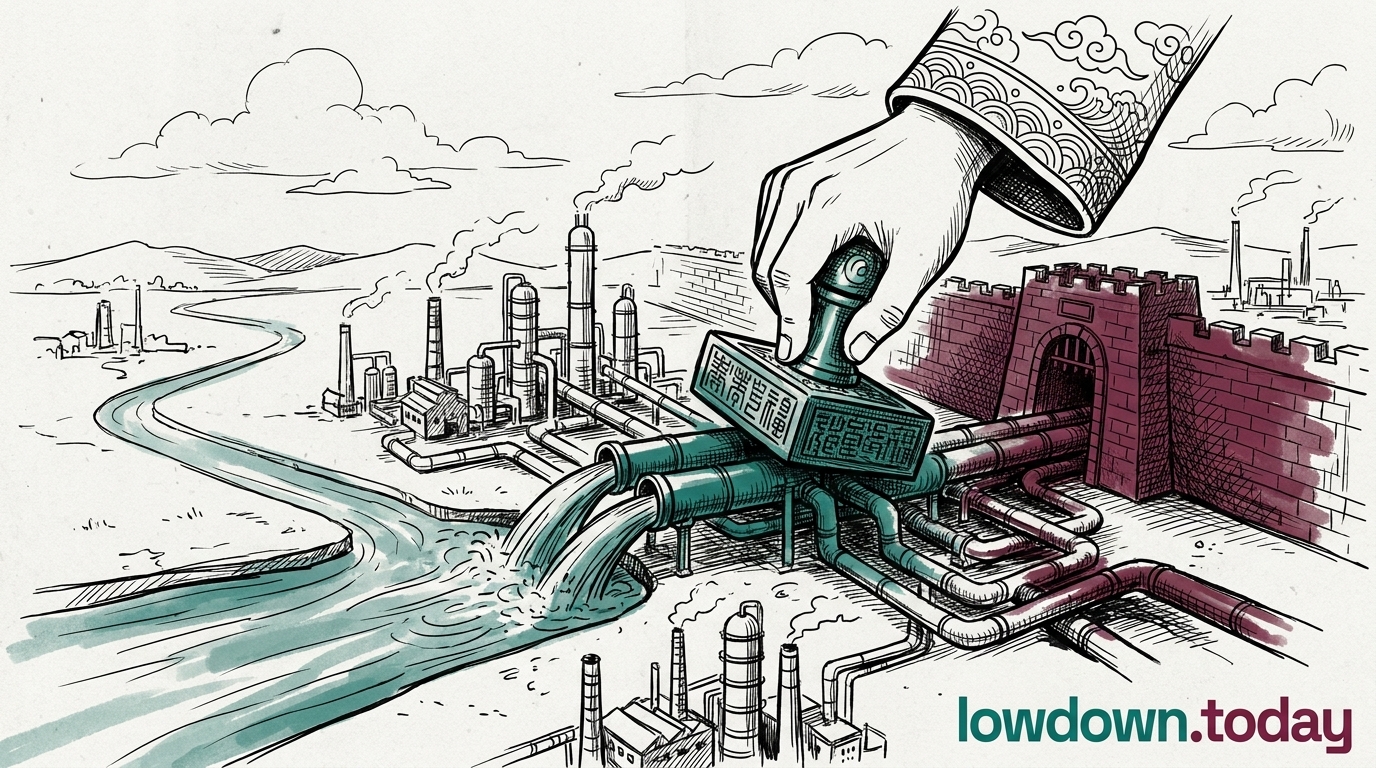
Mohammad Sarafraz, a member of Iran's Supreme Council of Cyberspace, confirmed that Chinese-built deep-packet-inspection hardware for a permanent, switchable blackout has been imported and installed . 2 Deep-packet inspection lets the state read and block traffic by content rather than crudely severing the line.

Iranians are back online inside a system that can be cut by a single decision, with the Chinese equipment already wired in. The 40 per cent figure is the visible change; the switchable hardware behind it is the durable one. Iran has compressed the timeline China used in Xinjiang, where a ten-month isolation in 2009 was followed by embedded inspection hardware, installing the architecture during the war rather than after it. The next blackout need not be an emergency dragged out for weeks. It can be a switch, and VPN use stays heavy because ordinary users assume the next cut is a matter of when, not whether. 3

Deep Analysis

In plain English

Iran's government shut off most of its internet on 28 February when the war started. President Pezeshkian ordered it restored on 25 May. Three days later, on 28 May, only about 40% of normal traffic was flowing, according to the monitoring service NetBlocks. Most people are still effectively offline, and those who can connect use VPNs because they expect the government to cut it again. A senior official called Mohammad Sarafraz confirmed that China supplied Iran with hardware that lets the government switch internet access on or off instantly, by region or across the whole country. So the restoration is partial by design, and the hardware to kill it again is already installed and running.

What could happen next?
  • Consequence

    China's DPI hardware converts Iran's internet kill-switch from an emergency measure requiring days to implement into a standing capability operable in seconds, permanently changing the information-control architecture regardless of any future civilian presidential order.

  • Risk

    VPN saturation at 35 to 40 million users, built during the 90-day blackout, means any future selective restoration will face an already-circumventing user base that is harder to track than a population encountering VPNs for the first time.

First Reported In

Update #112 · Treasury opens a second Iran sanctions front

TechTimes· 30 May 2026
Read original
Different Perspectives
Markets
Markets
Brent crude rose 2.2 per cent to $96.34 on 10 June, reversing a 7 per cent weekly decline built on deal optimism, as the overnight exchange repriced the Strait of Hormuz risk premium in a single session. The move reflects transit-risk repricing rather than supply shock: Iran's exports had already collapsed to below 300,000 barrels per day.
Pakistan
Pakistan
Pakistan's Naqvi channel, the only mediation track carrying both civilian and military buy-in, was stress-tested by live ordnance within 48 hours of the 6-7 June Tehran visit. Whether Washington informed Islamabad of the imminent strike plan while Naqvi was in Tehran remains undisclosed, putting the channel's neutrality under scrutiny.
Kuwait
Kuwait
Kuwait hosted the third Iranian strike on its soil since the 3 June airport drone attack, with Ali Al Salem airbase targeted in the three-country salvo. Its recent $1.98 billion Anduril Anvil counter-drone purchase signals it is rearming rather than reconsidering its hosting posture.
Bahrain
Bahrain
Bahrain absorbed the IRGC barrage via PAC-3 intercepts with its magazine already at 87 per cent depletion and no resupply before 2027. Sounding air-raid sirens over Manama, it faced the intercept burden with the thinnest defensive stack in the Gulf coalition.
Jordan
Jordan
Jordan reported all five incoming missiles intercepted with no injuries and no damage, a clean defensive performance that strengthens Amman's case for staying in the Western coalition without escalating its own posture. It now sits on Iran's target list for the first time despite not being a party to the Abraham Accords confrontation.
Iran / IRGC
Iran / IRGC
Foreign Minister Araghchi posted on X that US forces should 'leave our region if you want to be safe' and framed the exchange as a US defeat, while the IRGC claimed 21 targets hit and an F-35 hangar destroyed. The claims serve a domestic and Arab-audience framing rather than a verified battle-damage assessment.