Skip to content
Briefings are running a touch slower this week while we rebuild the foundations.See roadmap
Iran Conflict 2026
3MAY

India hands Chabahar to Iran at Sunday midnight

4 min read
10:26UTC

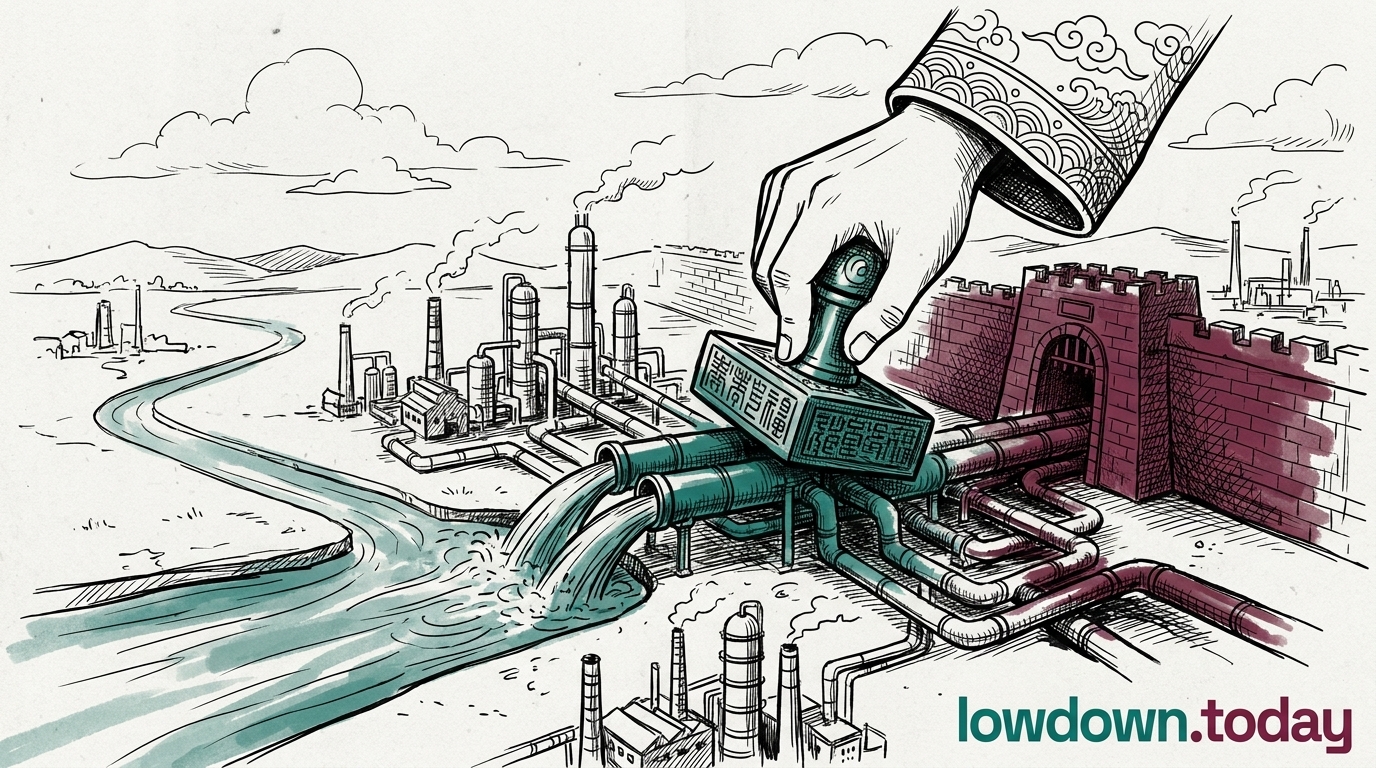
India Ports Global is transferring its Chabahar Free Zone holding to an Iranian entity ahead of the waiver lapsing at 00:01 EDT on Sunday 26 April. The transfer carries a contractual reversion clause if US sanctions ease.

ConflictDeveloping
Key takeaway

$120 million of Indian infrastructure now operates under Iranian control from Sunday morning, with a paper claw-back clause.

India Ports Global (IPGL), the Indian state-owned port operator, is executing a stake transfer of its holding in India Ports Global Chabahar Free Zone (IPGCFZ) to an Iranian entity ahead of the Chabahar sanctions waiver lapsing at 00:01 EDT on Sunday 26 April 1. The transfer carries a contractual provision to return control to India once US sanctions ease. India has invested approximately $120 million in Chabahar under the 2024 ten-year operational agreement with Iran's Ports and Maritime Organisation. India's Ministry of External Affairs has confirmed engagement with Washington on a possible waiver renewal; no OFAC instrument has appeared in the Federal Register pipeline.

This is the first concrete instance in the 2026 war of a third-country state-owned entity withdrawing operationally from Iran under US sanctions pressure. Delhi denies the "exit" framing; the operational reality is that the port comes under Iranian control on Sunday morning with a clause to revert. The transfer also breaks the eight-day MEA silence on the 15 April OFAC designations of the Shamkhani network, which named Indian nationals and India-registered firms . Delhi's preferred answer to the Shamkhani question turns out to be operational withdrawal rather than public statement.

The reversion clause is legally novel inside the 2026 sanctions context: it creates a contractual obligation to India inside an Iranian-controlled entity that is itself subject to US secondary sanctions. Any future activation would require an OFAC general license, so Delhi has pre-negotiated re-entry into a sanctions problem rather than exited one. The waiver expiry surfaced in the prior briefing ; the IPGL transfer is the operational consequence. India keeps the contract. Iran gets the keys.

Deep Analysis

In plain English

India built and operates a port in south-eastern Iran called Chabahar, investing $120 million and signing a ten-year deal in 2024. Chabahar gives India a direct shipping route to Afghanistan and Central Asia without crossing Pakistan. The US has sanctioned Iran since the 1970s, but India held a special exemption (called a waiver) allowing Chabahar operations to continue legally. That exemption expired at midnight EDT on Sunday 26 April, and the US did not renew it. Facing that deadline, India transferred operational control of the port to an Iranian company, but wrote into the contract that India gets it back once US sanctions ease. India steps back just enough to avoid breaking US sanctions law, while keeping a contractual right to return. This is the first time any state-owned company from a third country has withdrawn from Iranian infrastructure because of the 2026 war's sanctions pressure.

Deep Analysis
Root Causes

OFAC's 15 April designation of Indian individuals and firms in the Shamkhani network crossed a threshold: it established that the US will apply secondary sanctions to Indian entities with Iran exposure, not merely to Iranian and Chinese actors. The Chabahar waiver was India's only formal exemption from that architecture; its lapse on 26 April removed the legal cover Delhi had relied on since 2024.

India's state refiners, Indian Oil and Hindustan Petroleum, process crude purchases in dollar-denominated instruments that pass through US-linked correspondent banks. OFAC secondary sanctions would cut those refiners from dollar clearing, a systemic disruption to India's oil import infrastructure, not merely a Chabahar-specific problem. The Chabahar transfer eliminates the most visible exposure before that broader enforcement risk activates.

The IRGC seizure of the Epaminondas on 22 April, carrying cargo bound for Mundra in Gujarat , put India in the position of having Iranian military forces attacking its shipping while simultaneously holding Iranian port assets. The Chabahar transfer resolves half of that contradiction by removing the direct asset exposure.

What could happen next?
  • Precedent

    India Ports Global's reversion-clause transfer establishes a template other third-country state entities may use: nominal withdrawal from Iranian assets to clear OFAC secondary-sanctions exposure while preserving contractual re-entry rights.

    Short term · 0.78
  • Risk

    If OFAC determines the reversion clause makes the transfer nominal rather than genuine, India could face the same secondary-sanctions exposure as before the transfer, with the additional legal problem of a potentially fraudulent instrument.

    Medium term · 0.58
  • Consequence

    China's Gwadar port operates without a competing Indian-managed alternative during any period India's Chabahar operations are suspended, strengthening Beijing's logistics position in the western Indian Ocean.

    Medium term · 0.72
First Reported In

Update #79 · Islamabad 3 collapses; Witkoff grounded, talks stall

Business Standard· 25 Apr 2026
Read original
Different Perspectives
International human rights monitors (NetBlocks, IHR, Hengaw)
NetBlocks recorded 1,704 cumulative hours of near-total internet blackout for roughly 90 million Iranians on Day 74, while IHR documented ongoing executions under emergency provisions. These organisations are the only active monitoring windows into a civilian population cut off from the global internet for 71 consecutive days.
UK / France coalition
The Royal Navy confirmed HMS Dragon's Hormuz deployment on its own website on 11 May, converting a press-reported presence into declared force posture; UK and French defence ministers hosted a coalition meeting the same day. Britain and France are now the only named contributors to a Hormuz escort mission all five allies Trump originally asked had declined.
Saudi Aramco / Gulf producers
Saudi Aramco CEO Amin Nasser warned on 11 May that a Hormuz closure could remove 100 million barrels of weekly supply from global markets (roughly 15 million barrels per day for a week), a figure that dwarfs any OPEC+ swing capacity. The warning functions as both a price-floor signal and a public pressure on Washington to protect transit.
Beijing / Chinese Government
China has not publicly acknowledged the four Hong Kong-registered entities designated on 11 May or extended MOFCOM's Blocking Rules cover to HK-domiciled firms. Xi Jinping hosts Trump on 14–15 May having already de-risked state-bank balance sheets via NFRA's quiet loan halt, entering the summit partially compliant before any negotiation.
Tehran / Iranian Government
Foreign Minister Araghchi described Iran's 10-point counter-proposal as 'reasonable and responsible' via spokesman Baqaei on 11 May, and widened the mediator pool by meeting Turkish, Egyptian, and Dutch counterparts in a single day. Tehran is buying procedural runway while Trump's verbal rejection went unmatched by any written US counter.
Trump White House
Trump White House
Trump called the ceasefire 'on massive life support' and dismissed Iran's 10-point counter-proposal as 'a piece of garbage' on 11 May, while departing for Beijing two days later with no signed Iran instrument to show Congress. The verbal maximum and the paper void coexist: the administration is running a legal pressure campaign through Treasury while the president free-lances the rhetoric.