Skip to content
Briefings are running a touch slower this week while we rebuild the foundations.See roadmap
Iran Conflict 2026
1MAY

War leaves US farms 2m tonnes short

2 min read
10:38UTC
ConflictDeveloping

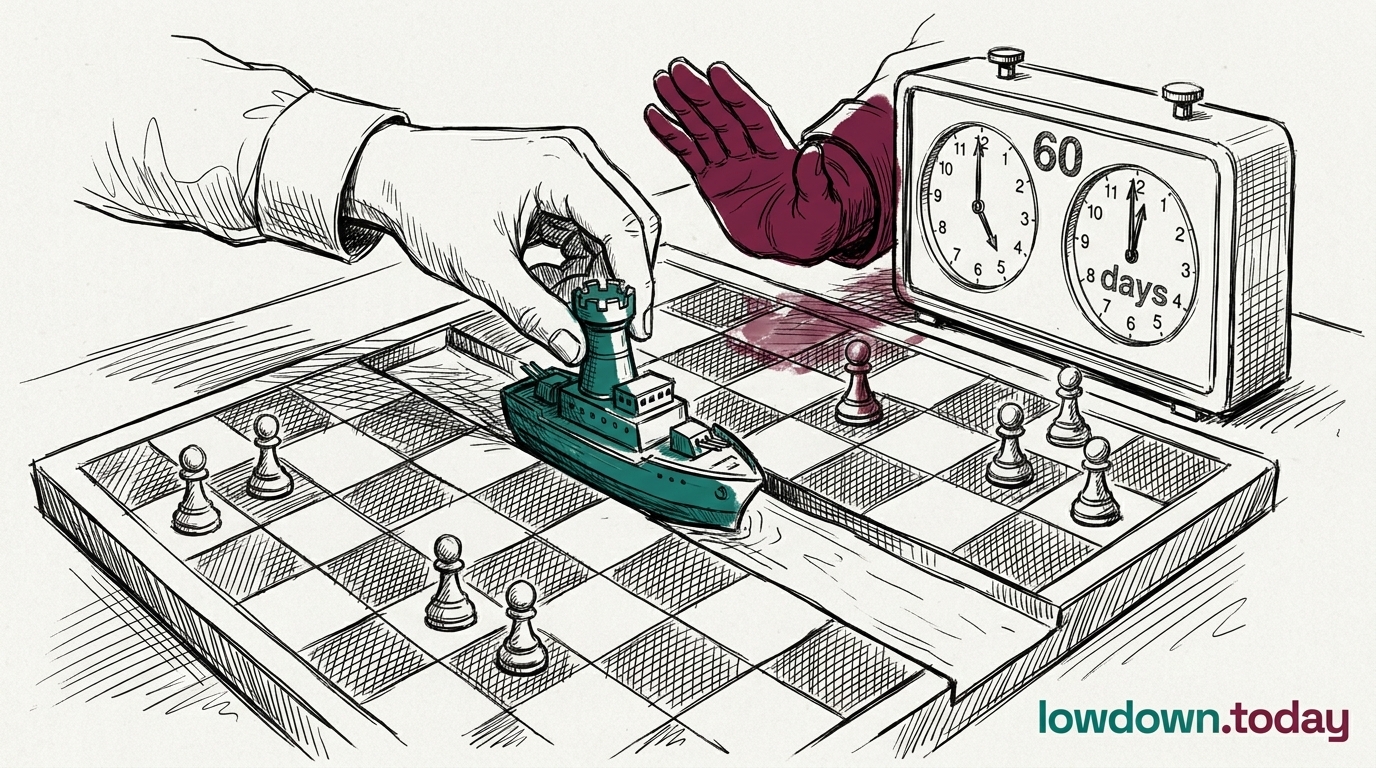
The Fertilizer Institute projects US farmers will be short 2 million tonnes of urea this spring, with urea prices up 30% since the war began. Some farmers cannot obtain supply at any price. 1 Spring planting is underway now. The shortage is not a forecast; it is a current constraint on fields being sowed this week.

The domestic economic pressure from this conflict has been building. US gasoline had already reached $3.98 per gallon , up 36% from pre-war levels. US diesel previously topped $5 per gallon . The fertiliser shortage adds a production-cost dimension to the energy-cost dimension: fuel to run farm equipment costs more, fertiliser to grow crops costs more or is unavailable, and transport costs have increased across the supply chain.

Urea is synthesised from natural gas. Iran and Russia together account for approximately 25% of global urea exports. The war has simultaneously disrupted Iranian production via strikes on petrochemical facilities and Russian supply chains via shipping insurance complications in The Gulf. The shortage is structural, not speculative: the 2 million tonne shortfall represents approximately 15% of annual US nitrogen fertiliser demand.

Corn planted without adequate nitrogen produces thin, pale stalks and reduced yields. The Fertilizer Institute's projection implies yields on affected acres could fall 10-20%, with downstream effects on global grain prices by autumn 2026. No administration response has been announced. The political dimension is acute: rural America, which supported the war at higher rates than urban centres per Pew data , is the constituency absorbing the most direct economic blow from a conflict it disproportionately endorsed.

Deep Analysis

In plain English

American farmers need fertiliser for spring planting right now. Most of it comes by ship through the Strait of Hormuz, which Iran controls. The war has disrupted those shipments. If fertiliser does not arrive in time, food prices rise for everyone.

Deep Analysis
Root Causes

US agriculture's dependency on imported fertiliser via a single maritime chokepoint.

The spring planting window is biologically fixed. Farmers who miss it cannot recover the yield later in the season.

First Reported In

Update #49 · Hormuz toll into law; Tangsiri killed

Siasat / Al Jazeera· 27 Mar 2026
Read original
Different Perspectives
Oil markets
Oil markets
Brent fell $1.05 to $106.0 on summit Day 1 but remains $5-7 above the post-ceasefire equilibrium analysts modelled in March; the market is pricing a holding pattern, not a breakthrough. OilPrice.com and Aramco CEO Nasser converge on buffer-exhaustion before Hormuz reopens if the blockade extends past mid-June.
Iranian dissidents and human rights monitors
Hengaw documented a five-prison simultaneous execution cluster on 13 May, with Gorgan appearing for the first time in the wartime register. Espionage charges framed as Israel-linked moharebeh now extend across Mashhad, Karaj, and Gorgan, using the war as judicial cover for protest-era detainees.
BRICS / Global South
Araghchi's Delhi appearance positioned Iran as a victim of US aggression before non-Western foreign ministers, with Deputy FM Bagheri Kani calling on BRICS to act against US aggression. India, as the largest non-Chinese user of Iranian-routed crude, faces pressure to balance bloc solidarity against its own shipping and sanctions exposure.
China
China
Beijing accepted the Nvidia chip clearance on summit Day 1 and gave Rubio verbal acknowledgement of Iran as an Asian stability concern, having already put Pakistan on paper as the mediatory channel on 13 May (ID:3253), deflecting the US ask for direct Chinese action without refusing it.
Iran (government and civilian diplomatic track)
Araghchi denied any Hormuz obstruction at BRICS Delhi on 14 May while Iran's SNSC had finalised a Hormuz security plan the day before. Israel Hayom's single-sourced 15-year freeze offer gives Tehran a deployable figure in non-Western forums regardless of corroboration; the state attributed 3,468 wartime deaths with no independent verification.
United States (Trump administration and Senate moderates)
Trump signed a chip clearance for 10 Chinese firms on summit Day 1 and zero Iran instruments across 76 days; Rubio and Vance made verbal Iran asks without paper. Murkowski voted yes on the 49-50 war-powers resolution after Hegseth told the Senate that Article 2 makes an AUMF unnecessary.