Skip to content
Briefings are running a touch slower this week while we rebuild the foundations.See roadmap
Iran Conflict 2026
1MAY

$200bn war bill not yet sent to Congress

2 min read
10:38UTC

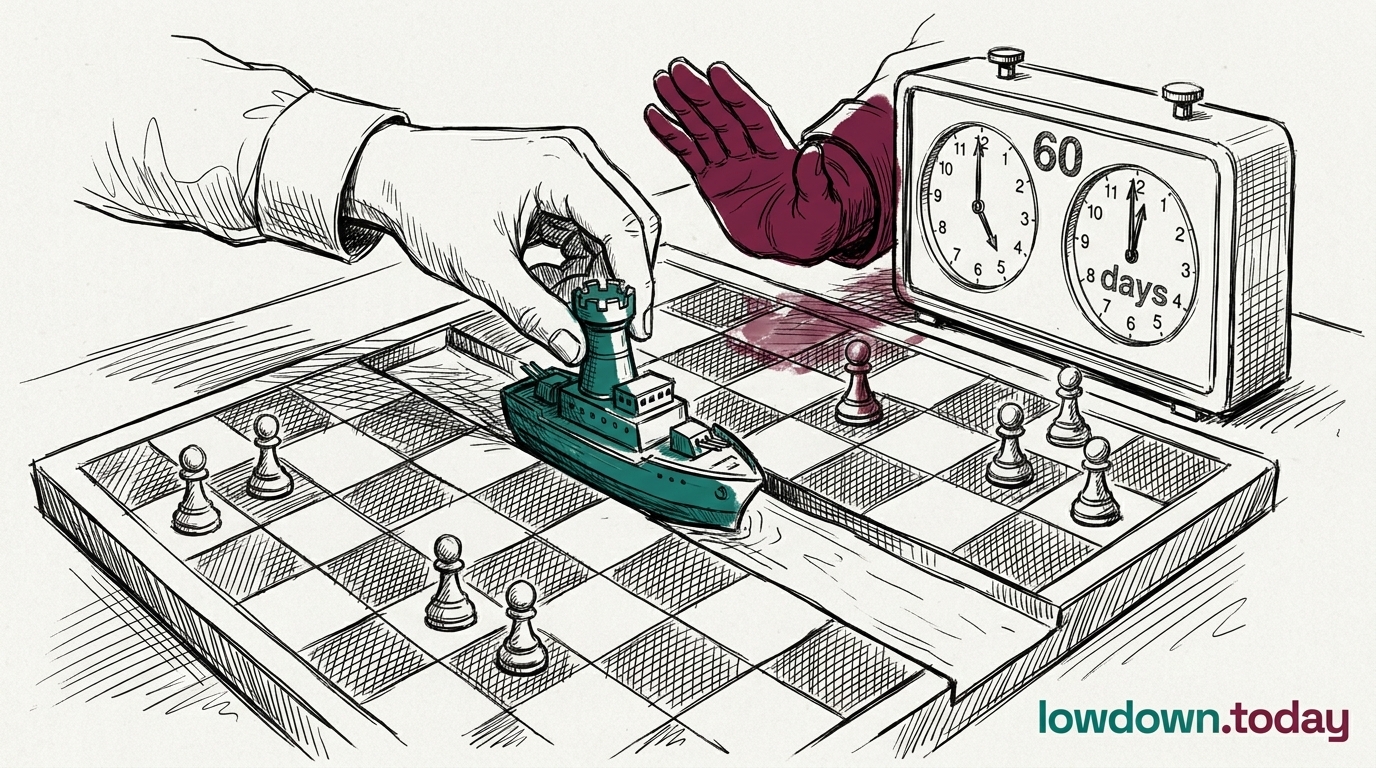
At $800 million per day, the Iran war is burning through money Congress has not authorised and may not approve.

ConflictDeveloping
Key takeaway

Military operations are expanding while Congress refuses to pay for them.

Pentagon officials confirmed on 31 March that their $200 billion Iran war supplemental has not been formally submitted to Congress. 1 Republican leaders told the Washington Post they lack the votes within their own party. The US spent roughly $15 billion in the first 19 days, nearly $800 million per day, more than the entire annual budget of the US Coast Guard.

The funding gap matters operationally. The 82nd Airborne's Devil Brigade is deploying to Kuwait . The USS Tripoli arrived with 3,500 Marines. Three Pentagon sources confirmed planning for "weeks of ground operations" including an amphibious seizure of Kharg Island. All of this requires money Congress has not authorised. Defence Secretary Pete Hegseth confirmed a forthcoming request but said the figure "could move." Heritage Foundation president Kevin Roberts endorsed the Republican resistance.

Deep Analysis

In plain English

The US military has been spending roughly $800 million every day on this war. To keep going, the Pentagon needs Congress to approve a special $200 billion funding package on top of the normal defence budget. That package has not been submitted to Congress yet. Republican leaders, from the president's own party, have said they do not have enough votes to pass it. The Heritage Foundation, a conservative think tank that helped write Trump's policy agenda, is backing the resistance. The practical problem is that the US has already committed ground troops to Kuwait and is planning to seize an Iranian oil island. All of that requires money Congress has not authorised.

What could happen next?
  • Risk

    Without supplemental authorisation, ground force deployments and Kharg Island planning may outpace available funding, creating a legal and operational crisis simultaneously.

    Short term · 0.75
  • Consequence

    Republican resistance from within the president's own party removes the political safety net that a bipartisan supplemental would normally provide.

    Immediate · 0.85
  • Opportunity

    The funding gap creates domestic leverage for a negotiated settlement: if the war cannot be funded at current scale, a deal becomes financially necessary regardless of military preference.

    Short term · 0.7
First Reported In

Update #53 · Trump drops Hormuz goal; toll becomes law

Washington Post· 31 Mar 2026
Read original
Causes and effects
This Event
$200bn war bill not yet sent to Congress
Without the $200 billion supplemental, the military expansion (ground troops, amphibious planning, interceptor replenishment) lacks financial authorisation.
Different Perspectives
Oil markets
Oil markets
Brent fell $1.05 to $106.0 on summit Day 1 but remains $5-7 above the post-ceasefire equilibrium analysts modelled in March; the market is pricing a holding pattern, not a breakthrough. OilPrice.com and Aramco CEO Nasser converge on buffer-exhaustion before Hormuz reopens if the blockade extends past mid-June.
Iranian dissidents and human rights monitors
Hengaw documented a five-prison simultaneous execution cluster on 13 May, with Gorgan appearing for the first time in the wartime register. Espionage charges framed as Israel-linked moharebeh now extend across Mashhad, Karaj, and Gorgan, using the war as judicial cover for protest-era detainees.
BRICS / Global South
Araghchi's Delhi appearance positioned Iran as a victim of US aggression before non-Western foreign ministers, with Deputy FM Bagheri Kani calling on BRICS to act against US aggression. India, as the largest non-Chinese user of Iranian-routed crude, faces pressure to balance bloc solidarity against its own shipping and sanctions exposure.
China
China
Beijing accepted the Nvidia chip clearance on summit Day 1 and gave Rubio verbal acknowledgement of Iran as an Asian stability concern, having already put Pakistan on paper as the mediatory channel on 13 May (ID:3253), deflecting the US ask for direct Chinese action without refusing it.
Iran (government and civilian diplomatic track)
Araghchi denied any Hormuz obstruction at BRICS Delhi on 14 May while Iran's SNSC had finalised a Hormuz security plan the day before. Israel Hayom's single-sourced 15-year freeze offer gives Tehran a deployable figure in non-Western forums regardless of corroboration; the state attributed 3,468 wartime deaths with no independent verification.
United States (Trump administration and Senate moderates)
Trump signed a chip clearance for 10 Chinese firms on summit Day 1 and zero Iran instruments across 76 days; Rubio and Vance made verbal Iran asks without paper. Murkowski voted yes on the 49-50 war-powers resolution after Hegseth told the Senate that Article 2 makes an AUMF unnecessary.