Skip to content
Briefings are running a touch slower this week while we rebuild the foundations.See roadmap
Iran Conflict 2026
22APR

ORG brands UK tech dependency a risk

4 min read
10:22UTC

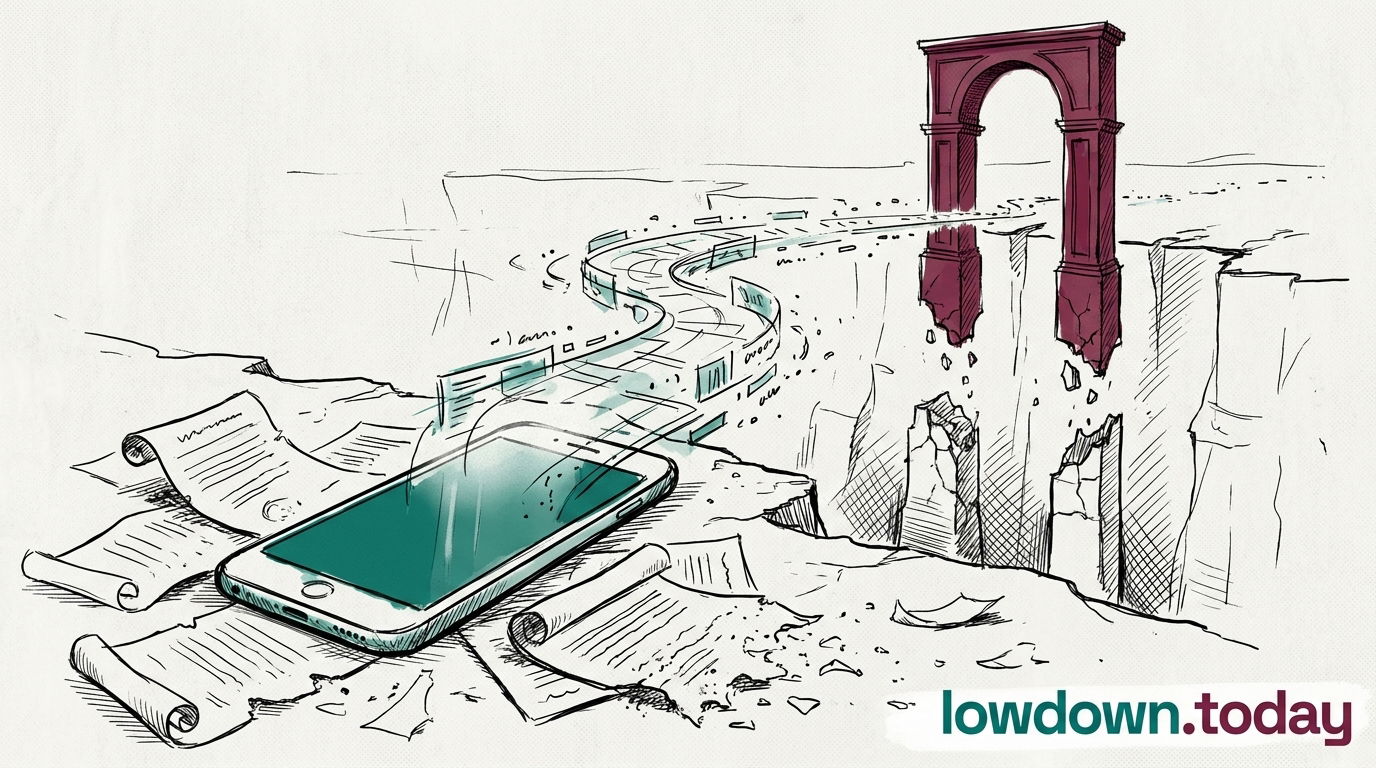
The Open Rights Group published 'Tech Giants and Giant Slayers' on 15 April, branding Britain's decade of US-tech dependency a national security vulnerability. It cites a CMA estimate that the UK wastes £500m a year on cloud lock-in alone.

ConflictDeveloping
Key takeaway

The CMA figure means the entire Sovereign AI Fund is being burned every year on cloud lock-in alone.

The Open Rights Group published "Tech Giants and Giant Slayers" on 15 April 2026, arguing Britain's decade of US-tech dependency is a national security vulnerability 1. The report cites a Competition and Markets Authority (CMA) estimate that the UK wastes £500m a year on cloud services due to lock-in, switching barriers and project overruns 1. It flags the US CLOUD Act, the US federal law requiring disclosure of overseas data held by US-headquartered companies, as a mechanism that can compel UK data disclosure without UK consent, and points to Microsoft's documented shutdown of email services for individuals hit by ICC-related sanctions as concrete precedent 1. Palantir contracts, the report adds, are expanding rather than shrinking 1.

The CMA figure sits awkwardly next to the Sovereign AI Fund . In budget terms, the annual cloud waste matches the entire fund spent every year on lock-in alone, yet DSIT has not matched it with a single cloud-layer instrument. The CMA cloud investigation closed in July 2025 without DMA-equivalent enforcement powers, leaving the exposure untouched. Britain is solving the model layer at the margin while the cloud layer still bleeds at scale.

The CLOUD Act flag shifts the framing from commercial efficiency to legal exposure. ICC-sanctioned individuals losing Microsoft email access is not a hypothetical: it is precedent that a US statute can reach UK users through the infrastructure they already use, regardless of where the data sits. The report treats this as an analogue of the EU-level Draghi Report's 11.2% implementation rate after one year : stated ambition without the matching legal instrument. Britain is building a national champion upstairs and leaving the front door open downstairs.


Deep Analysis

In plain English

The Open Rights Group is a British digital rights organisation. In April 2026 it published a report arguing that Britain's dependence on American technology companies carries national security consequences beyond commercial inefficiency. The core of the argument: a US law called the CLOUD Act means American companies can be ordered by US courts to hand over data they hold on behalf of British customers, including government data, without UK courts being involved. The ORG cites Microsoft shutting down email accounts for people sanctioned by the International Criminal Court as a real-world example where US law reached into British infrastructure and cut off services. The Competition and Markets Authority (the UK's competition regulator) estimates that Britain wastes £500m a year on cloud services purely because of the difficulty of switching providers. The report argues that building a domestic AI sector while leaving this dependency unaddressed is building on a compromised foundation.

First Reported In

Update #2 · Brussels buys, Britain backs, Google unlocks

The Register / Open Rights Group· 19 Apr 2026
Read original
Causes and effects
This Event
ORG brands UK tech dependency a risk
The report puts a number on the cloud-layer gap the UK's sovereign AI strategy leaves untouched, and flags the US CLOUD Act as a legal mechanism that can compel UK data disclosure without UK consent.
Different Perspectives
IAEA (Board of Governors, Vienna)
Grossi's 4 June Board report invoked 'loss of continuity of knowledge' on Iran's 440.9 kg stockpile after 97 days without access, the IAEA's formal finding that the evidentiary break cannot be retroactively closed. A Board censure resolution before 12 June would harden Iran's refusal to restore access.
Russia (Kremlin / SPIEF)
Putin reaffirmed Russia's offer to hold Iran's uranium at the St Petersburg Economic Forum on 6 June, positioning Moscow as the preferred custodian even after Trump vetoed the arrangement on 27 May. The offer allows Russia to present itself as a constructive actor while the IAEA verification gap renders any custodian arrangement unworkable.
Bahrain (Government and US Fifth Fleet host)
Bahrain's PAC-3 magazine reached 87% depletion after the 5 June IRGC salvo, with its resupply last in a Camden queue behind Qatar and Saudi Arabia. Manama hosts the US Fifth Fleet with terminal air defences that the supply chain cannot replenish before 2027.
China (Ministry of Commerce)
Washington designated Shanghai Qianye Energy on 5 June, the first mainland Chinese firm under Iran energy sanctions this war, the same week Beijing was pitched as a uranium custodian. China has not yet invoked its Blocking Statute; whether it absorbs the designation as a calibrated cost or retaliates is unresolved.
Iran (IRGC and Expediency Council)
The IRGC fired seven ballistic missiles at US bases in Kuwait and Bahrain on 5 June and Rezaei doubled the asset precondition to $24bn on 6 June, blocking both military and diplomatic de-escalation simultaneously. Tehran's hardliners are setting terms the civilian Foreign Ministry cannot override.
Trump administration (White House)
Trump claimed the uranium was 'entombed' and the deal '95% done' on 4 June, while signing no Iran executive instrument across Days 99-100. The gap between presidential assertion and signed executive action is now 100 days wide and structurally unchanged.



