Skip to content
Briefings are running a touch slower this week while we rebuild the foundations.See roadmap
Iran Conflict 2026
21APR

OPEC+ barrels cannot reach the market

4 min read
10:51UTC

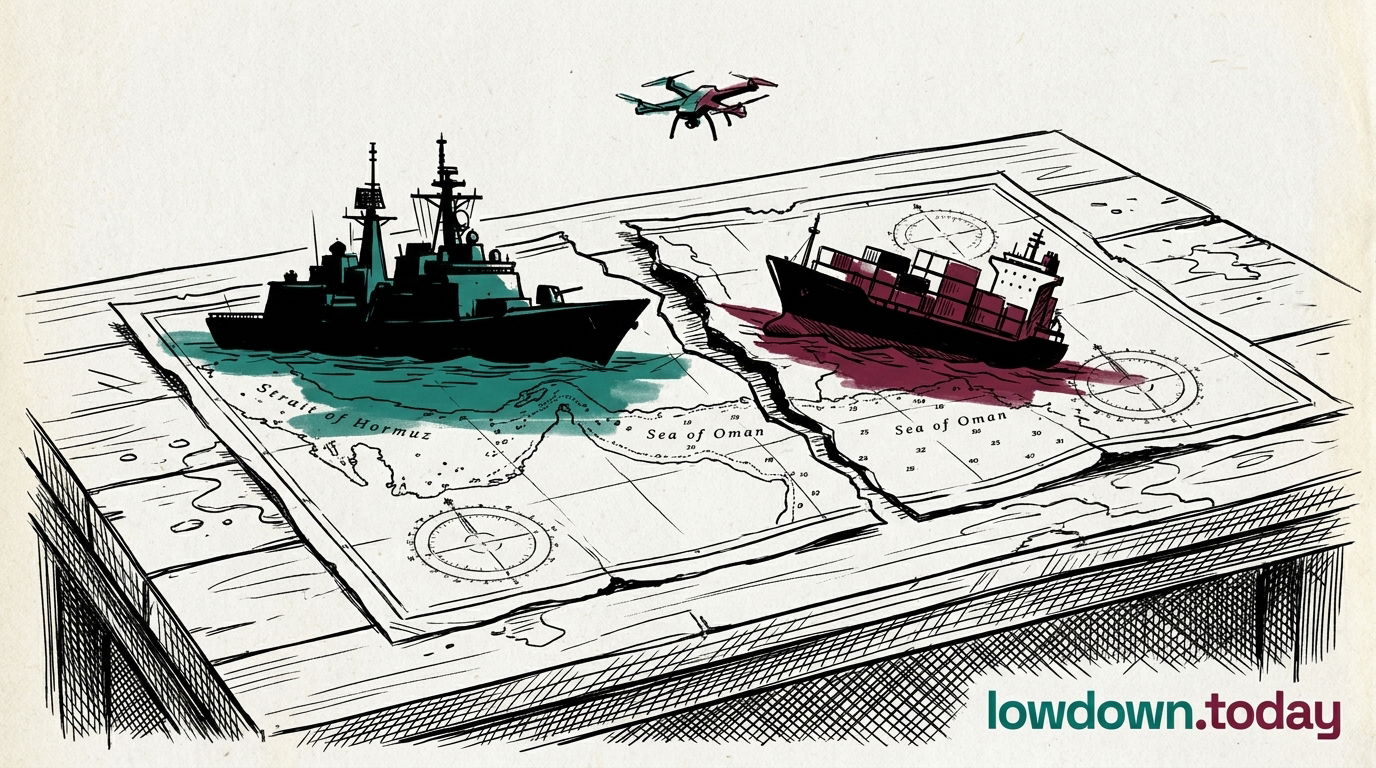
The cartel raised output by 220,000 barrels per day — an increase rendered meaningless while the Strait of Hormuz remains closed to commercial shipping.

ConflictDeveloping
Key takeaway

OPEC+'s 220,000 bpd production increase is arithmetically trivial against a Hormuz closure that removes an estimated 20 million bpd from global seaborne supply, making the Strategic Petroleum Reserve and conflict duration the decisive variables for energy markets.

OPEC+ raised production by 220,000 barrels per day in response to the supply disruption caused by the conflict. The increase is a rounding error against the scale of the problem. Approximately 20% of the world's traded oil — roughly 17–18 million barrels per day — transits the strait of Hormuz. The IRGC broadcast on VHF Channel 16 that "no ships may pass" , and vessel traffic through the strait has fallen 70% . The additional barrels cannot reach buyers if the waterway they must pass through is closed.

Brent Crude opened at $82.37 following the initial strikes and has since traded in the $77–80 range — a contained response that prices a short-duration disruption. Goldman Sachs has forecast a peak of $110 per barrel; JP Morgan projects $120–130 if the conflict is prolonged and has raised its US recession probability estimate to 35% . The gap between current prices and those forecasts measures the market's bet that the strait reopens within days. If it does not, the repricing will be abrupt.

The US Strategic Petroleum Reserve holds approximately 415 million barrels. At current US consumption of roughly 20 million barrels per day, the SPR covers approximately three weeks if no other source were available. It is designed to smooth temporary disruptions, not to substitute for a prolonged closure of the world's most important oil chokepoint. The six major container shipping lines — CMA CGM, Hapag-Lloyd, Maersk, Nippon Yusen, Mitsui, and Kawasaki Kisen — have already halted all Gulf transits . Until they resume, OPEC+ production quotas are an abstraction.

Deep Analysis

In plain English

The Strait of Hormuz is a narrow waterway in the Persian Gulf through which roughly one-fifth of all the world's traded oil passes every day. If it is blocked or too dangerous to use, that oil cannot reach the rest of the world regardless of how much is being pumped out of the ground. OPEC+ — the group of major oil-producing countries — has announced it will produce an extra 220,000 barrels of oil per day. To put that in context: the Hormuz strait handles around 20 million barrels a day. The OPEC+ increase is like offering to carry one extra bucket of water while a water main has burst. The United States also has an emergency stockpile of roughly 415 million barrels stored underground — that reserve exists precisely for crises like this, but at current consumption rates it would last only weeks, not months, if used to replace Hormuz flows entirely.

Deep Analysis
Synthesis

The OPEC+ announcement and the SPR's existence create a psychological floor for markets — they signal that governments and producers are not passive in the face of the disruption. But both instruments are fundamentally duration-limited. The market's current $77–80 Brent range, approximately 11% above pre-strike levels, reflects a consensus that the Strait of Hormuz will reopen within days rather than weeks. That consensus is not grounded in confirmed intelligence about Iranian intentions or capabilities — it is an assumption, and one that the narrative identifies explicitly. The $110–130 per barrel analyst projection for a prolonged scenario is not a tail risk; it is the central scenario if the Hormuz closure extends beyond the market's implicit timeline. The 35% recession probability estimate attributed to a major bank compounds this: energy price shocks of that magnitude have historically fed through to consumer price inflation within weeks and investment contraction within quarters, with the transmission mechanism accelerated in an environment where central banks have limited headroom from prior tightening cycles.

Root Causes

OPEC+'s production increase reflects the organisation's structural incentive to prevent oil prices from rising so sharply that they trigger demand destruction or accelerate the energy transition — not a humanitarian gesture. The 220,000 bpd figure is consistent with the incremental increases OPEC+ has been managing under its existing production adjustment schedule, suggesting the announcement may be more a repackaging of pre-planned output restoration than a crisis-specific intervention. The more fundamental dynamic is that no volume of additional production resolves a logistics blockage: oil that cannot physically transit Hormuz cannot reach consuming nations regardless of how much is pumped. The SPR calculation is equally constrained — the US reserve, though substantial at 415 million barrels, was designed to buffer short disruptions measured in days to weeks, not to substitute indefinitely for a closure of the world's most critical oil chokepoint. The root cause of the market's contained-but-elevated response is therefore a rational assessment that the Hormuz disruption is likely temporary, and that assessment is the load-bearing assumption underpinning current price levels.

What could happen next?
2 risk1 meaning1 consequence1 opportunity1 precedent
  • Risk

    If the Strait of Hormuz remains closed beyond the market's implicit assumption of days rather than weeks, Brent crude could move sharply toward the $110–130 per barrel range projected by analysts, triggering inflationary pressure across fuel-dependent supply chains globally.

    Short term · Assessed
  • Risk

    One major bank's internal estimate puts recession probability at 35% with the duration of the Hormuz disruption as the primary variable; sustained closure materially increases this probability.

    Medium term · Reported
  • Meaning

    OPEC+'s 220,000 bpd increase functions primarily as a market signal rather than a substantive supply substitute, given the orders-of-magnitude difference between the increase and the volume transiting Hormuz daily.

    Immediate · Assessed
  • Consequence

    Coordinated IEA Strategic Petroleum Reserve releases, if triggered, would provide a short-duration buffer of weeks — sufficient only if diplomatic or military resolution of the Hormuz situation is achieved in parallel.

    Short term · Assessed
  • Opportunity

    A rapid reopening of Hormuz — whether through ceasefire, diplomatic agreement, or military escort corridors — would likely produce a sharp oil price correction that partially reverses the current 11% risk premium, providing a deflationary impulse to import-dependent economies.

    Short term · Suggested
  • Precedent

    If SPR releases and OPEC+ increases prove inadequate to stabilise markets through a prolonged Hormuz closure, the episode will prompt a reassessment of Western energy security architecture and the adequacy of reserve stockpile levels established in the post-1973 era.

    Long term · Suggested
First Reported In

Update #8 · Patriot fratricide downs US F-15 in Kuwait

Kpler· 2 Mar 2026
Read original
Causes and effects
This Event
OPEC+ barrels cannot reach the market
The production increase addresses a supply problem that exists downstream of the actual constraint. Until commercial shipping can transit the Strait of Hormuz, additional barrels pumped in the Gulf have no route to market, and oil prices will be determined by the duration of the strait's closure, not by OPEC+ quotas.
Different Perspectives
Israel
Israel
The IDF struck a Lebanese army unit on 6 June, killing a colonel, and privately told Moscow that shelling near Bushehr was accidental, per Putin's SPIEF disclosure. Israel is advancing in Lebanon past an unenforced ceasefire text while maintaining a back-channel to Russia on nuclear-site deconfliction.
Lebanon
Lebanon
President Aoun told CNN on 5 June that Iran uses Lebanon as a bargaining chip and urged Hezbollah toward diplomacy; on 6 June an IDF strike killed a Lebanese army colonel on the Khardali-Nabatieh road. The Lebanese state is publicly rejecting Iranian tutelage while the army sustains casualties from Israeli fire and the Washington framework remains unenforced.
Bahrain
Bahrain
Bahrain's US Fifth Fleet headquarters was among the targets in the 5-6 June two-country salvo; its PAC-3 magazine stands at 87 per cent depletion with an 18-month resupply gap and no comparable arms sale has been announced. The state is defending a critical US regional command on a thinning interceptor stock.
Kuwait
Kuwait
Kuwait received a $1.98bn US counter-drone sale approval on the same day IRGC missiles targeted its bases; it expelled two Iranian diplomats on 4 June and filed a formal protest. The arms approval gives Kuwait a future capability but leaves a 6-18 month delivery gap that the salvo tempo is already pressing.
Russia
Russia
Putin reaffirmed Russia's offer to hold Iran's 440.9 kg HEU at SPIEF on 6 June, said Russia is not arming Iran, and disclosed that both the US and Israel privately told Moscow that shelling near Bushehr was accidental. The restatement casts Moscow as the only remaining mediator both sides call, a position serving Russian interests whatever the nuclear file produces.
Iran
Iran
The IRGC, per Iranian state media, fired seven ballistic missiles at US bases in Kuwait and Bahrain, the largest two-country salvo of the war, and framed the launches as lawful retaliation; Foreign Minister Araghchi rejected Aoun's bargaining-chip accusation and Velayati warned Beirut against diplomatic naivety. Tehran has sent no HEU counter-proposal since Araghchi confirmed no progress on 4 June.