Skip to content
Iran Conflict 2026
18APR

Trump: Iran campaign over in four weeks

3 min read
14:57UTC

The last three US presidents to predict the duration of a Middle Eastern military campaign were wrong. This conflict has already reached four fronts across ten countries in 72 hours.

ConflictDeveloping

President Trump stated the military campaign against Iran would last "four weeks or less." The claim was made as the conflict expanded from one active front to four in its first 72 hours, with ordnance falling on at least ten countries.

The four-week figure sits alongside two earlier administration statements: Trump's assertion to CNBC that the operation was "ahead of schedule" , and a US official's assessment to Al Jazeera that the war would last "weeks, not days" (ID:90). Read together, The Administration envisions a bounded air and naval campaign — closer in conception to the 78-day NATO bombing of Serbia in 1999 than to an open-ended commitment. Trump has explicitly ruled out ground troops and nation-building . The framing is of a punitive operation with a defined exit: degrade Iran's military infrastructure, destroy its nuclear programme, and withdraw.

The historical record of such predictions is dismal. In 2003, US Defence Secretary Donald Rumsfeld suggested the Iraq campaign might last "five days or five weeks or five months, but it certainly isn't going to last any longer than that." The US remained in Iraq for eight years; combat troops returned in 2014. In 2011, the Obama administration described the Libya intervention as lasting "days, not weeks." NATO operations continued for seven months. Both conflicts shared a feature now present in Iran: the assumption that air power alone could produce defined political outcomes.

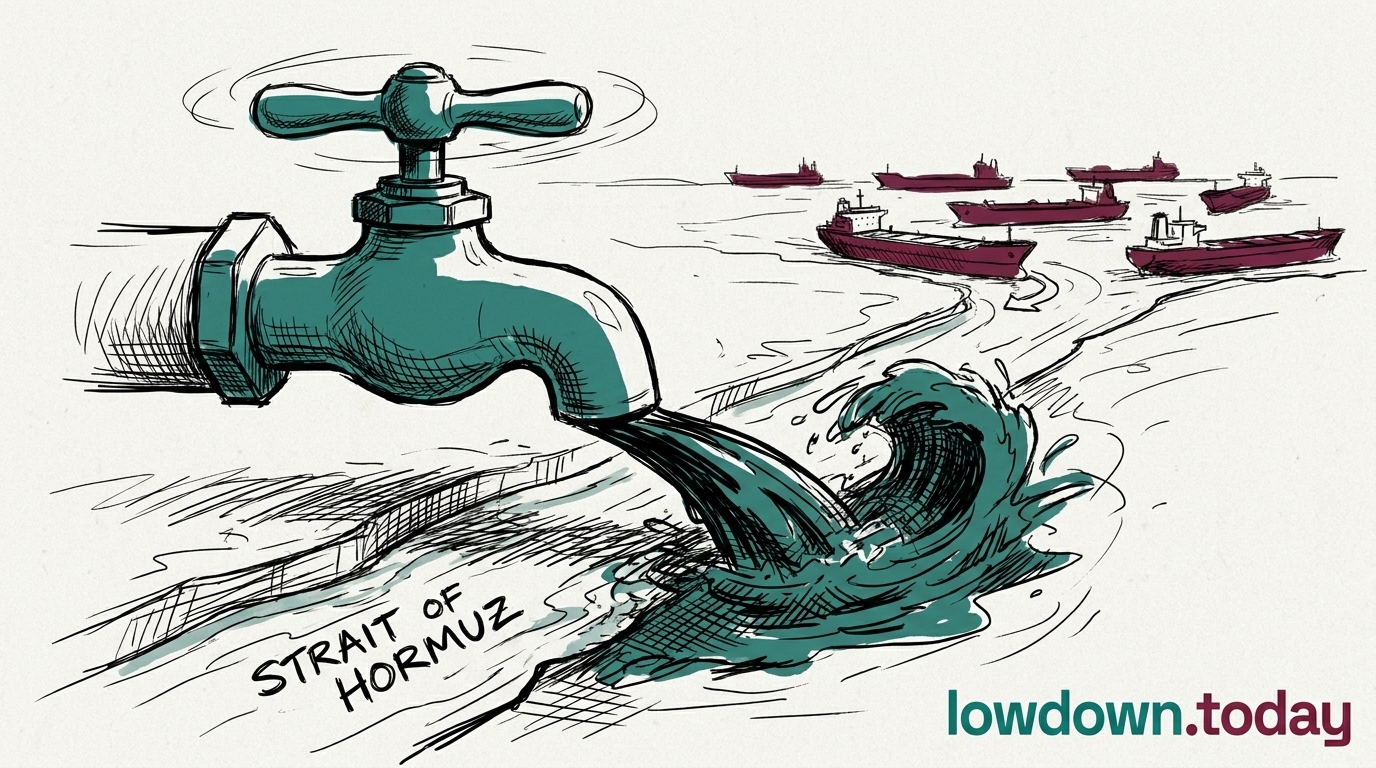
The specific difficulty with a four-week timeline is structural, not military. The US can sustain an air campaign indefinitely; the question is what "over" means. The killing of Khamenei , Defence Minister Nasirzadeh, IRGC Ground Forces Commander Pakpour, and Ali Shamkhani (ID:470) shattered Iran's command architecture. The three-person interim council holds constitutional authority but may lack operational links to the forces it nominally commands. Iran's foreign minister has stated that military units are acting outside central government direction. Hezbollah has entered the war independently. The Strait of Hormuz is a combat zone. A British base on European soil has taken fire. Four weeks of strikes can destroy infrastructure on a schedule. They cannot, on a schedule, produce an adversary capable of agreeing to stop — because the US-Israeli campaign has already killed the people who had the authority to do so.

Deep Analysis

Deep Analysis
Synthesis

The four-week statement functions as a political communication act with real strategic consequences. It gives Iran's strategic planners a defined endurance target: sustain operations for approximately one month and the US either declares victory on contested terms or continues in explicit defiance of its own stated timeline, at escalating domestic political cost. It also attaches presidential credibility to a conclusion the battlefield trajectory does not currently support, progressively narrowing escalation management options the longer the conflict continues.

Root Causes

Presidential timeline statements in military contexts serve three concurrent functions: domestic political reassurance for an audience concerned about open-ended commitments; commodity market stabilisation at a moment of acute price sensitivity; and coalition partner management, assuring allied governments they are not underwriting an indefinite regional war. All three pressures are clearly present — Senator Warner's 'war of choice' statement signals domestic opposition forming, Brent crude moved from $73 to over $82, and European partners require a time-limited framing. The 'four weeks or less' formulation echoes the Gulf War's 100-hour ground phase — a tight timeline designed to project operational mastery, its accuracy secondary to its political function.

Escalation

If the campaign has not achieved its stated objectives by week four, the administration faces a binary choice — declare victory on ambiguous terms, or continue in explicit defiance of the stated timeline. The latter requires seeking congressional authorisation, which the Senate war powers challenge already developing is designed to force. The timeline therefore acts as a self-imposed constraint that progressively narrows political and military options — and simultaneously gives dispersed IRGC units and regional proxy forces a defined endurance target rather than an open-ended commitment.

What could happen next?
  • Risk

    If the conflict extends visibly beyond four weeks, presidential credibility is damaged, the domestic political cost of continuation rises sharply, and the administration's ability to manage the war powers challenge in Congress is significantly weakened.

    Short term · Assessed
  • Risk

    The public timeline inadvertently signals to Iran that it must sustain resistance for approximately four weeks to outlast the stated US commitment, potentially hardening Iranian negotiating posture and extending the conflict.

    Immediate · Assessed
  • Consequence

    Energy commodity markets will use the four-week window as a pricing anchor; a failure to achieve visible progress toward resolution within that period will trigger repricing toward prolonged-conflict oil scenarios in the $110–130 range cited by analysts.

    Short term · Assessed
  • Precedent

    A publicly stated and subsequently missed military timeline weakens deterrence credibility for future US military signalling, as adversaries update their estimate of the gap between US stated commitments and operational outcomes.

    Long term · Suggested
First Reported In

Update #7 · Hezbollah enters; tankers burn in Hormuz

Axios· 2 Mar 2026
Read original
Causes and effects
This Event
Trump: Iran campaign over in four weeks
The four-week claim requires a defined adversary capable of conceding or collapsing on schedule. With Iran's command structure disrupted, proxy networks activating independently, and the war spanning four fronts across ten countries, the conditions for ending the conflict may not exist within any fixed timeline.
Different Perspectives
Global South governments (Indonesia, Brazil, South Africa)
Neutrality was possible when the targets were military. 148 dead schoolgirls made it impossible — no government can explain that away to its own citizens.
Trump administration
Oscillating between claiming diplomatic progress and threatening escalation, while deploying additional ground forces to the Gulf.
Israeli security establishment
Fears a rapid, vague US-Iran agreement that freezes military operations before the IDF achieves what it considers full strategic objectives. A senior military official assessed the campaign is 'halfway there' and needs several more weeks.
Iraqi government
Iraqi government
Iraq's force majeure is the position of a non-belligerent whose entire petroleum economy has been paralysed by a war between others — storage full, exports blocked, production being cut with no timeline for resumption.
Russia — Ambassador Vassily Nebenzia
Moscow calibrated its position between Gulf states and Iran: abstaining on Resolution 2817 rather than vetoing it, signalling it would not block protection for Gulf states, while refusing to endorse a text that ignores the US-Israeli campaign it regards as the conflict's proximate cause. Russia proposed its own ceasefire text — which failed 4-2-9 — allowing Moscow to claim the peacemaker role while providing Iran with satellite targeting intelligence, a duality consistent with its approach in Syria.
France — President Macron
France absorbed its first combat death in a conflict it has publicly declined to join. The killing of Chief Warrant Officer Frion in Erbil forces Macron to choose between escalating involvement and accepting casualties from the margins.