Skip to content
Briefings are running a touch slower this week while we rebuild the foundations.See roadmap
Iran Conflict 2026
18APR

Brent holds at $95 as markets wait

2 min read
14:57UTC

Oil prices stayed flat at $95-97, pricing a sustained stalemate rather than confidence in resolution.

ConflictDeveloping
Key takeaway

Brent above $95 reflects a market that expects neither resolution nor collapse.

Brent Crude traded between $95.20 and $96.69 on 11-12 April, essentially flat from the prior update's $96.39 . The post-Ceasefire drop to $92 proved temporary; Brent has since recovered and settled into a narrow band above $95.

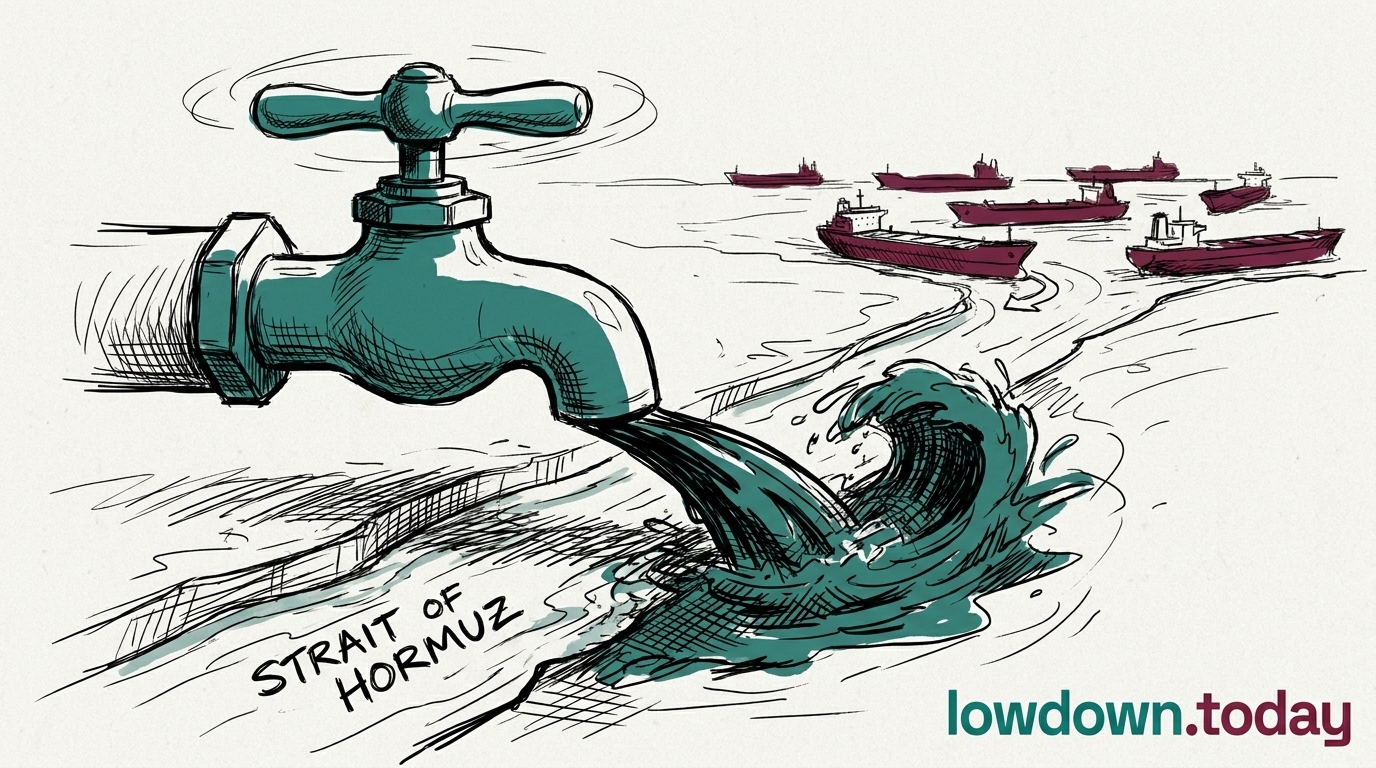
The flat range tells a story. Markets are not pricing in a clean resolution. They are not pricing in a return to conflict either. They are pricing a structural stalemate: the Hormuz Strait stays mostly closed, supply stays constrained, and nobody knows what happens when the Ceasefire expires.

Oxford Economics projects world GDP growth at 1.4% in 2026 if the conflict persists, down from a 2.6% baseline. War risk insurance premiums remain four to five times pre-war levels. Commercial vessels rerouting via the Cape of Good Hope add 10 to 20 days per voyage, and US importer freight rates have risen by up to 50%.

Most equity markets have not yet priced in a sustained conflict scenario, which means the current oil price may be an underestimate of the economic shock if the Ceasefire collapses without a replacement framework. Brent peaked sharply higher before the Ceasefire was announced; a return to those levels would sharpen the GDP drag considerably.

Deep Analysis

In plain English

Brent crude is the global oil price benchmark. It is trading just above $95 per barrel, roughly $20 above where it was before the conflict. The fact it has stayed flat, neither rising sharply nor falling, tells you what the markets think: they expect the stalemate to continue for a while, but they do not expect a catastrophic escalation either. Oxford Economics, one of the most widely-cited economic forecasting institutions, estimates that if this conflict drags on, the world economy will grow by only 1.4% in 2026, down from 2.6% without the conflict. That 1.2-percentage-point reduction does not sound like much, but at the scale of the global economy it represents roughly $1.2 trillion in lost output, roughly the entire GDP of Spain for a year. For ordinary people, the most direct effect is energy costs. Sustained $95+ Brent flows through to petrol, diesel, gas, and electricity prices over weeks to months.

What could happen next?
  • Consequence

    Markets pricing a structural stalemate rather than resolution means Brent will stay elevated regardless of ceasefire expiry, unless Hormuz transit actually resumes at scale, a signal the first oil tanker full transit would provide.

  • Risk

    The Oxford Economics 1.4% global growth scenario is predicated on sustained conflict without re-escalation; a return to active hostilities would trigger a spike above $110, potentially pushing the global economy into recession territory.

First Reported In

Update #66 · Islamabad collapses: 10 days to expiry

Stimson Center· 12 Apr 2026
Read original
Different Perspectives
Lloyd's of London war-risk underwriters
Lloyd's kept its Hormuz war-risk designation unchanged at $10-14 million per voyage even as Brent spiked 7%, holding the split from futures that has run since late May. Underwriters require a Security Council resolution or government certification, not a presidential phone call.
Gulf Cooperation Council states
Gulf states, having written to the IMO rejecting Iran's Hormuz transit authority, watched a fresh missile exchange land on Kuwaiti soil. Riyadh and Abu Dhabi remain caught between US security guarantees and Iranian fire, with no Gulf state co-belligerent except Kuwait.
China
China
Beijing stayed out of the diplomatic rupture, sending no envoy and offering no public position on the suspended talks. China keeps its bilateral energy corridor with Tehran while declining the exposure of a mediating role Trump barred it from anyway.
Kuwait
Kuwait
Kuwait's air defences engaged two Iranian ballistic missiles aimed at US forces late on 31 May, the second interception in days after invoking Article 51. Repeated strikes test whether Kuwait's politics can sustain hosting US forces as a de facto co-belligerent.
Lebanon and Hezbollah
Lebanon announced a partial ceasefire under which Hezbollah pledged to stop attacking Israel, the concrete output of Trump's call. Beirut heads to Washington on 3 June with Israeli forces still inside the south, testing whether the truce survives contact.
Israel under Netanyahu
Netanyahu stood down the planned Beirut operation under Trump's pressure but kept his ground advance running toward the Zaharani river, the deepest incursion in 25 years, and disputed Trump's claim that troops had turned around. Israel signalled the halt is tactical, not a wind-down.