Skip to content
You can now search across every topic, entity and event.What's new
Iran Conflict 2026
10APR

Spain rebukes Washington over Iran

4 min read
08:05UTC

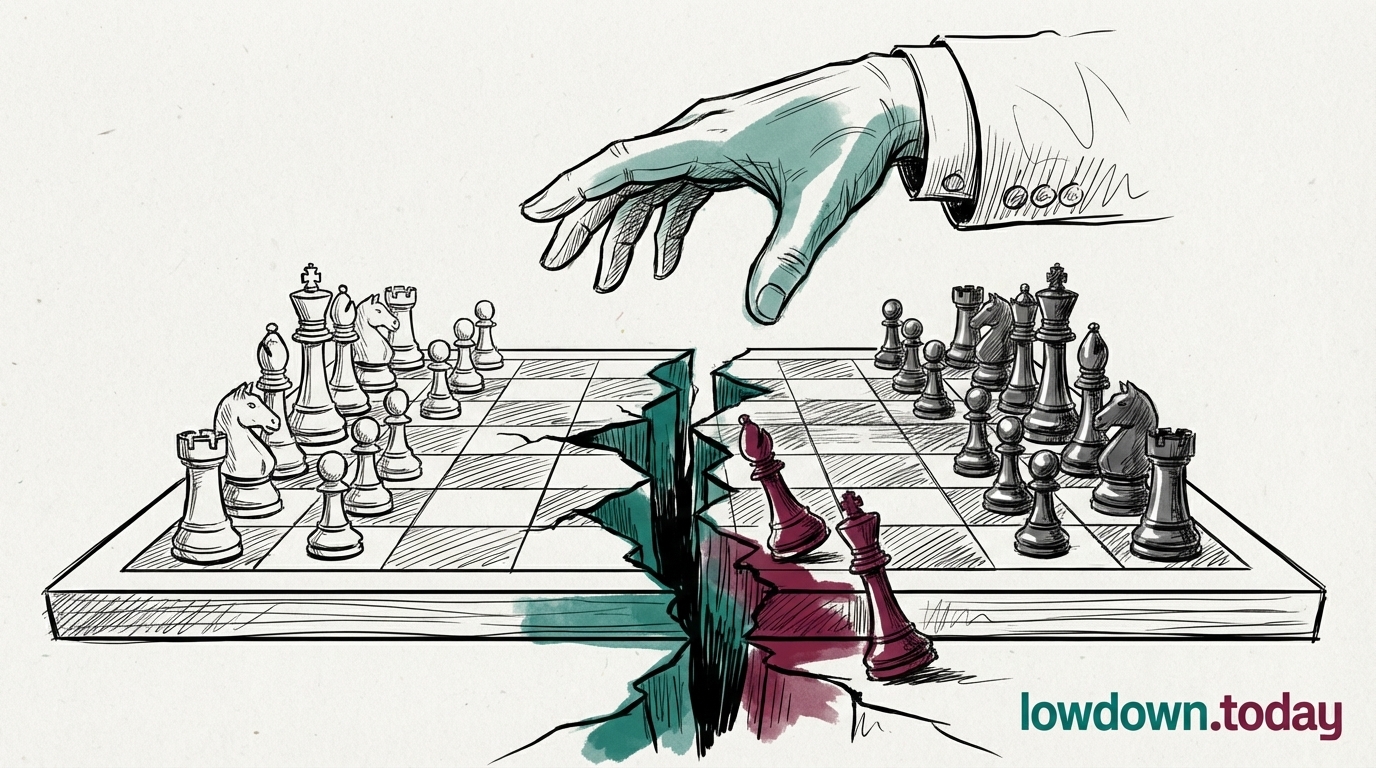
A NATO member hosting US missile defence warships publicly accuses Washington of degrading the international order — language that echoes Moscow and Beijing, delivered from inside the alliance.

ConflictDeveloping
Key takeaway

Spain's public rebuke from within NATO signals that the strikes are generating intra-Alliance fractures that could constrain US post-conflict diplomacy and provide rhetorical ammunition to Moscow and Beijing.

Spain described the US-Israeli operation as contributing to "a more uncertain and hostile international order" — language that goes well beyond the EU's collective "greatly concerning" and amounts to a direct accusation that Washington has degraded the system it claims to defend.

Spain hosts the Rota naval base in Cádiz province, home to four US Aegis destroyers forming the backbone of NATO's southern Ballistic missile defence shield. The 2015 base agreement makes Spain a direct participant in American Mediterranean force projection. Prime Minister Pedro Sánchez's government is not an outside critic; it speaks from within the American defence architecture. Sánchez has broken with Washington before — Spain was among the first European states to recognise Palestinian statehood in May 2024, alongside Ireland and Norway — but this formulation goes further. It does not merely object to a specific action. It charges that the action has made the world more dangerous.

The specific phrase — "a more uncertain and hostile international order" — echoes the framing Russia and China routinely deploy to describe American unilateralism. When that argument comes from inside NATO, it carries a different political charge. NATO's Article 5 guarantee rests on a shared understanding of when military force is legitimate. Spain's statement says, in diplomatic language, that the United States has acted outside that understanding. the Alliance held together formally — no member state backed the operation , but none took concrete counter-action either. The fracture is rhetorical for now. Whether it becomes operational depends on what Washington asks of its European allies next — basing rights for sustained operations, overflight permissions, or participation in any stabilisation force. Madrid has already signalled that each request will meet resistance.

Deep Analysis

In plain English

Spain, a full member of NATO and a close US ally, publicly described the US-Israeli strikes as making the world 'a more uncertain and hostile' place. In diplomatic terms, this is a meaningful rebuke: it is not a neutral call for de-escalation, but an implicit argument that the operation itself was destabilising rather than stabilising. The significance is that Spain is not Russia, China, or a non-aligned Global South state — it is a country bound by the NATO collective defence treaty to the United States, hosting US military assets, and deeply integrated into Western economic and security structures. When a partner inside the Alliance says a US military operation made the world more dangerous, it creates a different kind of problem for Washington than when adversaries say the same thing: it undermines the claim that the operation had broad Western support and hands Russia and China a line they can quote from a NATO ally.

Deep Analysis
Synthesis

Spain's statement is the most diplomatically significant of the Western responses documented in the source material, precisely because it originates from within the NATO Alliance rather than from an adversarial or non-aligned state. Its specific formulation — describing the operation as contributing to 'a more uncertain and hostile international order' — is a direct challenge to the US framing that the strikes stabilised the regional security environment by eliminating a nuclear threat and a repressive regime. This rhetorical inversion — a NATO ally arguing that a US operation undermined the international order — will be exploited extensively by Moscow and Beijing, who can now cite a member of the Atlantic Alliance to support their own characterisation of the strikes as destabilising Western imperialism. The uncomfortable irony for Washington is that the US justified the operation partly in terms of defending the liberal international order's values, while a European ally within that order argues it undermined it.

Root Causes

Spain's position reflects the convergence of three factors specific to the Sánchez coalition government's political context. The domestic political base is primary: a centre-left coalition with significant left-wing components has been more vocal than most European governments on Western military conduct in the Middle East, shaped partly by the 2004 Madrid train bombings and Spain's subsequent withdrawal from Iraq under public pressure — an episode that created enduring public scepticism of US-led military operations. The strategic self-interest dimension is equally important: Spain is highly dependent on energy imports, and sustained disruption to Strait of Hormuz transit — directly referenced in the broader narrative — affects Spanish energy costs far more acutely than it affects the United States. The Minab school strike provides the moral grounding that makes public condemnation politically viable: a government that remains silent in the face of 148 dead schoolgirls faces domestic accountability risks that outweigh the cost of friction with Washington.

Escalation

Spain's statement is de-escalatory in stated intent — framed as a concern about international order rather than a call for counter-action — but its structural effect on Alliance cohesion could paradoxically complicate de-escalation efforts. A fractured NATO cannot present a unified position on post-conflict Iranian governance, reconstruction financing, sanctions relief frameworks, or nuclear programme successor negotiations. The escalation risk is not military but systemic and cumulative: if European NATO members increasingly frame US military action as destabilising to the international order, they may become less willing over time to provide basing rights, intelligence-sharing arrangements, or logistical support for future US operations in the region — altering the political and operational calculus of American unilateralism in ways that will take years to become fully visible.

What could happen next?
  • Meaning

    A NATO ally has publicly characterised a US military operation as destabilising to the international order — a rare intra-Alliance signal that cannot be dismissed as adversarial commentary.

    Immediate · Assessed
  • Consequence

    Other European NATO members may use Spain's formulation as political cover for their own expressions of concern, building toward a collective European position that is publicly distinct from Washington's framing.

    Short term · Suggested
  • Risk

    Intra-NATO divergence on Middle East operations could weaken the Alliance's ability to present unified positions on post-conflict Iranian governance, sanctions architecture, or successor nuclear negotiations.

    Medium term · Assessed
  • Precedent

    If Spain's public rebuke goes unanswered by Washington, it may lower the political cost for European NATO members to dissent publicly from future US military operations, gradually altering the domestic political calculus of American unilateralism.

    Long term · Suggested
First Reported In

Update #5 · Bread lines and IRGC fear inside Iran

Fortune· 1 Mar 2026
Read original
Causes and effects
This Event
Spain rebukes Washington over Iran
A NATO ally that hosts US naval missile defence assets publicly characterises the operation as destabilising the international order. The language goes beyond the EU's collective statement and mirrors framing typically used by US adversaries, indicating the transatlantic consensus on the legitimate use of force is fracturing.
Different Perspectives
Oil markets / Lloyd's of London
Brent fell to near $87.33 on 80 per cent deal-probability pricing, but Lloyd's has not de-listed Hormuz from its war-risk register and shipping diversions continue at 139 vessels. Insurance markets are lagging futures: physical risk remains while financial markets have spent the good news before the paper exists.
India
India
Modi is expected to raise the deaths of three Indian sailors in the 11 June CENTCOM strike on the MT Settebello with Trump at G7 sidelines, the first non-party leader to put the blockade's human cost into a formal bilateral. New Delhi is also a major Iranian oil buyer whose import volumes the sanctions-relief terms will govern.
Israel (Netanyahu)
Israel (Netanyahu)
Netanyahu stated Israel is not party to the deal on 12 June; Defence Minister Katz ruled out the Lebanon withdrawal Iran's draft demands, inserting a third blocker the US-Iran negotiating channel cannot resolve. Israel's position tethers Hormuz reopening to a Lebanon settlement Washington has not brokered.
Pakistan (mediator, Sharif/Naqvi)
Sharif declared a final agreed text on 12 June before either principal confirmed it, running two Tehran visits in under a week without securing a written IRGC or Khamenei response. Islamabad's incentive to claim a diplomatic win outpaces its standing to deliver either capital's signature.
Iran foreign ministry (Araghchi)
Araghchi declared digital signing within days while setting dilute-in-Iran as a non-negotiable red line on the 440.9 kg HEU stockpile, a standing Tehran position he cannot override without authorisation from Khamenei, reachable only by courier. The FM track is sprinting to close before the IRGC reasserts control.
Trump administration / CENTCOM
Vance called the deal still TBD on 12 June while CENTCOM downed Iranian drones over Hormuz for a second consecutive night and the White House register stayed blank. Washington holds the ship-out position on HEU and has not signed an Iran instrument in over 100 days of conflict.