Skip to content
Briefings are running a touch slower this week while we rebuild the foundations.See roadmap
Iran Conflict 2026
10APR

Russia strips Victory Day of hardware

3 min read
08:05UTC

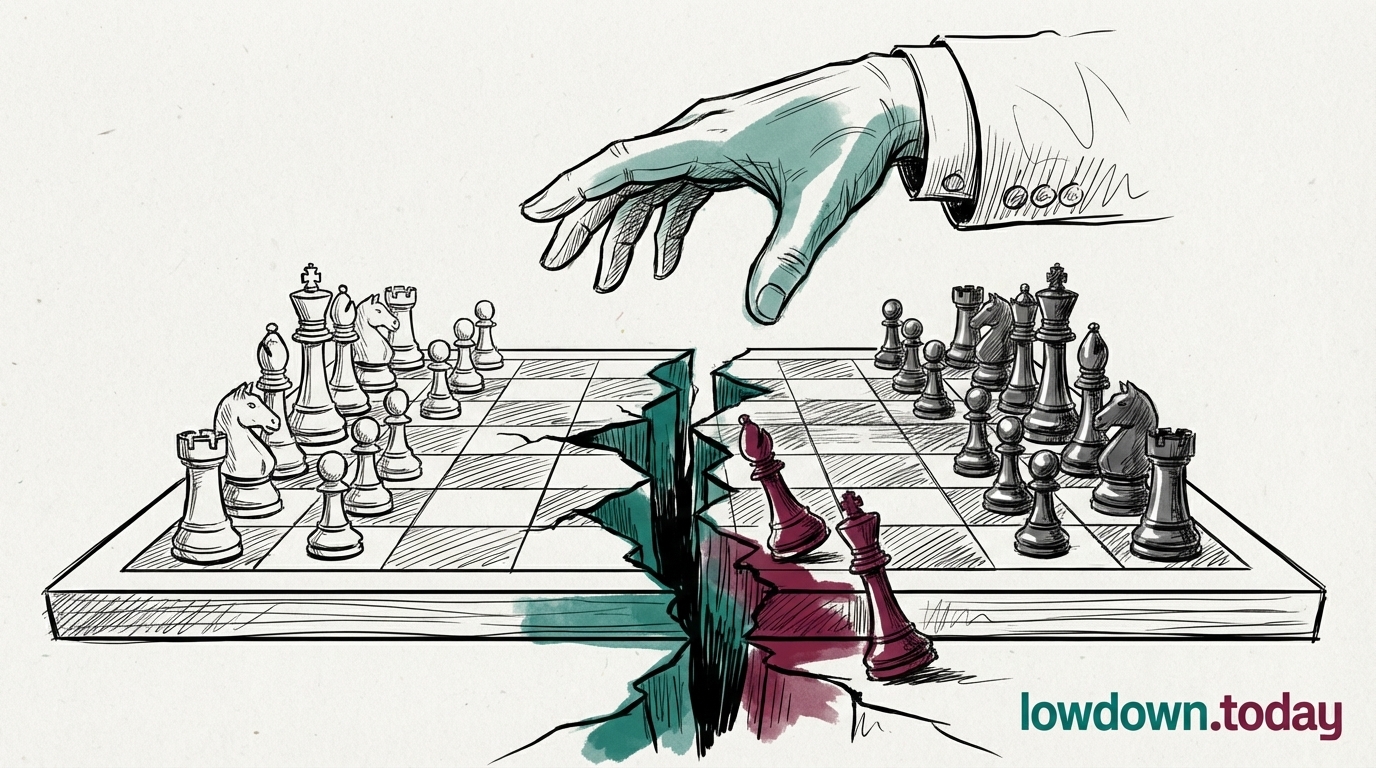
Russia's Ministry of Defence stripped tanks, Iskander launchers and Yars carriers from the 9 May Victory Day parade, the first foot-only column on Tverskaya Street in roughly twenty years.

ConflictDeveloping
Key takeaway

Russia is hiding its hardware on its biggest day because Ukraine can now hit it in central Moscow.

On 29 April Russia's Ministry of Defence announced that the 9 May Victory Day parade on Red Square would feature troops marching on foot but no tanks, missile launchers, or armoured vehicles. Iskander short-range ballistic launchers and Yars intercontinental carriers, both standard fixtures, will not roll down Tverskaya Street. It is the first hardware-free Red Square parade in roughly twenty years.

Victory Day, marking the Soviet defeat of Nazi Germany in 1945, is the central choreographed event of the Russian state calendar. The hardware column has been the parade's visual signature since the Soviet era and was reinstated under Vladimir Putin in 2008. Russian milbloggers and Western analysts attributed the change directly to Ukraine drone forces and the deep-strike reach now extending into Moscow oblast. An Atlantic Council analyst described the parade format as one that 'once projected power; now it reveals Russia's weakness'. Ukraine's deep-strike doctrine is detailed elsewhere in this briefing alongside the 2-3 May drone-exchange reversal.

The Federal Security Service (FSB) cannot guarantee static air defence over the parade route while a hardware column moves at three kilometres per hour. A drone striking an empty truck cab is a security incident; a drone striking an Iskander launcher in front of the Kremlin wall is a state-television problem the Kremlin cannot edit out.

The parade decision sits inside the same week Putin requested a parade-day truce from Trump, the third commemorative-truce gesture of 2026 after the Easter decree and its violation-heavy expiry and the 324-drone post-Easter barrage . The hardware-strip is the first physical, datable concession that Ukraine's deep-strike campaign has reshaped Russian domestic ceremony.


Deep Analysis

In plain English

Russia holds a huge military parade every year on 9 May to celebrate the Soviet Union's victory over Nazi Germany in World War Two. For the past twenty years, that parade has featured tanks, missile launchers, and other heavy weapons rolling through Red Square in Moscow. This year Russia announced none of that hardware will appear, only soldiers marching on foot. The reason, according to Western defence analysts and Russia's own military bloggers, is that Ukraine now has drones capable of reaching Moscow. Russia's air defences cannot reliably protect a column of expensive tanks and missile systems rolling through the city centre, so the army chose not to risk them. It is the first concrete change to Russian domestic behaviour that can be directly attributed to Ukraine's long-range strike campaign.

Deep Analysis
Root Causes

Ukraine's long-range FPV and loitering munition programme crossed a threshold in early 2026 that changed the operational calculus for central Moscow. The MoD's security perimeter for the Red Square route runs roughly 80 km from the city centre; Shahed-class Ukrainian drones with the 2025 guidance upgrade have a confirmed strike range that covers that radius from launch points inside Ukrainian-controlled territory.

The second structural cause is the depletion of Russian short-range air-defence assets at the parade perimeter. Pantsir and Tor systems that would normally form the parade's inner-ring defence layer have been redistributed to the front and to oil infrastructure protection since late 2024. The Ministry of Defence cannot credibly guarantee hardware safety over a Red Square column without pulling systems back from operationally critical positions, and it chose not to.

Russian milbloggers have been publicly attributing the hardware decision to Ukraine's reach since mid-April, meaning any attempt to move tanks to the capital now would be read domestically as a response to Ukrainian pressure rather than as a confidence display. The MoD's information environment has no clean path back to the equipment-column format while that attribution is live in the Russian-language blogosphere.

What could happen next?
  • Consequence

    The parade decision hands Ukraine's communications teams a datable, first-party-confirmed data point for the argument that deep-strike reach is changing Russian domestic behaviour beyond the battlefield.

    Immediate · 0.88
  • Risk

    If the Victory Day ceasefire holds and is seen as enabling a safe parade, the Kremlin may claim retroactively that the hardware decision was strategic rather than security-driven, muddying the evidentiary record.

    Short term · 0.72
  • Precedent

    The 2026 hardware-free parade sets a baseline: future parades stripped of equipment will be read as evidence of ongoing strike vulnerability rather than tradition, regardless of official framing.

    Medium term · 0.85
First Reported In

Update #15 · Hardware-free parade; crude waiver lives on

Kyiv Independent· 3 May 2026
Read original
Causes and effects
This Event
Russia strips Victory Day of hardware
First time in two decades a Russian leadership has visibly conceded a Victory Day staging ground to an active adversary's reach.
Different Perspectives
Markets
Markets
Brent crude rose 2.2 per cent to $96.34 on 10 June, reversing a 7 per cent weekly decline built on deal optimism, as the overnight exchange repriced the Strait of Hormuz risk premium in a single session. The move reflects transit-risk repricing rather than supply shock: Iran's exports had already collapsed to below 300,000 barrels per day.
Pakistan
Pakistan
Pakistan's Naqvi channel, the only mediation track carrying both civilian and military buy-in, was stress-tested by live ordnance within 48 hours of the 6-7 June Tehran visit. Whether Washington informed Islamabad of the imminent strike plan while Naqvi was in Tehran remains undisclosed, putting the channel's neutrality under scrutiny.
Kuwait
Kuwait
Kuwait hosted the third Iranian strike on its soil since the 3 June airport drone attack, with Ali Al Salem airbase targeted in the three-country salvo. Its recent $1.98 billion Anduril Anvil counter-drone purchase signals it is rearming rather than reconsidering its hosting posture.
Bahrain
Bahrain
Bahrain absorbed the IRGC barrage via PAC-3 intercepts with its magazine already at 87 per cent depletion and no resupply before 2027. Sounding air-raid sirens over Manama, it faced the intercept burden with the thinnest defensive stack in the Gulf coalition.
Jordan
Jordan
Jordan reported all five incoming missiles intercepted with no injuries and no damage, a clean defensive performance that strengthens Amman's case for staying in the Western coalition without escalating its own posture. It now sits on Iran's target list for the first time despite not being a party to the Abraham Accords confrontation.
Iran / IRGC
Iran / IRGC
Foreign Minister Araghchi posted on X that US forces should 'leave our region if you want to be safe' and framed the exchange as a US defeat, while the IRGC claimed 21 targets hit and an F-35 hangar destroyed. The claims serve a domestic and Arab-audience framing rather than a verified battle-damage assessment.



