Skip to content
Briefings are running a touch slower this week while we rebuild the foundations.See roadmap
Iran Conflict 2026
9APR

Trump's fifth Hormuz deadline expires tonight

2 min read
11:02UTC

The fifth reformulation of the same Hormuz ultimatum in six weeks is set to lapse at 8pm Eastern, with the most probable outcome a sixth extension framed around the Islamabad track.

ConflictDeveloping
Key takeaway

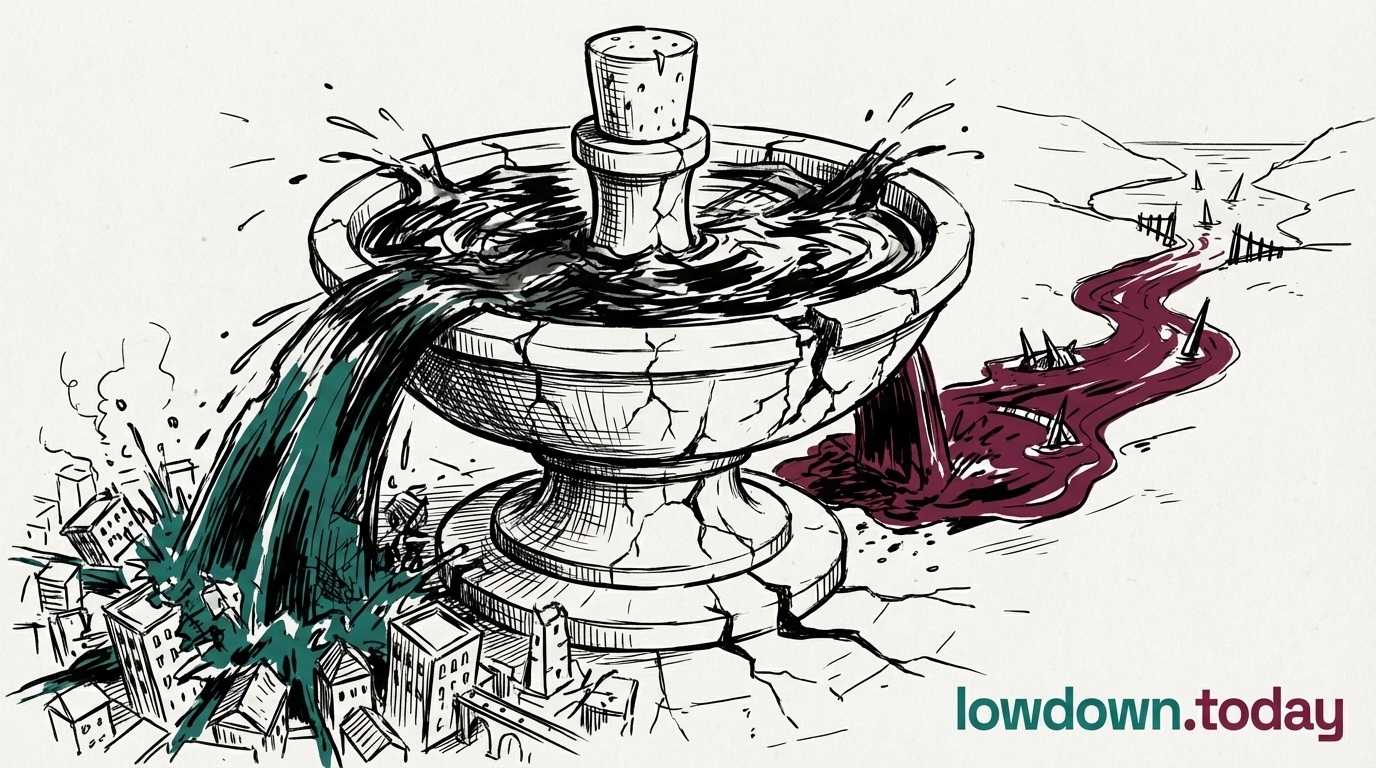
Five extensions in, the deadline mechanism has become the instrument rather than a precursor to action.

Donald Trump's fifth Hormuz ultimatum expires at 8pm ET (0000 UTC Wednesday). It follows the 6 April power-grid deadline and the second replacement that itself ran out , and reformulates the same threat for the fifth time in six weeks .

Each previous expiry produced an extension. The rhetoric escalated each cycle while the operational ceiling stayed flat: no civilian-infrastructure threshold ever crossed, no new target category announced, no military fact on the ground that the prior subsequents had not already established. The most probable outcome tonight, on the pattern, is a sixth extension framed around whatever the Islamabad track allows.

Tehran is now planning around the assumption that the deadline itself is the instrument, not a precursor to action. The risk is not that one of these expiries is theatre, it is that the day Trump genuinely intends to follow through, no actor in the system will read the signal differently from the four that preceded it.

Deep Analysis

In plain English

Trump has now issued five versions of the same ultimatum over six weeks: open Hormuz or face consequences. Each previous deadline has produced an extension rather than action , the 6 April power-grid deadline, the second replacement, and three further reformulations. Tonight's version expires at 8pm Eastern time. The most likely outcome, on pattern, is a sixth extension framed around whatever the Pakistan diplomatic track allows. The practical effect of five extensions is that Iran now plans on the assumption the deadline itself is the tool, not a warning of what follows. The danger is not that each expiry is theatre , it may well be , but that the day it is not, no one reads it differently.

Deep Analysis
Root Causes

The five-extension pattern reflects a structural mismatch between Trump's political need to signal toughness on Hormuz domestically and the operational reality that the US has not found a military solution within the constraints it has set for itself , no civilian infrastructure thresholds crossed, no new target categories announced, carriers moved out rather than in.

Each extension preserves the option while deferring the cost; the cumulative cost is the credibility of the next deadline.

Escalation

The fifth deadline expiry does not itself raise escalation risk; the pattern has lowered it by training both sides to treat expiry as routine. The risk is asymmetric: on the day the US genuinely intends to follow through, the signal will be indistinguishable from the four that preceded it, creating a window for catastrophic Iranian miscalculation.

What could happen next?
  • Risk

    Five consecutive extensions have habituated Iran to treating US deadlines as negotiating variables; if Trump does eventually order enforcement action, the prior pattern means the signal will not be read as materially different, raising the risk of a genuine miscalculation.

  • Precedent

    The five-extension cycle establishes that this administration will not cross civilian-infrastructure thresholds under deadline pressure alone, narrowing Iran's incentive to offer substantive concessions before a threshold is actually crossed.

First Reported In

Update #61 · Carriers retreat; Iran codifies Hormuz

Lebanon Health Ministry· 7 Apr 2026
Read original
Different Perspectives
Civilians and prisoners inside Iran
Mojtaba Kian was hanged in under 50 days from arrest, the fastest wartime espionage case in Hengaw's record, as Trump announced a peace deal. Amnesty places Iran's 2026 execution count above 200 at its fastest pace in 44 years; the diplomatic track has not altered the internal enforcement tempo.
China
China
Beijing accepted a Pakistani civilian briefing mission on the same day OFAC's GL V expired, keeping itself inside the deal architecture without being a named signatory. How Chinese banks respond to Monday's Hengli dollar-clearing decision is the first real-world test of whether the verbal MOU carries any institutional weight.
Pakistan
Pakistan
Islamabad split its highest-level delegation: army chief Munir to Tehran on the security track, Prime Minister Sharif and Foreign Minister Dar to Beijing before Monday's GL V-driven bank compliance decision. The architecture routes the deal's hardest problem, IRGC buy-in, through the general-officer channel that has extracted every wartime concession.
Israeli government
Israeli government
An unnamed Israeli official told the Times of Israel that Trump privately told Netanyahu the deal will dismantle Iran's nuclear programme and remove all its uranium, terms incompatible with what Tehran and a Reuters source describe. If Netanyahu believes he was promised full dismantlement and the deal delivers less, Israel holds a sabotage veto before any signature.
Iranian Foreign Ministry
Spokesman Esmail Baghaei told state agency IRNA that nuclear issues are 'not in the current negotiations text' and the sequencing is: end the war first, then negotiate nuclear over two months. Baghaei's formulation preserves Khamenei's 21 May uranium-stay directive while letting the civilian diplomacy track continue.
Donald Trump / White House
Trump declared the Iran deal 'largely negotiated' on 23 May via Truth Social and signed nothing; the White House's only paper was a Memorial Day proclamation. The verbal-track method converts maximum political signalling into minimum legal exposure: no congressional notification, no Senate treaty ratification, no instrument for Iran to formally reject.