Skip to content
Briefings are running a touch slower this week while we rebuild the foundations.See roadmap
Iran Conflict 2026
9APR

Oil swings $30 in a single session

2 min read
11:02UTC

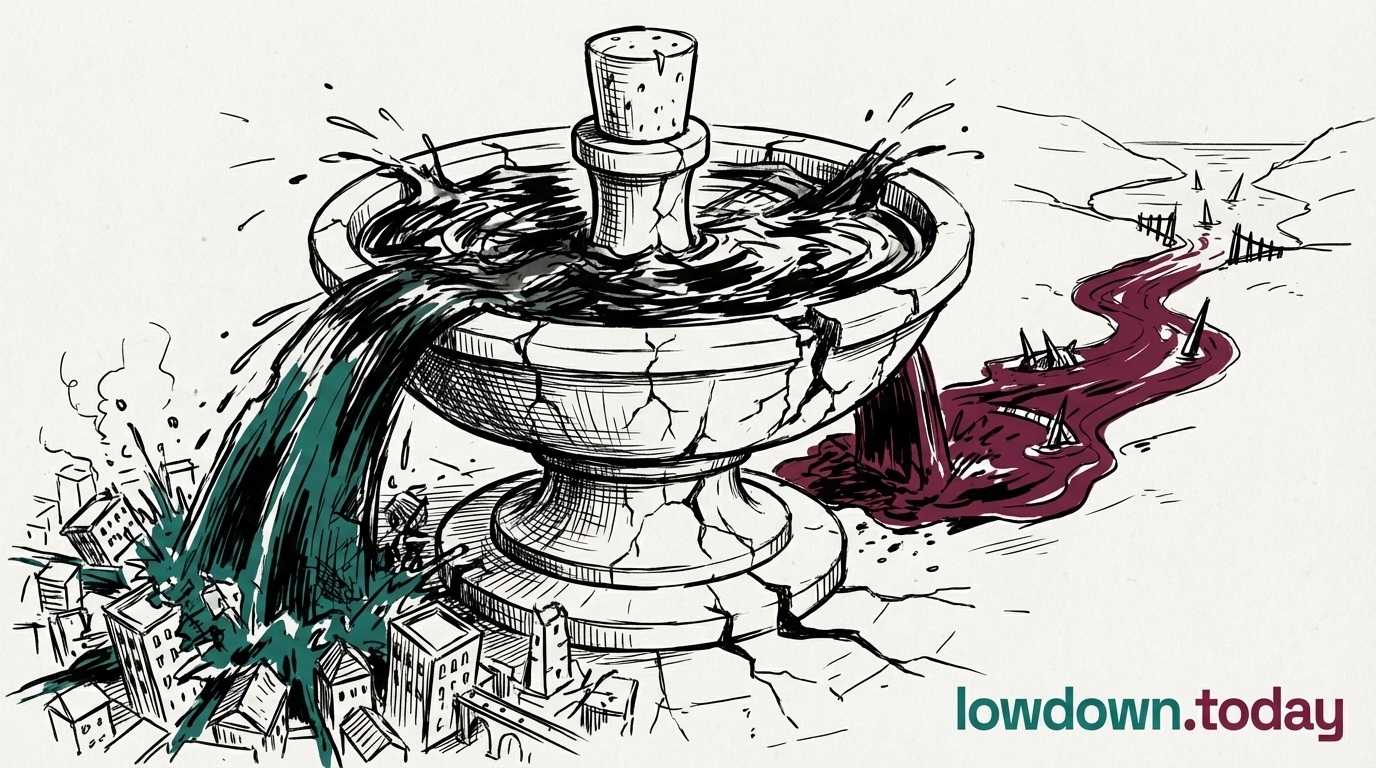
Brent hit $119.50 — the highest since 2012 — then crashed below $90 on a single presidential comment. The most volatile crude session in decades reveals a market trading on words, not barrels.

ConflictDeveloping

Brent Crude hit $119.50 per barrel on Monday morning — the highest since 2022 and a 77% rise from $67.41 on 27 February, the day the war began. WTI reached $119.48. By the US close, Brent had settled at $98.96, sinking below $90 in after-hours trading. WTI settled at $94.77. The $30 intraday reversal was driven by Trump's 'very soon' language on ending the war and profit-taking on overcrowded long positions.

The $30 swing dwarfs normal oil market volatility. Brent's average daily range through 2025 was approximately $2. Even during the 2020 pandemic price collapse, intraday moves rarely exceeded $10. Last Friday, US crude futures posted a 35.63% weekly gain — the largest since the contract began trading in 1983 . Qatar's energy minister warned of $150 per barrel if Hormuz remains closed . The market touched $119 and flinched — but the flinch was triggered by a presidential remark, not by any change in the physical supply picture. Brent had been at $116.08 just three days ago , itself a 72% rise in under two weeks. The 1990 Iraqi invasion of Kuwait doubled oil prices over two months; this war achieved the same effect in ten days and then gave back a third of it in an afternoon.

The underlying supply disruption has not changed. Tanker traffic through Hormuz remains down approximately 70%. Kuwait's force majeure removed 300,000 barrels per day from export markets. Combined with Iraq's curtailments of approximately 1.5 million barrels per day, roughly 3.5 million barrels per day of Gulf production capacity is shut in or unable to reach market. No tanker insurance has been restored. No diplomatic off-ramp for Hormuz has materialised. The fundamental imbalance — supply removed, demand unchanged — is identical to what it was at $119 in the morning. What moved was sentiment, and sentiment moved on words.

The question for Tuesday's Asian open is whether $90 or $100 becomes the new floor. If $90 holds, the oil shock remains a market event — painful but absorbable for import-dependent economies, even those already strained (South Korea's KOSPI triggered two circuit breakers in four sessions, . If $100 holds, it crosses into macroeconomic damage: compressed industrial margins, inflationary pressure on food and transport costs across Asia and Europe, and political pressure on governments to release strategic petroleum reserves or seek bilateral supply deals outside The Gulf. The market is not pricing oil. It is pricing the probability that one man's 'very soon' means what it says.

First Reported In

Update #31 · Iran moves to heavy warheads; China deploys

Euronews· 10 Mar 2026
Read original
Different Perspectives
Civilians and prisoners inside Iran
Mojtaba Kian was hanged in under 50 days from arrest, the fastest wartime espionage case in Hengaw's record, as Trump announced a peace deal. Amnesty places Iran's 2026 execution count above 200 at its fastest pace in 44 years; the diplomatic track has not altered the internal enforcement tempo.
China
China
Beijing accepted a Pakistani civilian briefing mission on the same day OFAC's GL V expired, keeping itself inside the deal architecture without being a named signatory. How Chinese banks respond to Monday's Hengli dollar-clearing decision is the first real-world test of whether the verbal MOU carries any institutional weight.
Pakistan
Pakistan
Islamabad split its highest-level delegation: army chief Munir to Tehran on the security track, Prime Minister Sharif and Foreign Minister Dar to Beijing before Monday's GL V-driven bank compliance decision. The architecture routes the deal's hardest problem, IRGC buy-in, through the general-officer channel that has extracted every wartime concession.
Israeli government
Israeli government
An unnamed Israeli official told the Times of Israel that Trump privately told Netanyahu the deal will dismantle Iran's nuclear programme and remove all its uranium, terms incompatible with what Tehran and a Reuters source describe. If Netanyahu believes he was promised full dismantlement and the deal delivers less, Israel holds a sabotage veto before any signature.
Iranian Foreign Ministry
Spokesman Esmail Baghaei told state agency IRNA that nuclear issues are 'not in the current negotiations text' and the sequencing is: end the war first, then negotiate nuclear over two months. Baghaei's formulation preserves Khamenei's 21 May uranium-stay directive while letting the civilian diplomacy track continue.
Donald Trump / White House
Trump declared the Iran deal 'largely negotiated' on 23 May via Truth Social and signed nothing; the White House's only paper was a Memorial Day proclamation. The verbal-track method converts maximum political signalling into minimum legal exposure: no congressional notification, no Senate treaty ratification, no instrument for Iran to formally reject.