Skip to content
Briefings are running a touch slower this week while we rebuild the foundations.See roadmap
Iran Conflict 2026
28MAR

Third ship hit near Hormuz in 72 hours

2 min read
17:06UTC

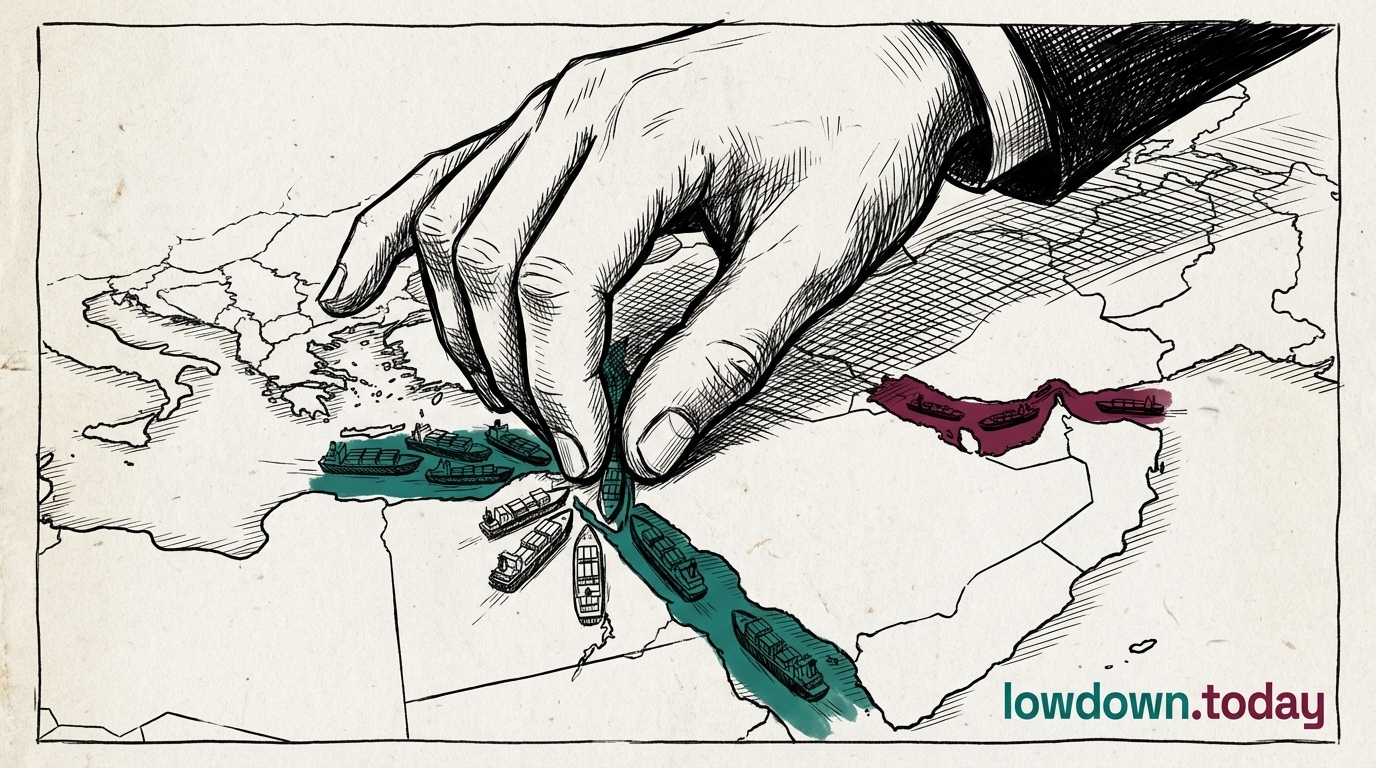
The Sea La Donna is the third commercial vessel attacked near the Strait of Hormuz in 72 hours. The strike rate already exceeds the average tempo of the four-year Tanker War of the 1980s.

ConflictDeveloping

The Sea La Donna was attacked near the strait of Hormuz, the third commercial vessel struck in the waterway's approaches in 72 hours. Details of the weapon, damage extent, and crew casualties remain unconfirmed.

The information vacuum around the attack is itself a product of the combat environment now surrounding the strait. When tankers were attacked in The Gulf of Oman in June 2019 — the Kokuka Courageous and Front Altair incidents — satellite imagery, crew interviews, and US military footage were available within hours. Here, Iran's internet blackout has reduced connectivity to 1% of normal levels , severing communications from its southern coast, and military operations have restricted civilian maritime monitoring.

Three vessels struck in 72 hours — one per day — already exceeds the overall rate of the 1984–88 Tanker War, when Iran and Iraq between them hit 546 ships across four years, averaging roughly one every 2.7 days. That conflict escalated gradually over months before sustained attacks on commercial shipping began. This one reached a comparable tempo in its opening weekend. For war-risk underwriters at Lloyd's of London, who designate listed conflict areas, the distinction between a one-off provocation and a sustained campaign is the difference between elevated premiums and withdrawal of cover entirely. Three attacks in three days leaves little room for the former reading.

Deep Analysis

What could happen next?
  • Consequence

    Three tanker attacks in 72 hours will trigger immediate upward revisions to war-risk premiums across all Gulf shipping lanes, regardless of the Sea La Donna's specific damage assessment.

    Immediate · Assessed
  • Risk

    If the Sea La Donna was carrying hazardous cargo and suffered significant structural damage, it could create a navigation hazard or environmental incident in waters already under active military pressure.

    Immediate · Suggested
  • Meaning

    Three attacks in 72 hours constitutes a campaign pattern, shifting diplomatic pressure onto flag states whose vessels are being targeted to either seek naval protection or press for a ceasefire.

    Short term · Assessed
First Reported In

Update #7 · Hezbollah enters; tankers burn in Hormuz

gCaptain· 2 Mar 2026
Read original
Causes and effects
This Event
Third ship hit near Hormuz in 72 hours
Three tanker attacks in 72 hours establishes a strike rate exceeding the average tempo of the 1984–88 Tanker War — the last sustained military campaign against commercial shipping in these waters — and confirms the strait has transitioned from a threatened chokepoint to an active combat zone.
Different Perspectives
Oil markets / Lloyd's underwriters
Futures markets priced CENTCOM's strikes-complete statement as a de-escalation signal and pushed Brent down 1.7 per cent to $94.71, even as the IRGC declared Hormuz closed. Lloyd's war-risk premiums held elevated because institutional de-listing requires a UN Security Council resolution that Russia and China have just shown they will block.
Pakistan (mediator)
Pakistan (mediator)
Interior minister Mohsin Naqvi carried dual civilian and military letters to Mojtaba Khamenei in Tehran on 6-7 June with no public response. The IRGC's Hormuz closure on 11 June shows the corps is acting independently of the channel Pakistan is using, making the mediation structurally unable to produce a binding commitment without direct IRGC access.
Russia and China
Russia and China
Russia and China voted against GOV/2026/40 at the IAEA Board, following through on the blocking position coordinated with Grossi in Geneva on 5 June; both states continue to oppose Western institutional pressure on Iran at every multilateral venue.
E3 and IAEA (UK, France, Germany)
The E3 co-sponsored IAEA resolution GOV/2026/40, adopted 21-3-10 on 10 June, demanding Iran disclose 440.9 kg of unaccounted HEU and admit inspectors to four denied facilities. The 10 abstentions and Russia-China noes leave any Security Council referral without a viable enforcement path.
IRGC / Iran military command
The corps declared Hormuz closed to all traffic on 11 June and claimed two vessels struck, overriding the MoU its own civilian negotiators were pursuing through Pakistan. The closure order used the Persian Gulf Strait Authority apparatus to convert a toll mechanism into a military prohibition.
Trump administration / CENTCOM
CENTCOM completed a second day of strikes on Tehran, Sirik and Minab, rejected the IRGC Hormuz closure as inconsistent with observed transit, and said strikes were complete. Hegseth framed the bombing explicitly as the negotiation: the method is coercive deal-making with no stated pause threshold.