Skip to content
Briefings are running a touch slower this week while we rebuild the foundations.See roadmap
Iran Conflict 2026
5MAR

Dutch TTF retreats to €48 on ceasefire

3 min read
04:57UTC

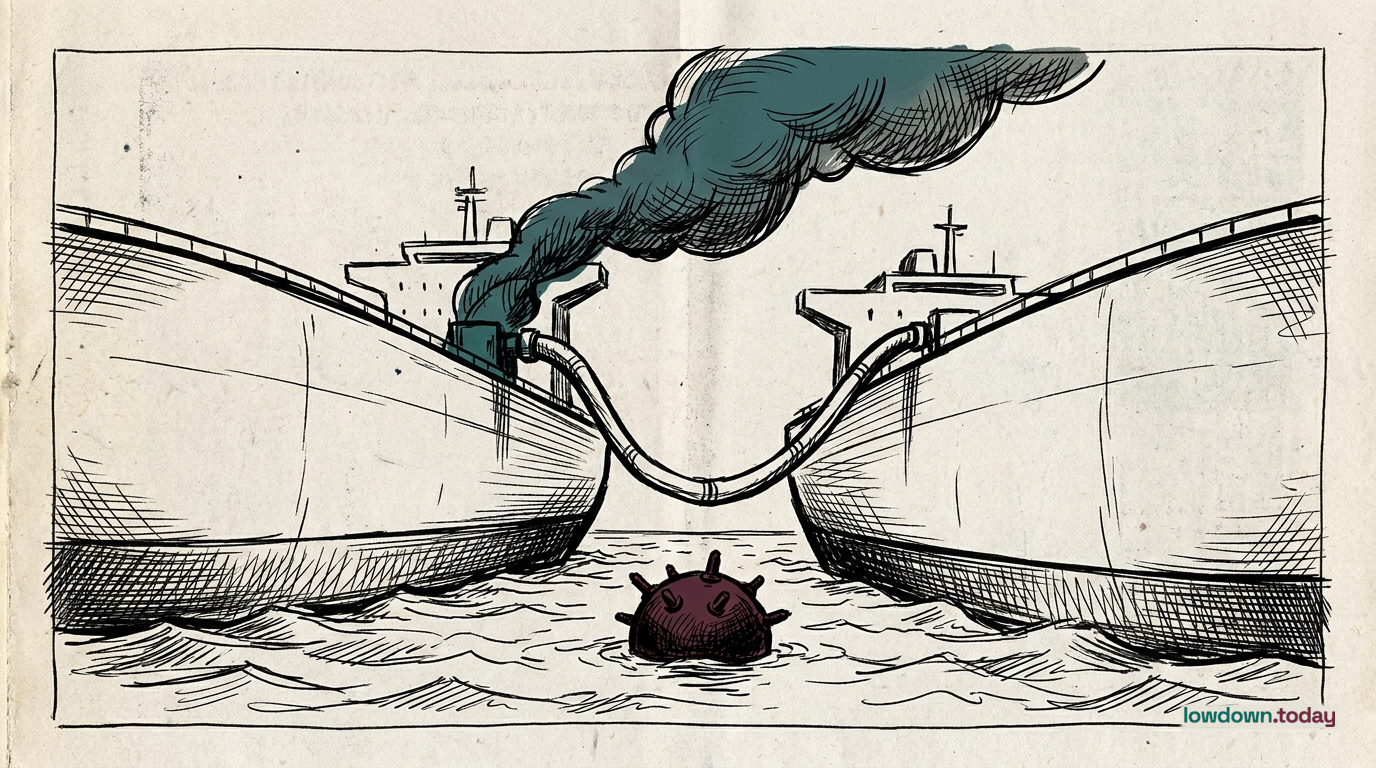
Dutch TTF gas contracts fell to €48/MWh from peaks above €60, but remain 50% above pre-conflict levels — a market trading on ceasefire expectations while every physical supply indicator points the other direction.

ConflictDeveloping
Key takeaway

The TTF retreat is a pure sentiment trade on expected de-escalation with no supply change behind it, and Qatar's simultaneous role as joint-statement signatory and Europe's largest LNG supplier represents an unpriced tail risk that could invalidate it rapidly.

Dutch TTF natural gas contracts pulled back overnight to approximately €48 per megawatt-hour, retreating from peaks above €60/MWh reached earlier in the week . The decline reflects trader positioning around an expected de-escalation. It does not reflect any change in physical gas supply.

The supply picture has worsened, not improved, since the peak. QatarEnergy ceased all LNG production at Ras Laffan and Mesaieed following Iranian drone strikes on Monday . Ras Laffan is the world's largest LNG export facility; Qatar produces 20% of global Liquefied Natural Gas. That production remains offline. the strait of Hormuz is now commercially sealed after the P&I insurance deadline passed overnight . EU gas storage stands at 30%, below the previous year's level at the same point . Bloomberg assessed that Europe can absorb current price levels if the conflict ends within one month; beyond that, the continent faces a genuine supply crisis heading into next winter's restocking season.

The €48/MWh price sits in a specific place: well below the panic peak, but roughly 50% above the low-€30s/MWh where TTF contracts traded before the conflict began. The 2022 Russian gas cutoff drove TTF to €340/MWh — but that disrupted pipeline supply over months, giving markets time to adjust. This conflict has disrupted LNG — the replacement fuel Europe spent four years and tens of billions of euros securing after the Russian cutoff — in under a week. Asian LNG spot prices rose 39% on the Qatar strikes alone . South Korea's KOSPI fell 12% in its worst single session on record; Japan's Nikkei dropped 3.9% . The speed of this supply disruption is faster than 2022. Goldman Sachs's Q2 oil forecast and this gas price retreat both carry the same embedded assumption: that the war ends before its economic consequences become structural. No physical supply indicator currently supports that bet.

Deep Analysis

In plain English

Europe gets gas through pipelines from Norway and (now minimally) Russia, plus liquefied natural gas (LNG) carried on ships mainly from Qatar and the US. The Hormuz closure physically prevents Gulf LNG tankers from departing. The overnight price drop does not mean more gas has arrived — it means traders are betting the war will wind down soon and shipments will resume. Qatar, which supplies roughly 15–20% of European gas, has just co-signed a statement threatening military action against Iran while simultaneously hosting a US air base that Iran struck overnight. That combination is not reflected in a falling price.

Deep Analysis
Synthesis

The divergence between crude (Goldman below spot, backwardated curve) and gas (still €15–18 above pre-conflict, sentiment-driven retreat) reveals that oil and gas markets are pricing different resolution timelines. Oil's global arbitrage mechanisms and OPEC+ spare capacity allow it to anticipate resolution quickly; gas is a regional, less-fungible commodity without equivalent spare capacity, retaining a higher residual risk premium. This asymmetry means energy-intensive European industries face a worse-than-headline energy cost outlook than crude price movements suggest — and that any deterioration in the Qatar situation hits gas disproportionately harder than oil.

Escalation

Qatar co-signing the eight-nation joint statement reserving 'the option of responding' while Al Udeid — on Qatari soil — was struck overnight creates a specific scenario where Qatar could redirect or halt LNG exports to manage domestic political risk or in response to further Iranian targeting. This would directly invalidate the de-escalation narrative driving the TTF retreat; the market does not appear to be pricing this Qatar-specific channel of disruption.

What could happen next?
1 risk2 consequence1 meaning1 precedent
  • Risk

    If Qatari LNG exports are disrupted — politically or militarily — the TTF retreat reverses violently, as Qatar supplies 15–20% of European gas with no immediate large-scale substitute available.

    Short term · Assessed
  • Consequence

    Failure to refill European gas storage to 80%+ by October 2026 — possible if Gulf LNG disruption extends through the summer refill season — will propagate elevated energy costs into winter 2026–27 regardless of when the conflict ends.

    Medium term · Assessed
  • Consequence

    European fertiliser and chemical production curtailments at current price levels will tighten global agricultural input supply chains over a 6–12 month lag, transmitting the energy shock into food prices across importing nations.

    Medium term · Suggested
  • Meaning

    The sentiment-driven nature of the price retreat — with no underlying physical supply change — means TTF is unusually sensitive to a single piece of diplomatic news, creating outsized volatility risk in either direction from current levels.

    Immediate · Assessed
  • Precedent

    Europe's 2022–2024 LNG infrastructure buildout has demonstrated that rapid diversification can partially insulate the continent from a single supplier's disruption, but the Hormuz closure tests a different chokepoint that affects multiple Gulf suppliers simultaneously — a scenario the 2022 buildout was not designed to address.

    Long term · Suggested
First Reported In

Update #20 · Hormuz sealed; Senate war powers bill fails

Euronews· 5 Mar 2026
Read original
Different Perspectives
Gulf shipping and insurance markets
With Hormuz and Bab el-Mandeb both hostile at once, war-risk underwriters face their first dual-chokepoint pricing problem; the rerouting hedge that absorbed one closure is gone for Israeli-linked hulls. Any deal that reopens Hormuz without a Houthi stand-down clause delivers only partial shipping relief.
Russia and China
Russia and China
Russia and China met IAEA chief Grossi jointly in Geneva on 5 June to coordinate an advance blocking position against Washington's censure resolution, the first documented instance of proactive pre-session obstruction rather than reactive post-vote dissent. Beijing's move came four days after OFAC designated Shanghai Qianye Energy under Iran energy sanctions.
Saudi Arabia
Saudi Arabia
Saudi Arabia was left out of the emergency $4.01 billion Patriot waiver Qatar received on 2 May as its own PAC-3 stocks ran near-empty from intercepting Iranian salvoes over Aramco facilities. Riyadh is on a standard 18-month FMS queue behind a production line booked through 2030, with no equivalent priority to Qatar's Al Udeid basing role.
Houthis (Ansar Allah)
The Houthis declared a complete ban on Israeli Red Sea navigation on 8 June and struck Jaffa, their first attack on Israeli territory since April, seven days after the Tasnim authorisation to activate other fronts including Bab el-Mandeb. The declaration put both chokepoints under hostile authority simultaneously.
Iran
Iran
Iran agreed the 9 June mutual halt after the Mahshahr exchange and coordinated with Russia and China to block Washington's IAEA censure resolution, using the Board as a second front while the bilateral pause held on the military one. Tehran's acceptance of the Lebanon carve-out contradicts the linkage position it stated on 1 June.
Benjamin Netanyahu and the IDF
Israel struck the Karun Petrochemical plant at Mahshahr on 8 June over Trump's explicit objection, then agreed a halt with Iran the following day scoped on Israeli terms with Lebanon carved out. Netanyahu's posture is that the IDF will not accept Iranian missile factories as off-limits regardless of US diplomatic timelines.