Skip to content
Welcome, thoughtbot's Giant Robots listeners!Start here
Iran Conflict 2026
7SEP

Treasury sanctions a Panama law firm

3 min read
14:39UTC

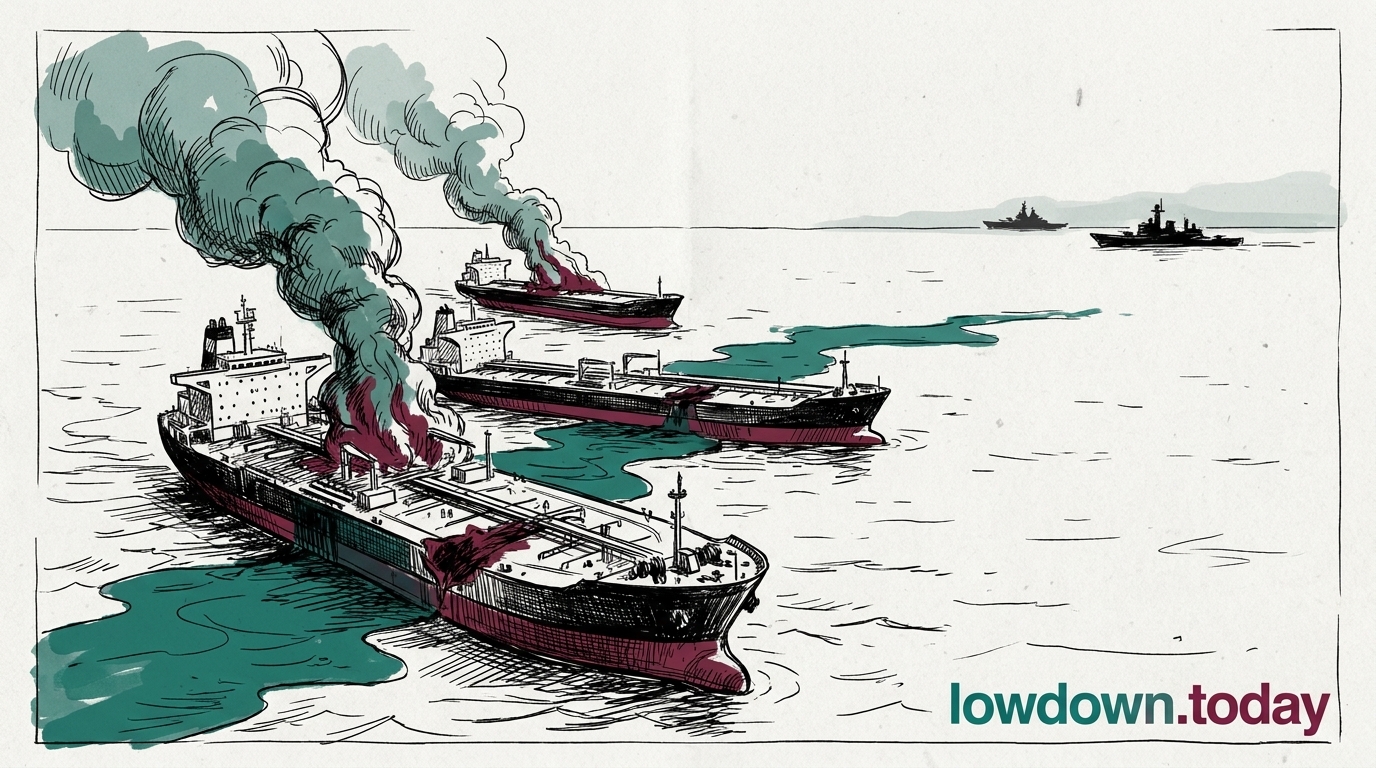
OFAC sanctioned Karnakis and Karnakis, a Panama City law firm it says set up shell owners for shadow-fleet ships, and licensed repairs for just seven vessels.

ConflictAssessed
Key takeaway

OFAC sanctioned a Panama law firm over shadow-fleet shells and licensed repairs for only seven ships.

The US Treasury's Office of Foreign Assets Control (OFAC) on Wednesday 21 October designated (put on the US sanctions list) Karnakis and Karnakis, a law firm in Panama City with an office in Piraeus, under Executive Order 13902⁠1. Treasury says the firm set up shell companies that own shadow-fleet ships (vessels that hide their ownership to carry sanctioned cargo) moving Iranian steel, oil and petrochemicals, and that its staff sat as their nominal directors (directors in name only)⁠2. Its sanctions entry reads "Organization Type: Legal activities".

OFAC's earlier October rounds hit ships and their managers. This one goes a layer down, to the people Treasury says sign the incorporation papers. The same action named five Panamanian individuals and three firms, and blocked nine ships. Roxette Maritime Shipping and Trading manages seven Panama-flagged dry cargo ships; Amigoz Singapore is a port agent; Dubai's Whales Shipping Line has two support vessels flagged in the United Arab Emirates. "Either you are with us or against us," said Treasury Secretary Scott Bessent⁠3.

OFAC also issued General Licence HH, which allows crew-safety measures, emergency repairs, bunkering (refuelling) and salvage until 20 November, but only for the seven Roxette ships and never in an Iranian or Russian port⁠4. No general authority of that kind has existed since General Licence DD lapsed on 23 September with no successor. A ship in distress near Iran that Treasury has not blacklisted still has no such cover, and the two Whales vessels are missing from the licence's annex.

On 19 October Energy Secretary Chris Wright told a Citadel Securities event in New York that the administration will let investors buy sanctioned tankers and refit them to carry other oil. "We are converting dark tankers to legitimate tankers. There is no removing of sanctions," he said, putting the shadow fleet at about 1,600 ships⁠5. Two arms of the same government are now working the fleet from opposite ends: Energy wants hulls bought out and cleaned up, Treasury keeps adding them to the blacklist.

Deep Analysis

In plain English

Some ships carry oil from countries under sanctions, such as Iran, while hiding who really owns them. People call this the shadow fleet. To hide ownership, the ships are owned by shell companies, which are firms that exist only on paper. The US Treasury says a law firm in Panama set up such shell companies and let its staff appear as their directors. The Treasury has now frozen the firm's US assets and barred Americans from dealing with it.

Deep Analysis
Root Causes

Shadow-fleet owners register each ship in its own company, so that a sanctions action against one hull cannot reach the rest. A firm that can create those companies cheaply and supply nominee directors is what lets one owner run dozens of ships while appearing as dozens of owners.

The General Licence HH annex shows a second constraint. Treasury cannot leave crews without repairs or fuel without risking a disaster at sea, so every blocking action now needs a carve-out, and gaps in that carve-out fall on ships left off the list.

What could happen next?
  • Precedent

    Sanctioning an incorporating law firm sets a template that Treasury can apply to other ship registries in Dubai, Hong Kong and the Marshall Islands.

    Medium term · Assessed
  • Risk

    Ships missing from the General Licence HH annex, including the two Whales Shipping Line vessels, may struggle to buy fuel or repairs before 20 November.

    Immediate · Suggested
  • Opportunity

    The Wright plan could create a market in rehabilitated tankers if Treasury issues licences for their sale.

    Medium term · Suggested
First Reported In

Update #182 · Iran says it mined Hormuz and hit 7 ships

US Treasury· 22 Oct 2026
Read original →
Causes and effects
Different Perspectives
Wang Yi
Wang Yi
China's foreign minister and Djibouti's issued a joint communique on 21 October saying the war should not reach the Horn of Africa and stressing free navigation through Bab al-Mandeb. The text names neither Iran nor the Houthis, and Djibouti hosts China's only overseas military base, opposite the Yemeni coast.
Ministry of External Affairs
India's foreign ministry called the attacks on Saudi civilian and energy sites "unacceptable" on 22 October and said they must stop at once. An Indian died at Dammam, Indians were injured there and at Shaybah, and about 4,000 Umrah pilgrims remain stranded by one MP's count.
Iraq
Iraq
Iraq closed the al-Sheeb crossing with Iran to travellers and trucks from 21 October and said other crossings would close gradually. Unlike September's closure, which ended on a staged timetable, this one has none, and Iran's interior ministry said it received no notice.
Abdel Fattah el-Sisi
Egypt's president said on 21 October that Cairo's support would "defend Saudi territory, and does not include an attack on Yemen". Araghchi warned that Egyptian involvement would further complicate the situation, and Cairo's limit matches the one Ankara set on 8 October against attacking another state's soil.
UK Ministry of Defence
The MoD said on 20 October that RAF Typhoons over Saudi Arabia will not strike the Houthis, but extended tanker support to Saudi operations including against Houthi targets in Yemen. The tanker line sets no limit on strikes, so British aircraft may now refuel Saudi jets on bombing runs.
Turkey
Turkey
Ankara sent the Mecca Joint Defence Agreement to parliament around 20 October, and its published text treats an attack on one party as an attack on all. Article 16 brings it into force only on the last ratification, so the 5 October invocation in Riyadh could not yet bind Turkey.

Written with AI from Lowdown's published reporting. Not individually reviewed by an editor. Editorial standards.
