Skip to content
You can now search across every topic, entity and event.What's new
Iran Conflict 2026
3SEP

EU moves to freeze the $44 cap

3 min read
16:40UTC

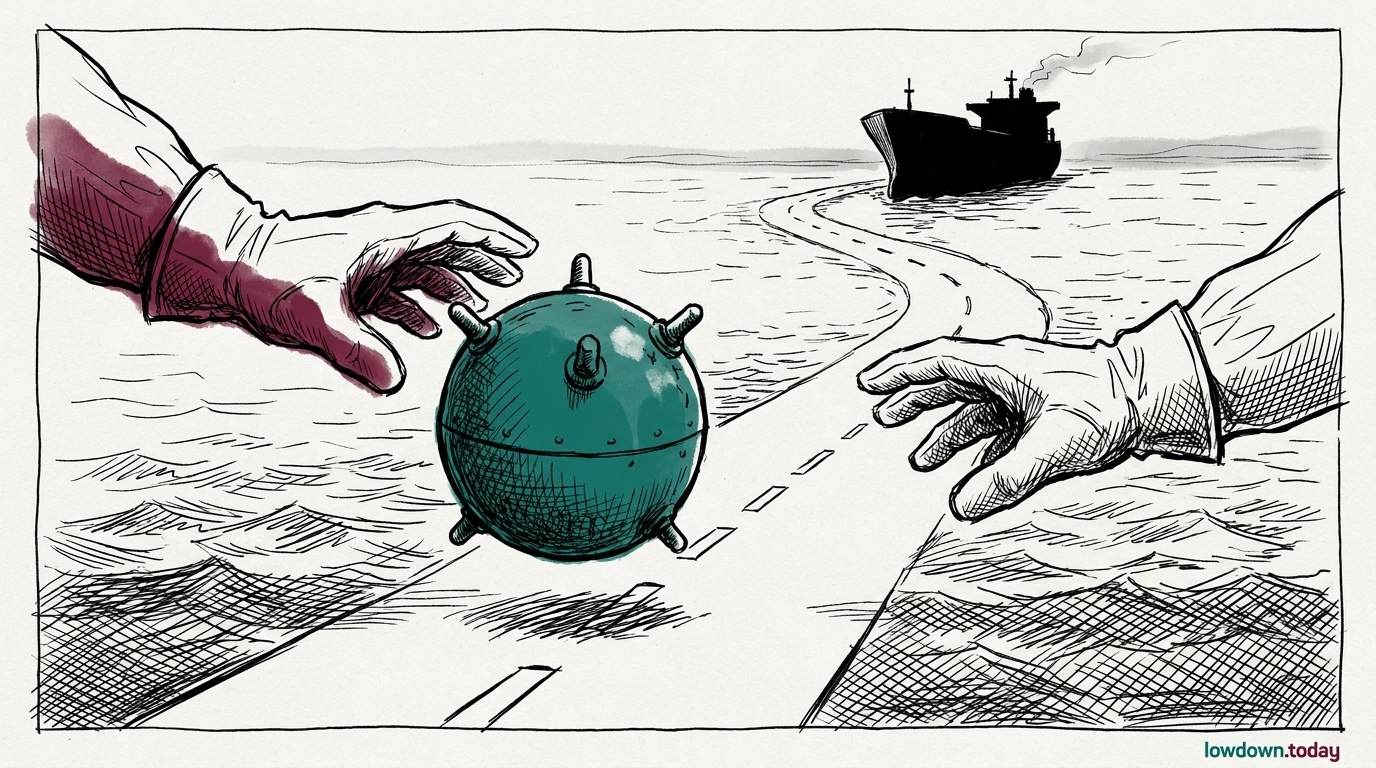
The European Commission moved to freeze the $44.10 Russia oil price cap to January 2027, killing the 15 July formula review that would have auto-lifted the ceiling toward roughly $75.

ConflictDeveloping
Key takeaway

Brussels moved to freeze the Russia oil cap before a July review would have auto-lifted it toward $75.

The European Commission, the EU's executive body, moved to freeze the $44.10 G7 price cap on Russian crude until January 2027, pausing the adjustment mechanism and killing the 15 July formula review that would have auto-lifted the ceiling toward roughly $75 1. The cap is the legal limit on what buyers can pay for Russian seaborne crude and still access Western shipping and insurance. The 15 June mini-package of 34 individuals and 47 entities is adopted; the freeze itself is sourced to Baker McKenzie synthesis, with no adopted Council legal text as of 18 June.

On a falling-Brent formula, the 15 July review would have lifted the $44.10 ceiling toward $75, restoring Russian earnings just as the GL 134C vessel-services lapse cut compliant-terms placement, so the freeze and the review were set to collide. The two clocks pulling opposite ways into Evian were flagged last week . Pausing the mechanism keeps both squeezes live at once rather than letting one undo the other.

Malta and Greece, both major shipowning states, continue to block the full maritime-services ban that would extend coverage to Western shipping services, leaving the 21st package partial. A freeze that adopts before 15 July locks the revenue constraint; a Malta-Greece stall past that date converts the cap into a decorative mechanism as the reference price collapses, with the Urals discount given more room to widen if the cap holds while Brent falls.

Deep Analysis

In plain English

The G7 countries and the EU set a maximum price at which they allow Western companies to provide shipping services to tankers carrying Russian oil: currently $44.10 per barrel. The idea is that if Russian oil can only be sold at that low price using Western services, Russia earns less money to fund the war. Every few months there was supposed to be a review: if the market price was close to the cap, the cap would be raised so it kept biting. The EU has now decided to pause that review until January 2027, keeping the $44.10 cap in place regardless of where oil prices go. This is intended to put maximum financial pressure on Russia. The catch is that Russia has found ways to sell oil at higher prices without using Western shipping services, so whether the cap actually constrains Russian earnings depends on how tightly the shipping services part is enforced, and two EU countries are blocking that.

Deep Analysis
Root Causes

The 15 July formula auto-lift would have restored Russian export revenue at precisely the moment the GL 134C lapse tightened Western vessel services on Russian crude.

The Commission's decision to freeze the cap reflects the G7 Evian alignment: Trump's 'soon we'll be able to' signal on Russia oil sanctions tightening, combined with Hormuz partial normalisation reducing the West's need for Russian crude at any price, created the political window for the Commission to abandon the formula-based adjustment in favour of a flat freeze.

Malta and Greece's blocking of the maritime-services ban reflects a structural economic constraint: Malta operates the world's largest ship registry (~17% of global merchant fleet by gross tonnage), and Greece controls roughly 20% of global merchant tonnage. Both countries' shipping sectors would face direct revenue loss from a ban on providing services to Russian-crude tankers, including vessels nominally flagged to non-EU registries but owned by Piraeus or Valletta-connected operators.

First Reported In

Update #9 · Russia cliff landed while screens sold Iran

Baker McKenzie· 18 Jun 2026
Read original
Different Perspectives
China's foreign ministry
Spokesman Lin Jian rejected Treasury Secretary Scott Bessent's 25 August warning that Iranian oil buyers face an "economic D-Day", saying sanctions do not help and that Beijing would safeguard its own rights and interests. China's Iranian crude imports had already halved for unrelated reasons.
Iraq's government and Erbil authorities
Erbil authorities said 10 explosive-laden drones were shot down over the city on 1-2 September with no casualties. Iraq's government condemned the attacks without naming Iran as their source, and neither Washington nor Baghdad confirmed the IRGC's claim to have hit US bases there.
Bahrain Defence Force
The General Command said air defences intercepted several Iranian missiles and drones on 1-2 September and called the use of such weapons against civilians and private property a flagrant violation of international humanitarian law.
Kuwait's Fire Force and foreign ministry
KUNA reported a hostile Iranian drone struck a residential complex in Kuwait City on 2 September; Fire Force spokesman Brigadier General Mohammad Al-Gharib said losses were confined to property. Kuwait's foreign ministry called the attack a clear breach of its sovereignty.
Jordan's Armed Forces
Petra carried a statement that air defences intercepted eight missiles violating Jordanian airspace early on 31 August and 10 of 13 fired on 1 September. The statement named no target and did not address the IRGC's claim to have struck Camp Titin and killed US personnel.
CENTCOM
CENTCOM
CENTCOM's 1 September target list named IRGC air defence, radar, maritime and mine-laying sites in Iran but no tanker, after Axios reported anonymous officials describing a Trump-approved "tanker for tanker" drone policy. A CENTCOM spokesman declined to confirm the policy and referred questions to policymakers.