Skip to content
You can now search across every topic, entity and event.What's new
Iran Conflict 2026
20AUG

Brent sheds 4.88% on called-off strike

3 min read
16:36UTC

Trump said he had called off a planned strike on Iran, and ICE Brent for October gave back 4.88% to $83.64 in early Monday trade while WTI fell almost 6%.

ConflictDeveloping
Key takeaway

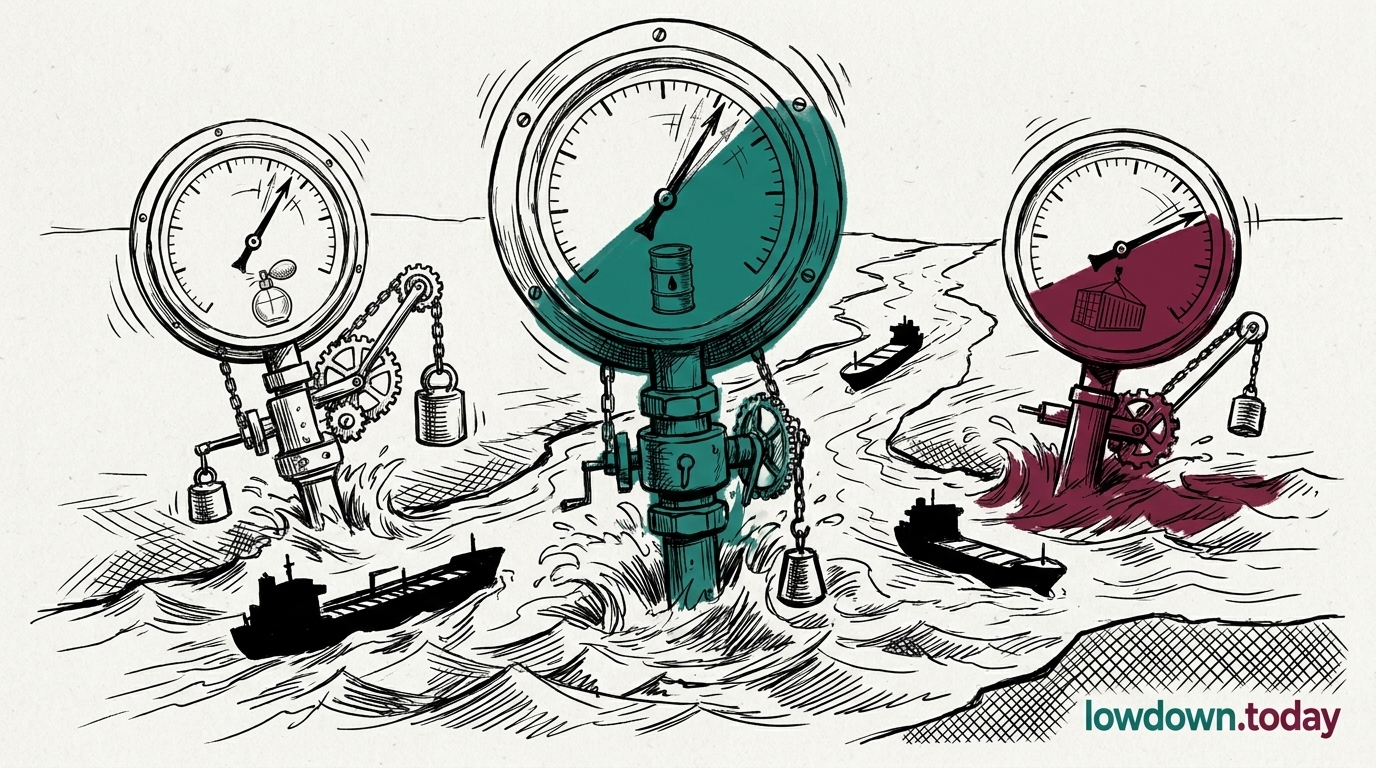
Brent and WTI gave back the war premium on intraday quotes while European diesel cracks held a record.

ICE Brent for October traded at $83.64 a barrel at 03:33 ET on Monday 3 August, down 4.88%, and NYMEX West Texas Intermediate for September traded at $79.57, down almost 6%, after President Trump said he had called off a planned strike on Iran, per CNBC 1. Both are intraday quotes taken hours before the close, not settlements, and the screen will have moved before you read this. Brent is the seaborne North Sea benchmark against which most internationally traded crude is priced. WTI is the US contract delivered inland at Cushing, Oklahoma, which is why the two rarely move by the same amount on the same headline.

Monday's fall repeats a trade this desk logged eight days earlier. Brent surrendered $100 and fell 7.4% intraday on 26 July on the first reports of a US-Iran strike pause , a week after its first close above $100 since May . A second leg down on the same class of headline is a rehash of that session, not a new shock, and the paper spread moved with it: Brent-WTI stood at $5.13 on 15 July , and Monday's quotes imply roughly $4.07, a snapshot rather than a settlement-based spread.

What did not repeat sits on the product side of the barrel. Argus Media assessed the West Mediterranean diesel crack four days earlier at an all-time high, well clear of the previous peak set three weeks earlier, in the same window the flat price gave back its premium 2. A refining or product desk that hedged its landed cost against outright crude is now watching that hedge come off while the cost it was hedging prints a record. The gap between the two prices, rather than the selloff on its own, is what a European trading book has to reprice this morning.

Deep Analysis

In plain English

Oil prices jump when traders fear a war is about to disrupt supply, and fall back down when that fear passes. On 3 August, President Trump said he had called off a planned strike on Iran, so the extra cushion traders had built into the price for that risk got stripped straight back out. Brent, the international benchmark, fell almost 5% in minutes; the US benchmark WTI fell even more. Meanwhile the price of diesel in the Mediterranean was still sitting near a record high, because diesel's problem (not enough of it reaching Europe) is a separate, slower-moving story that a single day's headline does not fix.

Deep Analysis
Root Causes

A called-off strike removes only the most immediate layer of risk premium, the chance of an attack in the next few days; it does nothing to the deeper premium built on standing capability and stated intent, which is why the same headline (a strike called off) can produce a large price move even when nothing about the underlying military balance has changed.

Flat-price markets react fastest to headline risk because futures traders can reposition in seconds, while the physical diesel market behind the still-elevated Mediterranean crack reflects supply commitments made weeks earlier and cannot unwind on the same timescale.

What could happen next?
  • Risk

    If the strike-threat cycle repeats a third time, options desks may start pricing skew that assumes call-offs rather than strikes, blunting the premium's ability to reset at all.

First Reported In

Update #22 · The premium unwinds; the diesel crack does not

CNBC· 3 Aug 2026
Read original
Different Perspectives
UK Maritime Trade Operations
UKMTO logged six armed men boarding a tanker 136 nautical miles east of Al Mukalla on 20 August and redirecting it toward Somalia. A vessel steered toward the Somali coast reads as an attempted seizure, a distinct hazard from the stand-off strikes the same lane has seen before.
Mohammad Bagher Ghalibaf
Iran's Majlis speaker received Iraq's Hormuz carve-out request in Baghdad on 19 August, a request that treats passage as Tehran's to grant. Ghalibaf's authority over that grant sits alongside the Revolutionary Guard's separate transit rules, which have moved independently of Iran's foreign ministry before.
Haibat al-Halbousi
Haibat al-Halbousi
Iraq's parliament speaker asked Iran for special consideration on Iraqi Hormuz oil exports during Ghalibaf's 19 August Baghdad visit. Iraq presses the request from a weak position: Iran's central bank is simultaneously demanding Baghdad release Iranian reserves parked in Iraqi accounts.
Federal Department of Economic Affairs, Education and Research
Switzerland's economics ministry updated the Article 21 forms governing lawful Iran money transfers on 19 August, with only the revised forms accepted from 26 August. Bern operates one of the few remaining legal Iran payment channels and has just set a hard cutover on its control point.
Motegi Toshimitsu
Motegi Toshimitsu
Japan's foreign minister said in Muscat on 20 August that Tokyo wants closer coordination with Oman on safe Hormuz and Bab el-Mandeb passage. Japan has no naval presence of its own in the strait, so it is routing the ask through the state negotiating with Iran instead.
Badr bin Hamad Al Busaidi
Oman's foreign minister joined Japan's in Muscat on 20 August to call for intensified coordination on Hormuz and Bab el-Mandeb navigation. Oman also runs the mediation track with Tehran, so the appeal travels through the same channel as the negotiation.