Skip to content
You can now search across every topic, entity and event.What's new
Iran Conflict 2026
19AUG

CENTCOM adds nine ships as Trump vows

2 min read
18:42UTC

CENTCOM redirected 44 commercial vessels off Iranian ports and disclosed its first boardings on 3 August. The next day Donald Trump promised the strait would reopen soon.

ConflictDeveloping
Key takeaway

CENTCOM added nine redirected vessels and its first two boardings the day before Trump promised a reopening.

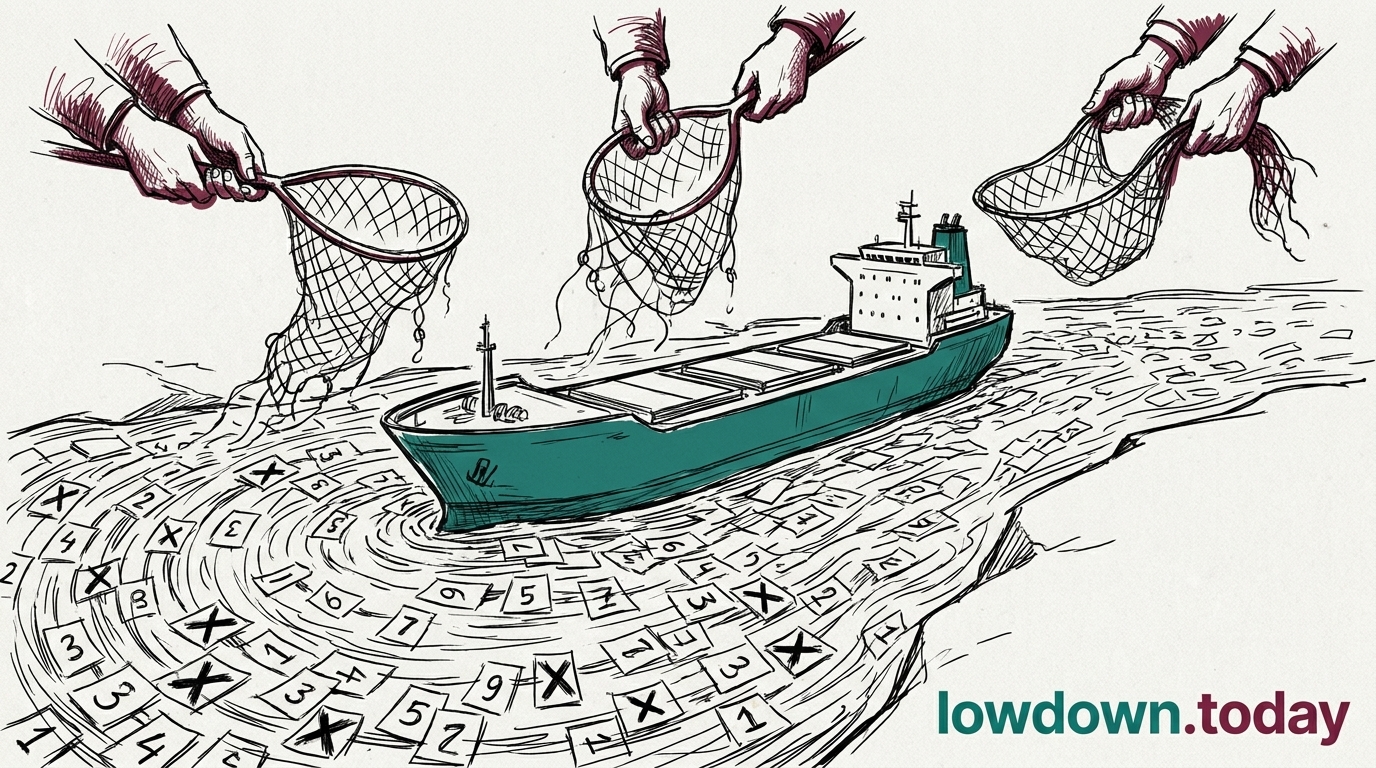
US Central Command (CENTCOM), the American military command covering the Middle East, said at 20:22 BST on Monday 3 August that its naval blockade of Iranian ports had redirected 44 commercial vessels, disabled two and boarded two 1. Its own published figure the previous day was 35 redirected 2. That is a rise of about 26 per cent inside roughly 24 hours, offered without explanation, and the first time the command has attached boarding figures to this operation at all.

The two boardings, disclosed for the first time on 3 August, are the escalation buried in the tally. Redirecting a merchant ship is a warning delivered over the radio; putting an armed team on its deck is enforcement, conducted at close quarters, in Iranian approaches, while two governments negotiate a reopening. A single shot fired on a merchant deck would end the diplomacy running alongside it.

Donald Trump told reporters the following day, Tuesday 4 August, that the strait would reopen "soon", and that Iran would be hit "really hard" if it did not 3. Read the two together and the sequence inverts: the rhetoric softened while the enforcement intensified. This is the same command that announced no new military action against Iran on 24 July as the president weighed a larger operation , then resumed bombing within hours of the IRGC's second strike on Jordan's Azraq base on 30 July .

Tehran draws a hard line between the two closures, and the line matters. CENTCOM's counter-blockade stops oil leaving Iranian ports, and Washington controls it unilaterally. The Hormuz transit collapse is a separate phenomenon with separate causes, and reopening the strait would not by itself lift the blockade Iran most needs lifted in order to sell. Nothing a bank, an insurer or a port authority actually reads has changed since 24 July, a Treasury quiet spell this file first noted on 3 August , which leaves 44 redirected hulls as the most concrete American act of the week.

Deep Analysis

In plain English

The US military's Central Command, which covers the Middle East, said it has now redirected 44 ships away from risky routes near Iran, up from 35 the day before, and for the first time said some of those ships were actually boarded and searched. That announcement came the day before President Trump said the Strait of Hormuz, the oil shipping chokepoint between Iran and the Arabian peninsula, would reopen soon, while warning Iran of serious consequences if it did not.

Deep Analysis
Root Causes

CENTCOM boards vessels under maritime interdiction authorities that stop short of a UN Security Council mandate, relying instead on bilateral flag-state consent and self-defence justifications tied to the ongoing hostilities.

That legal basis caps what CENTCOM can compel: it can redirect and board consenting or unflagged vessels, not compel Iranian-flagged shipping without further escalation, which is why the tally counts redirections rather than seizures.

What could happen next?
  • Consequence

    Public disclosure of boardings raises the bar for what counts as de-escalation: a claimed reopening will now be measured against a published enforcement baseline rather than a private one.

  • Risk

    A visible rise in boardings the day before a reopening pledge creates a gap between rhetoric and enforcement that Tehran can point to if the pledge slips.

First Reported In

Update #166 · Two Hormuz deals, neither one published

US Central Command· 6 Aug 2026
Read original
Different Perspectives
Shipping and insurance market
Twelve P&I clubs cancelled war-risk extensions after reinsurers pulled back on 18 August and rebought cover within three days, Lloyd's List reported, while S&P Global logged one Hormuz crossing on 16 August against Kpler's five for the same day. The market is pricing a route it cannot independently count, against an Iranian insurer that has not stopped operating.
Oman
Oman
Oman co-administers the Strait of Hormuz's insurance and toll regime alongside Iran under the Islamabad MOU, and was separately named as the target of a bombing threat Axios attributed to Trump on 19 August. No Omani government statement on either matter is on the record.
United States
United States
Axios reported on 19 August that Donald Trump posted a map labelling the Strait of Hormuz as US territory and separately threatened to bomb Oman if it obstructed US objectives. Neither claim carries an order or a deployment behind it, so the map reads as posture rather than a tasked military instruction.
France
France
Paris expelled two Iranian embassy agents on 18 August under the one power that requires it to publish no evidence, citing a July incident it now calls a premeditated assault on its own staff. Iran's rival account, of a secret meeting Paris had weeks of warning about, has not been answered by the Quai d'Orsay.
United Arab Emirates
Abu Dhabi halted all trade, commercial exchange and financial transactions with Iran on 18 August, closing the dirham channel Tehran has used to absorb sanctions pressure. Iran's foreign ministry called the missile allegation behind the move baseless on 19 August, but the UAE has not answered that denial with any further statement or reversal.
Iran
Iran
Iran's foreign ministry says it declared two French embassy staff persona non grata on 19 August, a day after France, for conduct it says breached the Vienna Convention. Majlis security committee chair Ebrahim Azizi cast the dispute as one more entry in a French ledger running back to contaminated blood, INSTEX and snapback.