Skip to content
You can now search across every topic, entity and event.What's new
Iran Conflict 2026
14AUG

Hormuz held severe as Guard herds ships

2 min read
09:56UTC

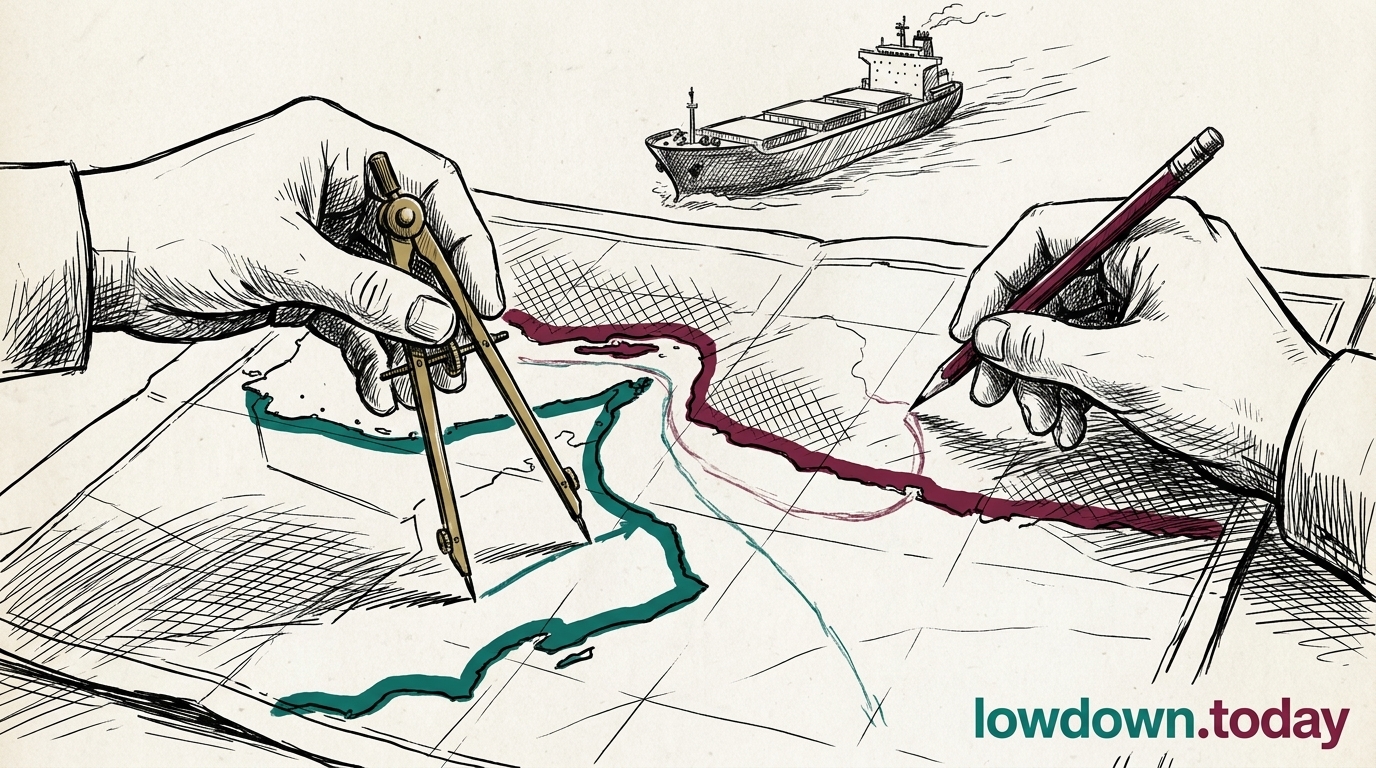
JMIC held the Strait of Hormuz at a severe threat level through 7 July as the IRGC hailed transponder-on vessels and directed them into the Iranian-controlled northern corridor.

ConflictAssessed
Key takeaway

Hormuz stayed at severe threat as the IRGC herded transponder-on ships into the corridor it controls.

The Joint Maritime Information Center (JMIC), run through UK Maritime Trade Operations (UKMTO), held the Strait of Hormuz at a SEVERE threat level through 7 July in its Advisory Note Update 068. 1 JMIC is the body that issues Gulf maritime threat ratings to merchant shipping, and at severe, marine underwriters price each transit as a live war-risk exposure. Commercial traffic still runs through both the widened southern Omani corridor and the northern Iranian-controlled route.

Vessels transiting with Automatic Identification System (AIS) transponders switched on may be hailed and warned to divert to the northern route, the advisory said, and IRGC hailing has intensified to enforce that flow. 2 AIS is the shipboard transponder that broadcasts a vessel's identity and position, so leaving it on is what lets the Islamic Revolutionary Guard Corps (IRGC) pick out and redirect ships. Mine-risk reporting remains live within and adjacent to the Traffic Separation Scheme, the marked deep-water lanes that keep inbound and outbound tankers apart.

the strait had briefly recovered. Thirty-five tankers exited it at pre-war levels on 2 July before the IRGC suspended and re-policed its corridors . The sanctioned diversion now pushes vessels into water Iran controls, at the moment Washington has closed the legal channel for selling the cargo, so a single mine incident inside the northern lanes would test whether the widened southern corridor can absorb the diverted traffic at all.

Deep Analysis

In plain English

JMIC (the Joint Maritime Information Center) is a body, run through UKMTO (UK Maritime Trade Operations), that issues warnings to commercial ships about security threats in the Gulf. It kept the Strait of Hormuz at its highest threat level, SEVERE, through 7 July. Iran's IRGC (Islamic Revolutionary Guard Corps) has been hailing ships that have their AIS (Automatic Identification System, a tracking transponder all large ships must legally run) switched on, and ordering them into a narrower shipping lane it controls in the northern part of the strait. Mines have also been reported near the marked shipping lanes, adding to the danger for any vessel passing through.

Deep Analysis
Root Causes

JMIC's SEVERE rating extends a threat level set after the 25 June Ever Lovely attack, when the Persian Gulf Strait Authority first suspended the corridor; the mine-risk reporting near the Traffic Separation Scheme has never been formally lifted since.

The IRGC's reliance on AIS to hail vessels is a structural vulnerability it exploits deliberately: commercial ships cannot legally sail through the strait's narrow deep-water lanes with transponders off under IMO collision-avoidance rules, giving Iranian patrol craft a reliable, low-cost method to identify and divert targets without radar or satellite tracking.

What could happen next?
  • Risk

    Unresolved mine-risk reporting near the Traffic Separation Scheme raises the chance of an accidental strike on a vessel that has already complied with IRGC diversion orders.

  • Consequence

    A sustained SEVERE rating keeps war-risk insurance premiums elevated for any vessel transiting Hormuz regardless of whether it follows the IRGC's northern corridor.

First Reported In

Update #149 · The first thing Washington signed on Iran: a revocation

Times of Israel· 8 Jul 2026
Read original
Different Perspectives
Zawtar municipality, Lebanon
Mayor Muhammad Ismail called the 12 August demolition of the Sheikh Naim Mahdi School the biggest blow of a month that has also taken a nursery, municipal buildings, and his own home. The school falls inside Lebanon's nominal ceasefire zone.
European Union
European Union
The EU's High Representative joined 31 other states on 13 August condemning Iran's use of the death penalty to silence dissent. The joint statement cites no single casualty figure, leaving the scale of what it condemns to three monitors that disagree with each other.
Hengaw
Hengaw
The Norway-based monitor recorded 67 Iranian executions in July alone, against the Abdorrahman Boroumand Center's full-year total of 916 and Iran Human Rights Monitor's roughly 463. None of the three reconciles its count with the other two.
Lloyd's List Intelligence and Kpler
Lloyd's List counted 78 weekly Hormuz transits to 9 August, down from 95, with non-Iranian-linked ships leaving fastest. Kpler-sourced reports for 11 August traffic diverge between outlets by more than double, leaving underwriters no single figure for the route.
United States Treasury
Treasury Secretary Scott Bessent told Newsmax on 13 August that Washington will announce measures with more detail the following week. He named no instrument, sanctions target, or effective date.
United Arab Emirates
The UAE foreign ministry named the IRGC as the perpetrator of the 13 August attack on two ADNOC vessels, called it piracy, and invoked UN Security Council Resolution 2817. The statement follows five months in which every UAE shipping claim rested on Abu Dhabi's word alone.