Skip to content
Welcome, thoughtbot's Giant Robots listeners!Start here
Iran Conflict 2026
7AUG

LNG carriers run under a separate cap

2 min read
12:08UTC

QatarEnergy's LNG restart stays paced by naval-escort capacity, not diplomacy, as carriers cross Hormuz on a separate convoy schedule from crude and two destroyed Ras Laffan trains hold recovery near 83% of nameplate.

ConflictAssessed
Key takeaway

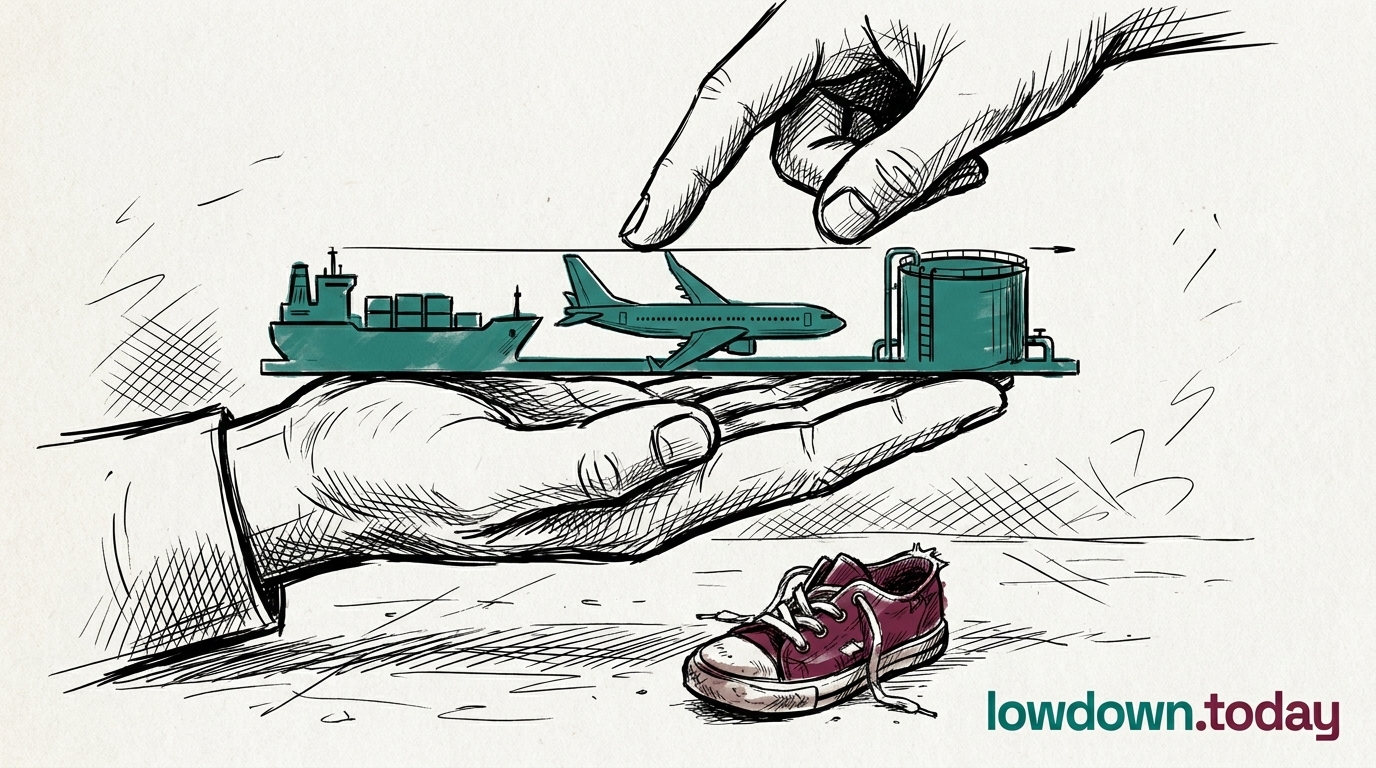
LNG carriers queue for escorts separately from crude, so the tanker rebound leaves QatarEnergy's gas restart capped.

QatarEnergy's LNG restart stayed paced by naval-escort capacity rather than diplomacy through the tanker rebound, with Lloyd's List reporting escort slots, not the talks in Qatar, as the binding constraint⁠1. LNG carriers cross the Strait of Hormuz on a separate convoy schedule from crude tankers.

A strong day for crude exits therefore carries no read on the LNG throughput a European gas desk actually prices. Two destroyed Ras Laffan trains hold recovery near 83% of pre-conflict nameplate, a plant-level ceiling that no transit count can lift.

TTF settled around €43.6/MWh on 1 July, a two-week high driven by US-Iran-talks-in-Qatar jitters rather than any change in physical LNG supply⁠2. The JKM-TTF arb had already compressed towards parity as two Qatar trains stayed offline, and neither leg moved on the tanker news.

Deep Analysis

In plain English

European gas prices ticked up on 1 July, but not because less gas is actually flowing. The rise tracked worries about US-Iran talks in Qatar, a country that supplies a large share of Europe's liquefied natural gas (LNG). LNG tankers use a different, separately escorted route through the strait of Hormuz than the oil tankers making headlines. Qatar's gas terminal at Ras Laffan still has two production units destroyed by earlier strikes, capping output at about 83% of normal, a limit that will not lift quickly: rebuilding a destroyed LNG unit typically takes years, not weeks.

Deep Analysis
Root Causes

QatarEnergy's restart is capped by two independent constraints that do not resolve on the same timeline. The physical constraint, two destroyed trains at Ras Laffan, holds nameplate near 83% regardless of diplomacy.

A second, narrower logistics constraint compounds it: Lloyd's List reports escort convoys clear only three to four tankers a day through Hormuz on seven to eight warships, a ratio that cannot scale without adding more warships to the corridor.

What could happen next?
  • Consequence

    QatarEnergy's 83% nameplate ceiling is likely to persist for years rather than months, since rebuilding a destroyed LNG train typically takes three to five years from start.

    Long term · Assessed
  • Risk

    The escort-convoy cap of three to four tankers a day cannot expand without additional naval escort ships in the corridor, a decision outside QatarEnergy's control.

    Medium term · Reported
  • Meaning

    TTF's two-week high on 1 July reflects diplomatic sentiment rather than a fresh physical supply loss, since the escort-convoy LNG regime did not lose capacity that day.

    Immediate · Assessed
First Reported In

Update #24 · Hormuz tanker rebound is no LNG relief

Lloyd's List· 6 Jul 2026
Read original →
Different Perspectives
Office for Budget Responsibility
The OBR's 28 October forecast assumed $82 oil for 2026 and 2027, from market prices for the ten working days to 19 August, and blamed dearer wholesale energy on the war without naming Iran. It expects CPI inflation close to 4% in early 2027 even at that price.
Hengaw, Kurdish rights group
Hengaw reported the 3 November hangings of Amirhossein Maleki and Amirhossein Ebrahimi in Isfahan, saying Ebrahimi was tortured into confessing and that nine of 12 people sentenced to death in the case have now been hanged. Iran's judiciary holds that the defendants killed members of the security forces.
FINTRAC, Canada's financial intelligence unit
FINTRAC worked with the US Treasury on the 6 November designation of eight money services businesses in British Columbia, Ontario and Quebec. Treasury says the businesses still operate, some under new names, so closing them falls to Ottawa.
Abdul Qadir al-Dakhil, Governor of Nineveh
Al-Dakhil cancelled three Mosul International Airport contracts on 7 November over alleged links to armed groups, after meeting Prime Minister Ali al-Zaidi in Baghdad. He named no group or company, and said the contracts will go to international companies.
Kuwait
Kuwait
Kuwait condemned the Houthi missile fired towards the Madinah region on 5 November and restated its support for Saudi Arabia, the Qatar News Agency reported. Its state tanker company, Kuwait Oil Tankers Company, is among the Gulf state fleets on Iran's expanded Hormuz list.
Scott Bessent, US Treasury Secretary
Treasury designated an alleged Chandigarh false-flag network on 4 November and eight Canadian exchangers on 6 November, while State sanctioned alleged MANPADS intermediaries. None of the actions touches an oil buyer; they target the paper, cash and procurement around Iran's trade.

Written with AI from Lowdown's published reporting. Not individually reviewed by an editor. Editorial standards.
