Skip to content
You can now search across every topic, entity and event.What's new
Iran Conflict 2026
7AUG

Freight has not confirmed the spike

3 min read
12:08UTC

Brent traded near $79.16 on 13 July, its highest since 22 June, yet no dated VLCC rate or war-risk premium has printed to confirm the move physically.

ConflictDeveloping
Key takeaway

Brent's highest since 22 June rests on strait fear that freight has yet to confirm.

Brent traded near $79.16 and WTI $74.38 by Monday 13 July, the highest Brent since 22 June, after a fourth US strike on Iran in a week and Iran's Strait Authority declared vessels on unauthorised routes forfeit any safe-passage guarantee 12. The Strait of Hormuz, the 33km chokepoint carrying roughly a fifth of the world's oil, saw crossings thin to 6-9 vessels a day against a pre-war baseline near 130 3. The strike sits with the wider Iran conflict coverage; what it did to the physical balance and the spreads is what decides the P&L here.

The Brent-Dubai EFS, the exchange-for-swaps spread between the two crude grades and a gauge of Atlantic-versus-Gulf demand, stood at $4.24 on 8 July . No dated TD3C VLCC rate or war-risk premium for 10-13 July has printed since. On 22 June the TD3C forward held $181,163/day flat while Brent shed 8% , and war-risk cover sat at 3 to 4% of hull value .

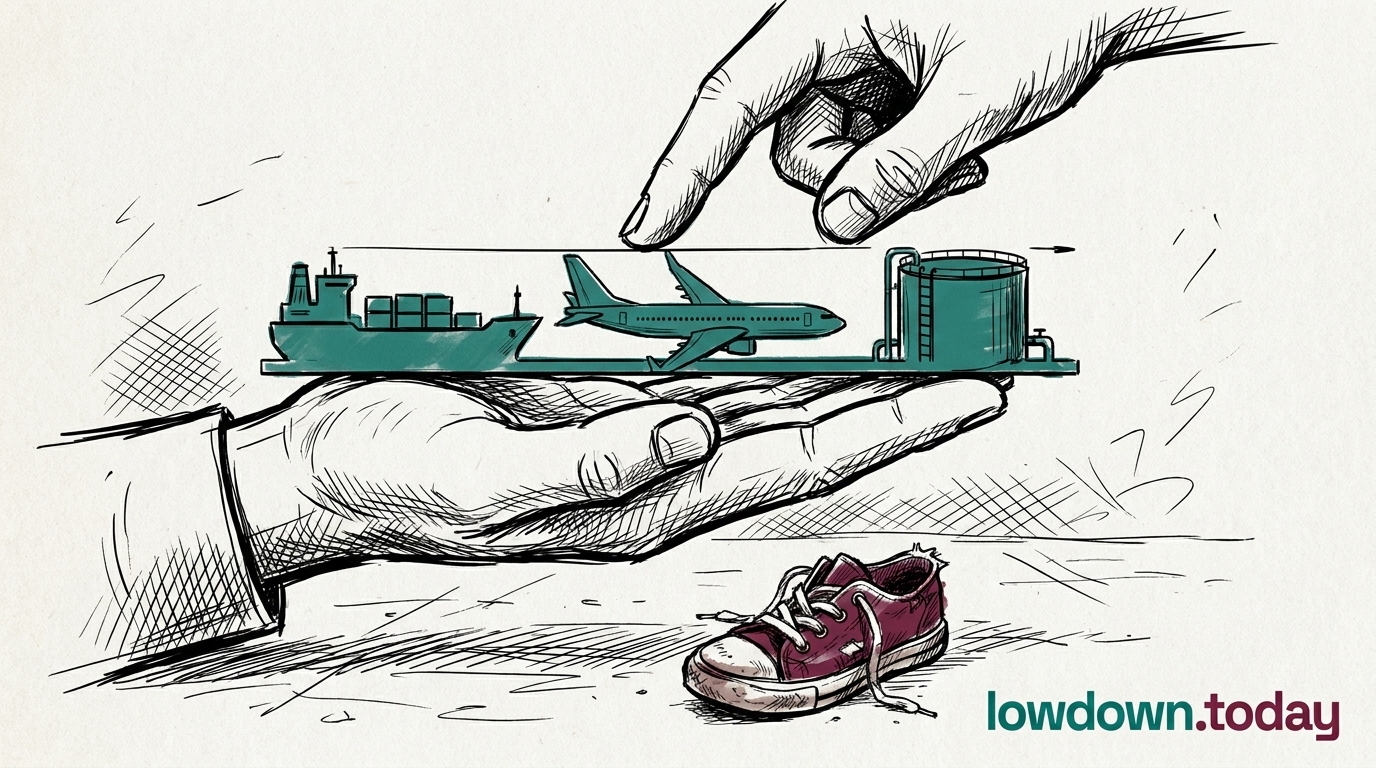
Freight is the desk's cleanest test of whether Hormuz risk is physical or paper. A rate that holds flat while flat price spikes says the tankers are still moving and the premium is on the screen, not on the water. Through 10-13 July it stayed silent, so the highest Brent since 22 June rests on strait-transit fear that the physical market has yet to ratify.


Deep Analysis

In plain English

The Strait of Hormuz is a narrow sea passage between Iran and Oman that roughly a fifth of the world's oil shipments pass through. After the US carried out its fourth strike on Iran in a week, Iran's Strait Authority said ships using routes it has not approved would lose any guarantee of safe passage. The number of vessels crossing the strait fell sharply, from a normal 18-22 a day to as few as 6-9. Oil prices jumped on the news. But 'freight rates', the price shipowners charge to move oil on tankers, and 'war-risk premiums', the extra insurance cost for sailing through a danger zone, had not yet been reported for this exact period, so it is not yet confirmed whether the disruption is showing up in the physical shipping market or only in oil's headline price.

Deep Analysis
Escalation

A fourth US strike in a week against Iran, alongside Iran's own safe-passage declaration, marks a step up in direct exchanges rather than proxy actions; watch whether a dated TD3C or war-risk print over the coming days confirms physical disruption, which would signal the conflict has moved from rhetoric to a genuinely constrained chokepoint.

What could happen next?
  • Risk

    If no dated TD3C or war-risk premium confirms the vessel-crossing collapse within the coming days, the current Brent premium risks being exposed as overpriced against the physical shipping reality, as happened on 22 June.

  • Precedent

    The 22 June divergence between flat TD3C freight and an 8% Brent fall (ID:4566) establishes a desk precedent that Hormuz-linked price moves have decoupled from physical freight before, cutting both directions.

First Reported In

Update #16 · Brent hit $79; the structure said no

Al Jazeera· 13 Jul 2026
Read original
Different Perspectives
Turkiye
Turkiye
Erdogan followed the Pakistani delegation to Jeddah for an instrument that has not been signed. Ankara's entry widens Saudi Arabia's defence architecture beyond the existing Pakistan pact, adding a second non-Gulf military partner mid-conflict.
Oman
Oman
Muscat is the corridor's broker but has published nothing about the arrangement Fars describes on its behalf. The account leaves Oman administering outbound traffic only, a narrower role than the shared route its mediation has rested on since 1979.
Pakistan
Pakistan
Islamabad sent Sharif, Munir and Dar to Jeddah to widen a defence commitment it has honoured in cheaper registers since March, when Dar invoked the Saudi mutual defence pact. Jeddah tests whether that hedge becomes a binding trilateral instrument with Turkiye.
United States
United States
Washington rejected the Majlis Hormuz bill outright while CENTCOM's own tally kept climbing to 49 vessels redirected since 14 July. Both instruments tightened in the same week Trump promised the strait would reopen soon.
Iran
Iran
Iran's foreign ministry is selling a phased Hormuz corridor through Oman and denying any percentage cargo tariff, while its own Majlis is legislating fines to 20% and a bar on Israeli-linked cargo. The two accounts, from the same government, do not agree with each other.
Saudi Arabia
Saudi Arabia
Riyadh published a target forecast, not an attribution, for the campaign it says the Najran strike previewed. That keeps an Article 51 case available while it formalises a trilateral defence architecture with Pakistan and Turkiye.



