Skip to content
You can now search across every topic, entity and event.What's new
Iran Conflict 2026
7AUG

Abu Dhabi Gas Facility Ablaze After Intercept Debris Strike

3 min read
12:08UTC

Debris from an intercepted projectile set Abu Dhabi's Habshan gas facility alight on 3 April. Cumulative UAE intercepts have now reached 457 ballistic missiles and 2,038 UAVs, with 19 ballistic missiles and 26 UAVs intercepted in two days alone.

ConflictDeveloping
Key takeaway

Habshan's fire from intercept debris shows UAE defences cannot fully prevent secondary damage even when missiles are stopped.

Abu Dhabi's Habshan gas processing facility caught fire on 3 April from debris of an intercepted projectile, according to UAE WAM. The strike was intercepted; the fire was not. The distinction between a direct hit and intercept debris has become operationally significant as the attack tempo increases.

The UAE Ministry of Defence's cumulative intercept totals now stand at 457 ballistic missiles, 2,038 UAVs, and 19 cruise missiles, up from 438 ballistic missiles and 2,012 UAVs as recently as Day 34 . Nineteen ballistic missiles and 26 UAVs were intercepted in two days alone. CENTCOM has described Iranian strike capability as 'dramatically curtailed.' The intercept data does not support that characterisation.

Habshan processes gas from the Rub al-Khali basin and feeds downstream UAE energy infrastructure. A fire at the facility, even from debris rather than a direct hit, affects processing capacity. The ADNOC bypass pipeline running from Abu Dhabi to Fujairah reached 71% utilisation as of Day 34 , meaning available redundancy is already constrained.

A Bangladeshi farm worker was killed by UAE air defence shrapnel in Fujairah on 1 April . The Habshan fire follows the same lethal-debris pattern. The UAE's missile defence system is performing its function; the secondary effects of that function are accumulating across the country's civilian and energy infrastructure.


Deep Analysis

In plain English

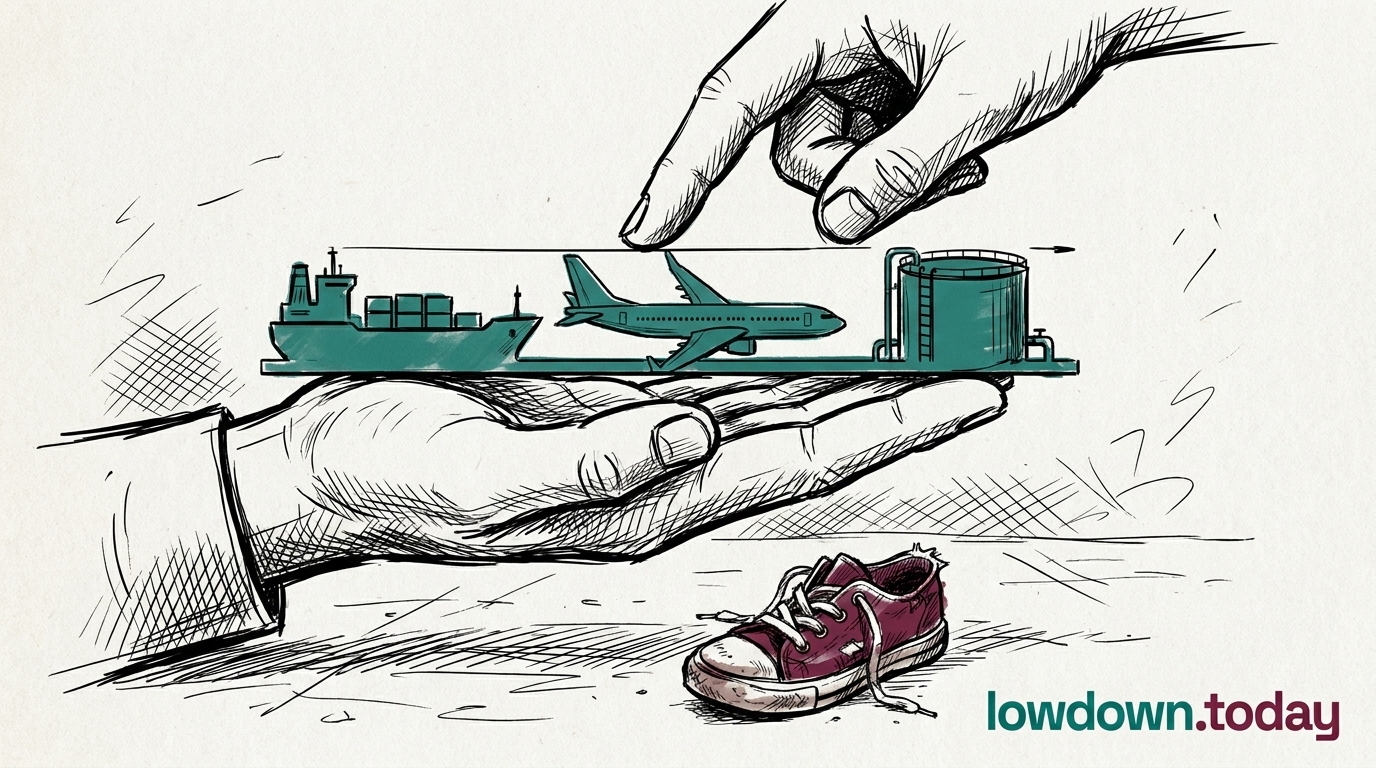
Iran is charging ships $1 for every barrel of oil they carry through the Strait of Hormuz, and it is now a law rather than just a wartime demand. Ships that refuse can go around Africa, adding weeks and significant cost to the journey. Some countries have already negotiated exemptions; everyone else pays.

Deep Analysis
Root Causes

The toll emerged from the IRGC's need to fund ongoing operations while Iran's oil export revenues are under maximum pressure sanctions. At $1/barrel with 16 transits, daily revenue is modest, but codification in law signals this is designed to outlast the conflict as a permanent Iranian revenue stream.

The stablecoin and yuan denomination reflects Iran's broader strategy of decoupling from dollar-denominated financial infrastructure, which has been in development since the reimposition of JCPOA sanctions in 2018.

Escalation

Stabilising in a narrow sense — codification reduces the unpredictability of the toll system by setting a clear price. But the legal permanence is escalatory in terms of the long-term structural conflict: the US cannot accept Iranian toll authority over an international strait without a formal legal and diplomatic challenge.

What could happen next?
  • Precedent

    Codifying the toll in Iranian law creates a permanent legal basis that will survive any ceasefire, requiring a specific diplomatic instrument to reverse.

    Long term · High
  • Risk

    OFAC action against the specific stablecoins used for toll collection would create a financial enforcement confrontation with stablecoin issuers operating in US-adjacent jurisdictions.

    Short term · Medium
  • Consequence

    Asian LNG importers face permanent Hormuz premium pricing regardless of conflict resolution; the structural cost is now baked into the market.

    Medium term · High
First Reported In

Update #57 · Bridge strike kills eight; Army chief fired

UAE WAM / Ministry of Defence· 3 Apr 2026
Read original
Causes and effects
This Event
Abu Dhabi Gas Facility Ablaze After Intercept Debris Strike
Habshan is a critical node in the UAE's gas processing infrastructure. The fire from intercept debris, not a direct strike, shows that a successful air defence system can still generate significant secondary damage on the ground.
Different Perspectives
Shipping and insurance industry
UKMTO counted about 20 US-facilitated Hormuz transits a day to 11 September against only 6 visible on AIS, with traffic still around 90% below the 138-a-day pre-war baseline. War-risk underwriters cannot price hulls they cannot see, or resolve whether the tanker El Gaia hit a mine, as Iran claims, or a missile and drone, as CENTCOM says.
European refiners
European refiners
European refiners, including Poland's Orlen, absorbed a roughly $26 gap between Dated Brent at $130.80 on 15 September and ICE Brent futures settling at $103.87 on 18 September, a spread that widened from $13.45 on 9 September rather than newly opening. Their futures hedges no longer cover what they now pay for physical barrels.
Saudi Arabia
Saudi Arabia
Saudi Aramco zeroed European term customers' October allocations and rerouted roughly 60 million barrels to Asia through Ras Tanura and Sohar, using Red Sea and Gulf terminal capacity built years ago to cut Hormuz exposure. Riyadh reallocated existing supply rather than negotiating a shortfall with Europe.
Qatar
Qatar
Qatar's energy minister Saad al-Kaabi told Bloomberg at the Qatar Economic Forum on 20 September that Bessent's two-year Hormuz-obsolescence forecast is wrong, and that Doha has deliberately built no bypass pipeline. Qatar's gas exports run through one waterway by choice, not oversight.
Iran (foreign ministry and Majlis)
Iran's foreign ministry and 130 Majlis deputies moved toward NPT withdrawal this week, with lawmaker Hossein-Ali Haji Deligani filing a triple-urgency bill on 20 September that Speaker Qalibaf has not yet scheduled. Tehran treats treaty membership as leverage still on the table, not yet spent.
Russia and China
Russia and China
Moscow and Beijing vetoed the Panel of Experts' renewal, maintaining Resolution 2231 lapsed in October 2025 and the 2025 snapback was never validly triggered, so the sanctions architecture the Panel enforces has no current legal standing. Both governments frame the veto as upholding law, not shielding Tehran.



