Skip to content
You can now search across every topic, entity and event.What's new
Iran Conflict 2026
31JUL

IAEA rejects Trump's war victory claim

2 min read
09:24UTC

Israel's prime minister said he is 'not necessarily' halfway through in terms of time, declining to endorse Trump's two-to-three-week withdrawal. The IAEA confirmed it still cannot verify 440 kg of 60%-enriched uranium ; enough for ten weapons at 90% enrichment ; while a new underground enrichment facility at Isfahan has been disclosed but not inspected.

ConflictAssessed
Key takeaway

Israel and the IAEA both declined to validate the nuclear victory claim; the 6 April deadline expires in five days.

Netanyahu declined to endorse Trump's two-to-three-week withdrawal timeline on 1 April while the IAEA confirmed it cannot verify Iran's 440 kg of enriched uranium. The 6 April power grid deadline remains in force with five days to expiry. Israel's missile shield had been approaching zero interceptors as this deadline approached, adding operational urgency to Netanyahu's reluctance to commit to any schedule.

Netanyahu's phrase, 'not necessarily in terms of time,' is a diplomatic formulation designed to avoid a direct rupture with Washington while making clear that Israel's military calendar does not match Trump's political one. Israel's generals had feared a deal before victory for weeks; Netanyahu's careful language reflects that institutional pressure. House Armed Services Committee members from both parties were 'unsatisfied' with the classified briefing, suggesting the discomfort extends beyond Israel.

The IAEA dimension compounds the problem. Trump declared the nuclear objective attained. The IAEA had already confirmed enriched uranium had moved beyond inspectors' sight before today's statement; Grossi now discloses a new underground enrichment facility at Isfahan that inspectors have not visited. At 90% enrichment, 440 kg is sufficient for approximately ten nuclear weapons. The goal Trump declared attained was not eliminating the stockpile; it was degrading production infrastructure.

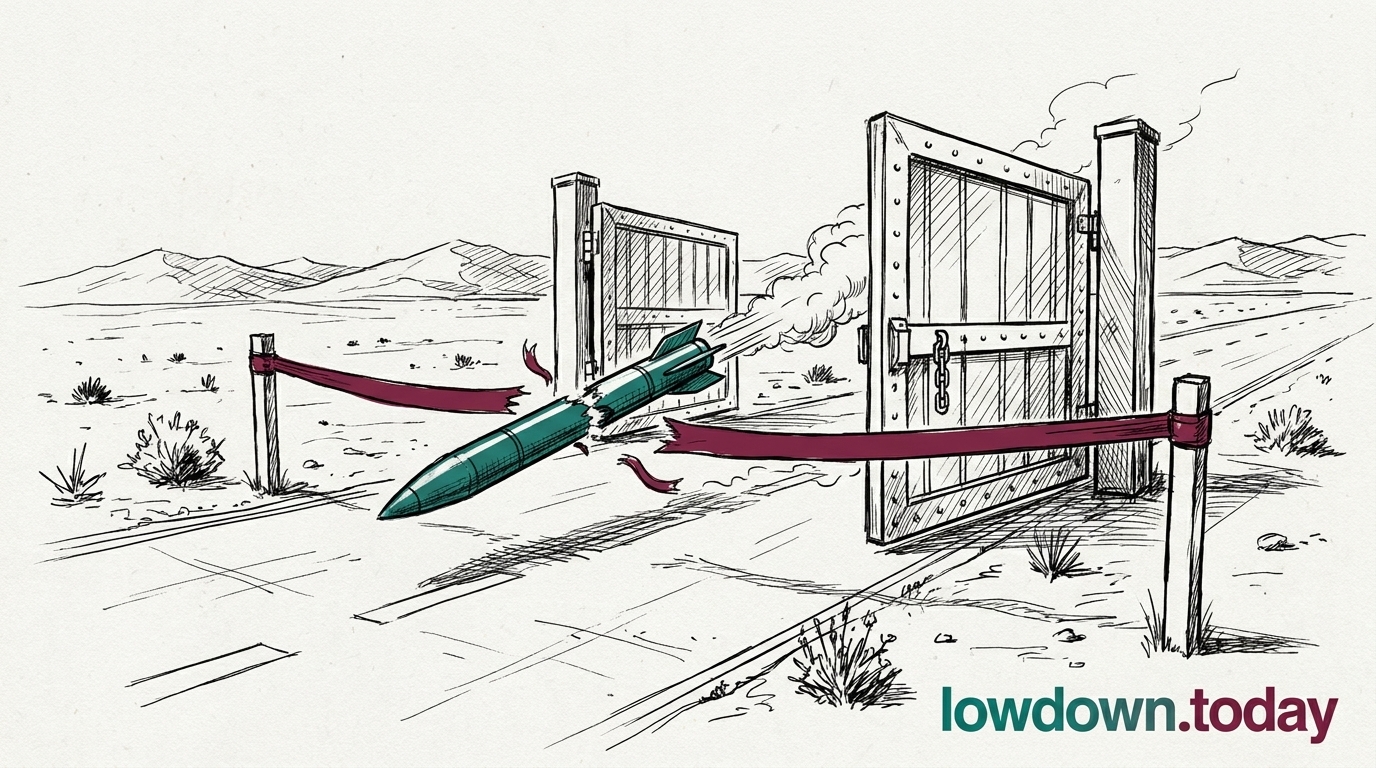
The 6 April deadline is Trump's third extension . Trump decoupled it from negotiations in the Oval Office speech, stating Iran does not need a deal for the war to end. Whether the deadline passes silently (credibility collapse), produces strikes (major escalation), or is extended a fourth time defines the next phase of the conflict. Rubio had told allies the war needed two to four more weeks on Day 30; that window is now closing with no resolution in sight.


Deep Analysis

In plain English

Trump said the nuclear goal has been achieved. But the United Nations nuclear agency said it still cannot check whether Iran has 440 kg of enriched uranium ; enough for about ten nuclear weapons ; and has found a new underground enrichment facility it has not been allowed to visit yet. Israel's prime minister, the US's closest partner in this operation, also said he is not necessarily halfway through in terms of time, and refused to say when Israel's military operations would end. Both Israel and the UN nuclear watchdog are telling the world the war's stated goals have not been met. In five days, Trump's deadline to destroy Iran's power grid expires for the third time. He has now said Iran does not need a deal for the war to end, which removes any negotiating purpose from the deadline.

Deep Analysis
Escalation

The 6 April deadline expiry represents a binary decision for Trump: execute the power grid strikes (major escalation, Iranian retaliation on Gulf energy infrastructure, oil price spike), extend again (fourth extension destroys remaining credibility), or let it pass silently (the deadline becomes irrelevant). Each option has significant consequences.

What could happen next?
  • Risk

    The 6 April deadline expiry with no active negotiating track forces Trump into a choice between credibility-destroying inaction or major escalation.

    Immediate · Assessed
  • Consequence

    A victory declaration combined with an IAEA-unverified nuclear stockpile means the stated war objective cannot be declared achieved by any independent measure.

    Short term · Assessed
  • Risk

    Netanyahu's independent timeline means Israel may continue military operations after any US withdrawal, removing the political cover Trump's withdrawal announcement was designed to provide.

    Short term · Reported
First Reported In

Update #54 · Trump declares victory and withdrawal

UPI· 1 Apr 2026
Read original
Causes and effects
This Event
IAEA rejects Trump's war victory claim
Netanyahu's refusal to endorse the timeline and the IAEA's inability to verify the nuclear stockpile are the two most direct contradictions of Trump's 'nuclear goal attained' claim, coming from the US's closest ally and the world's nuclear watchdog respectively.
Different Perspectives
Shipping and insurance underwriters
Underwriters can price Houthi strikes because the group announces its targets, but an unclaimed drone at Damietta and a mandatory Iranian insurance scheme both deny them a pattern to price against. War-risk premiums are increasingly being set by the absence of a claimant, not the scale of the damage.
Jordan
Jordan
Azraq absorbed its fourth Iranian strike in seven weeks, again drawing no direct Jordanian retaliation, only an American one. Amman's exposure, hosting US basing without the Patriot density of Gulf allies, has not changed even as the war around it widens.
Houthi movement
Houthi movement
The Houthis' 20 July blockade of Saudi-linked shipping is the injury Riyadh's new 43-nation coalition directly answers, yet the group itself was never asked to join and remains outside every proposal on the table. Sanaa-aligned commentators call the coalition a paper reassurance for insurers rather than a deployable force.
Egypt's Cabinet
Egypt's Cabinet
Egypt confirmed the Damietta blaze was an attack, not an accident, on soil the war had never touched before. Cairo now faces an unclaimed threat to a facility supplying roughly 7% of its domestic gas, with no author to hold accountable and no pattern yet to defend against.
Oman
Oman
Muscat is running the only channel Iran will use, a voluntary Hormuz fee modelled on Malacca, but stayed out of Saudi Arabia's new naval coalition entirely. Oman's mediating leverage depends on treating Hormuz as shared and non-exclusive, the opposite of what Tehran is now demanding of it.
Iraq's Prime Minister
Al-Zaidi cancelled his first official Riyadh visit and convened the Coordination Framework, the coalition that keeps him in power and whose factions sit inside the PMF that Saudi jets just struck. He is caught between a five-year Saudi investment relationship and armed groups inside his own state he does not fully control.



