Skip to content
You can now search across every topic, entity and event.What's new
Iran Conflict 2026
31JUL

FAQ 1224 sets Lukoil sale conditions

3 min read
09:24UTC

OFAC amended FAQ 1224 on 24 July, publishing for the first time what any licence to sell Lukoil International GmbH would have to satisfy: a clean break, blocked residual funds, and no up-front value to Lukoil.

ConflictAssessed
Key takeaway

Washington has published what a Lukoil International sale must look like: clean break, blocked funds, nothing up front.

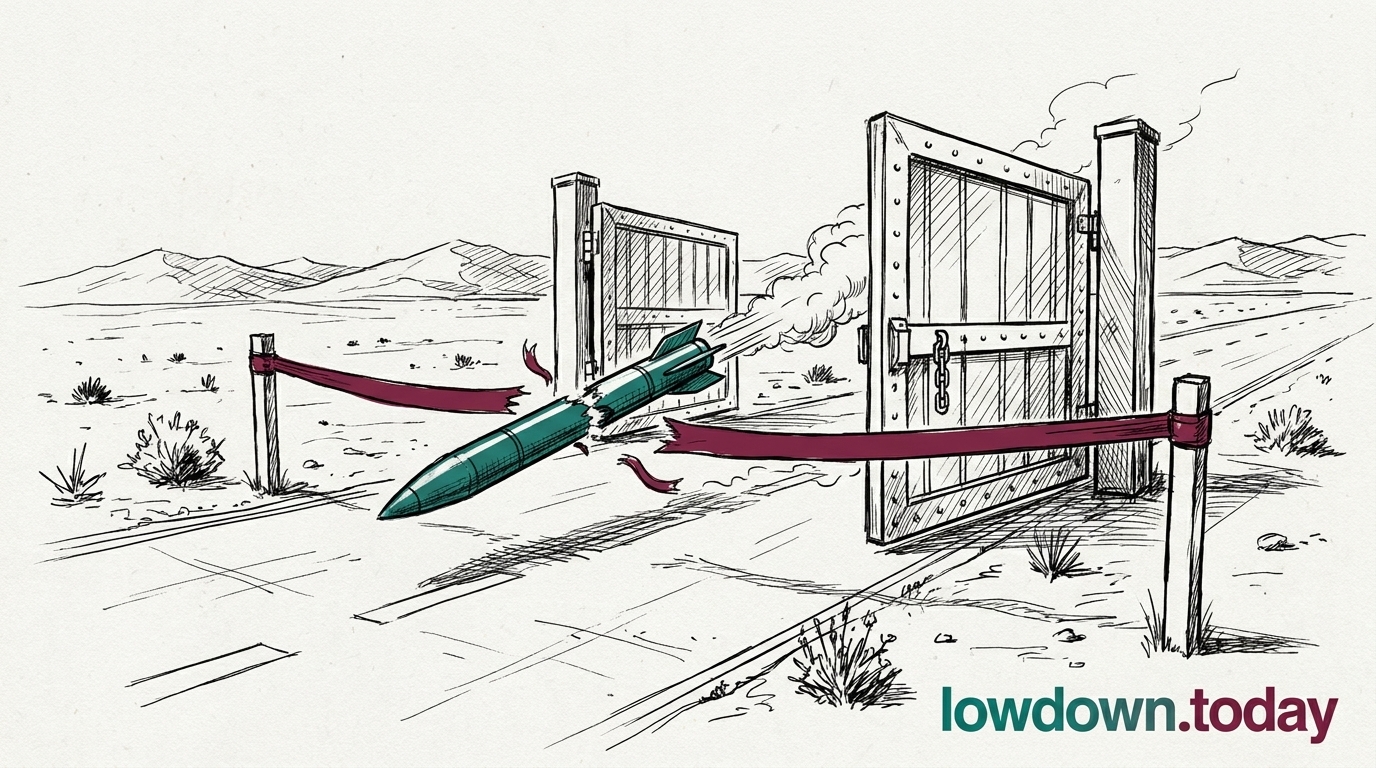
OFAC, the US Treasury's Office of Foreign Assets Control, amended FAQ 1224 on 24 July alongside general licence 131H, setting out for the first time what any future licence to effectuate a sale of Lukoil International GmbH would have to satisfy 1. Three conditions: complete severance of the sold business from Lukoil, any residual funds owed to Lukoil blocked in a US-jurisdiction account until sanctions lift, and no windfall to Lukoil, which rules out taking value up front through asset or share swaps. Lukoil International GmbH holds the Russian major's downstream assets outside Russia, and it has been unsellable since designation without Washington's permission.

Sanctions bureaus rarely publish licensing criteria in advance, because doing so surrenders discretion. Publishing them here reads as OFAC heading off structures it will not approve, and the no-windfall condition kills the share-swap architecture that has carried other Russian corporate exits. A blocked-funds requirement means a seller collects nothing until sanctions lift, which turns the negotiation from a price argument into a timing-risk argument and narrows the field of buyers who can live with it. Eight rollovers have marked time ; these conditions describe what would have to be true for the clock to stop.

The scope needs stating precisely, because it has been misreported. The GL 131 series authorises negotiation for Lukoil International GmbH and entities it owns 50% or more. It names neither ISAB, Priolo Gargallo nor Italy, and OFAC's GL 131G text was already confirmed to exclude the plant . Litasco sold ISAB to GOI Energy in May 2023, so the Sicilian refinery left the Lukoil perimeter three years ago.

ISAB's live sale runs from GOI Energy to Ludoil, gated by Italian Golden Power clearance, a Milan court seizure order and its own separate OFAC transaction licence, none of which is the GL 131 clock. ISAB Priolo runs 320,000 b/d. The 800kbd figure in circulation covers Lukoil International's entire European portfolio, and the separate Carlyle transaction covers Lukoil's other international assets while excluding ISAB.


Deep Analysis

In plain English

Lukoil is one of Russia's biggest oil companies, and it has been under US sanctions since April 2026. It owns a business called Lukoil International GmbH, which holds its assets outside Russia. Because of the sanctions, nobody can buy that business without special permission from OFAC, the US Treasury's sanctions office. Every month since the sanctions began, OFAC has issued a temporary permission slip just to let people talk about a possible sale, without letting any sale actually happen. On 24 July, for the first time, OFAC also published the rules any real sale would eventually have to follow: the business must be fully cut off from Lukoil, any money owed to Lukoil must sit frozen in a US bank account until sanctions end, and Lukoil cannot get any value up front. This is a separate matter from ISAB, an Italian oil refinery some reporting has wrongly linked to these Lukoil rules. ISAB left Lukoil's ownership back in 2023, and its current sale is governed by entirely different Italian and US approvals.

Deep Analysis
Root Causes

Publishing licensing criteria in advance is unusual for a sanctions bureau because it surrenders case-by-case discretion; OFAC's decision to set out severance, blocked-funds and no-windfall terms in FAQ 1224 reads as heading off specific deal structures, share swaps and asset transfers that deliver value to Lukoil before sanctions lift, structures the bureau has evidently seen proposed or anticipates being proposed.

The blocked-funds condition converts the negotiation from a price question into a timing-risk question: a seller collects nothing until US sanctions on Lukoil itself lift, an event with no published date, which structurally excludes any buyer unwilling to carry that open-ended risk on its own balance sheet.

What could happen next?
  • Precedent

    Publishing the sale conditions gives future bidders for other sanctioned Russian assets a template for what OFAC will and will not accept, beyond this single transaction.

  • Consequence

    The blocked-funds condition rules out any buyer unwilling to hold Lukoil's residual proceeds in a frozen US account for an unknown period, narrowing the realistic buyer pool to parties with substantial balance-sheet patience.

First Reported In

Update #21 · Insurers shut Bab el-Mandeb to Saudi hulls

US Treasury Office of Foreign Assets Control· 31 Jul 2026
Read original
Causes and effects
Different Perspectives
Shipping and insurance underwriters
Underwriters can price Houthi strikes because the group announces its targets, but an unclaimed drone at Damietta and a mandatory Iranian insurance scheme both deny them a pattern to price against. War-risk premiums are increasingly being set by the absence of a claimant, not the scale of the damage.
Jordan
Jordan
Azraq absorbed its fourth Iranian strike in seven weeks, again drawing no direct Jordanian retaliation, only an American one. Amman's exposure, hosting US basing without the Patriot density of Gulf allies, has not changed even as the war around it widens.
Houthi movement
Houthi movement
The Houthis' 20 July blockade of Saudi-linked shipping is the injury Riyadh's new 43-nation coalition directly answers, yet the group itself was never asked to join and remains outside every proposal on the table. Sanaa-aligned commentators call the coalition a paper reassurance for insurers rather than a deployable force.
Egypt's Cabinet
Egypt's Cabinet
Egypt confirmed the Damietta blaze was an attack, not an accident, on soil the war had never touched before. Cairo now faces an unclaimed threat to a facility supplying roughly 7% of its domestic gas, with no author to hold accountable and no pattern yet to defend against.
Oman
Oman
Muscat is running the only channel Iran will use, a voluntary Hormuz fee modelled on Malacca, but stayed out of Saudi Arabia's new naval coalition entirely. Oman's mediating leverage depends on treating Hormuz as shared and non-exclusive, the opposite of what Tehran is now demanding of it.
Iraq's Prime Minister
Al-Zaidi cancelled his first official Riyadh visit and convened the Coordination Framework, the coalition that keeps him in power and whose factions sit inside the PMF that Saudi jets just struck. He is caught between a five-year Saudi investment relationship and armed groups inside his own state he does not fully control.



