Skip to content
You can now search across every topic, entity and event.What's new
Iran Conflict 2026
31JUL

EU's 21st sanctions package stalls again

1 min read
09:24UTC

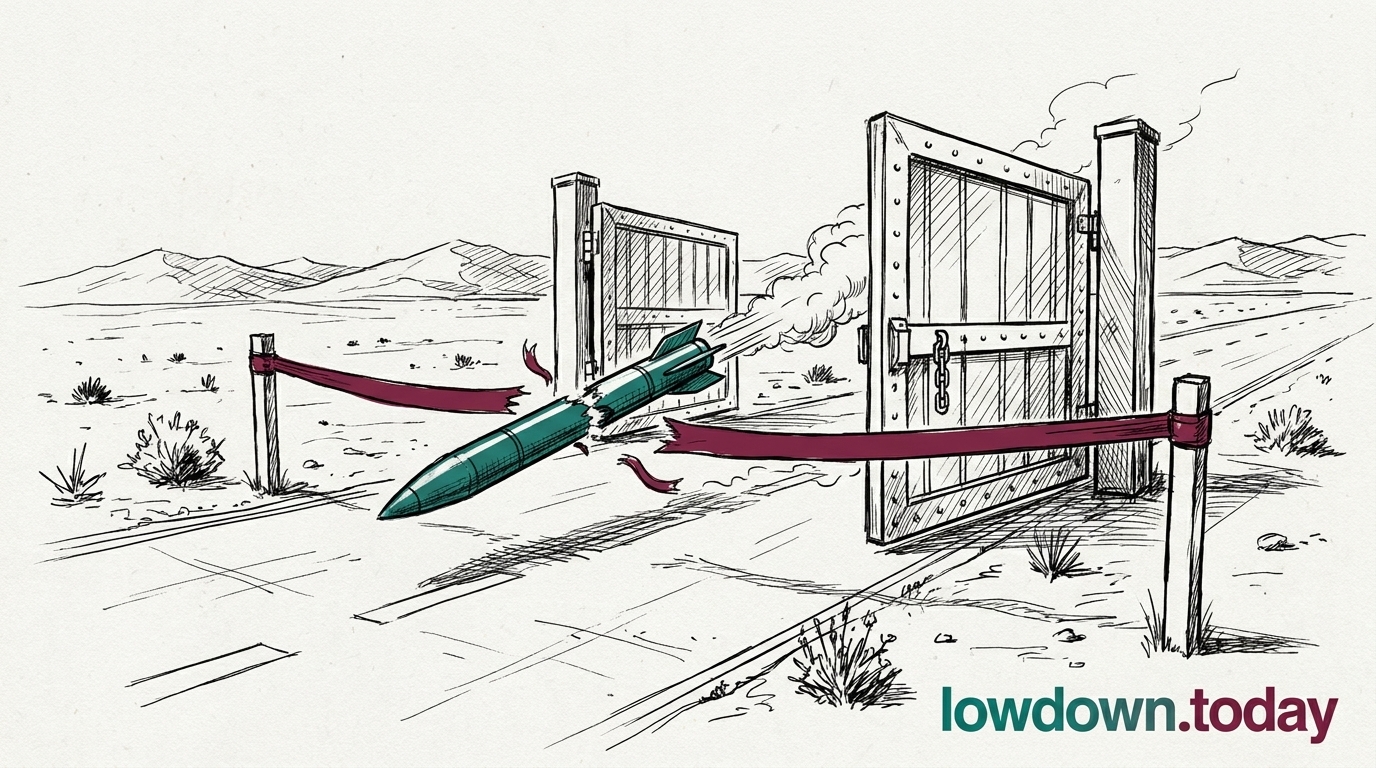
The EU's 21st Russia sanctions package failed to clear Coreper on 15 July. Greece wants LNG re-export rights preserved; Austria wants a Deripaska-linked firm delisted.

ConflictDeveloping
Key takeaway

Watch which carve-outs make the final text, not whether the twenty-first package clears.

The European Union's 21st Russia sanctions package failed to clear Coreper, the committee of member states' permanent representatives in Brussels, on 15 July, with negotiators setting a new target of 22 July rather than letting it slip to autumn 1. Greece wants to preserve re-export rights for Russian liquefied natural gas. Austria wants Rasperia, an investment firm linked to the sanctioned aluminium magnate Oleg Deripaska, removed from the list so that frozen assets can be used to compensate Raiffeisen Bank International.

Neither objection is an argument about whether to pressure Moscow. Both are domestic commercial interests: Greek shipping's role in moving cargoes that pass through Europe rather than remaining in it, and Raiffeisen's search for compensation against its Russian exposure. Sanctions packages pass by unanimity, so a commercial interest in one member state carries the same stopping power as a strategic objection in another.

Each round of unanimity leaves its mark on the text. Holdouts extract a carve-out, the carve-out persists into later packages because reopening settled wording costs another round of unanimity, and the enforcement surface narrows even as the number on the package climbs. Brussels has been tightening on paper while Washington has been loosening in practice, most recently by letting its crude oil waiver lapse unrenewed . Whether Greece's LNG exemption and Austria's Rasperia demand survive into the final wording is the part worth watching on 22 July, not whether the package passes.


Deep Analysis

In plain English

The European Union tries to pass new rounds of sanctions against Russia as a package, and this one, the 21st since the war began, failed to get the votes it needed at a meeting in Brussels on 15 July. Two countries are blocking it for different reasons: Greece wants to keep the right to re-export Russian liquefied natural gas to other countries, and Austria wants a specific investment firm removed from the sanctions list so its frozen assets can be used to compensate an Austrian bank that lost money doing business with it. EU sanctions need every member country to agree, so either objection alone is enough to stop the whole package. A new vote is set for 22 July.

Deep Analysis
Root Causes

The package's two holdouts trace to different national exposures rather than a shared objection: Greece's shipping industry depends on revenue from re-exporting Russian LNG to third countries, while Austria's block is a compensation mechanism for Raiffeisen Bank International's frozen Russian exposure via Rasperia. Clearing the package therefore requires satisfying two unrelated national balance-sheet problems, not resolving one disputed principle.

Each objection is solvable in isolation (a carve-out for Greek re-export rights, a delisting tied to specific compensation terms for Austria), but EU sanctions require unanimity, so either holdout alone is enough to stall the whole 21st package regardless of how narrow its underlying demand is.

First Reported In

Update #24 · Fedorov sacked as the front stands still

Global Sanctions· 19 Jul 2026
Read original
Causes and effects
This Event
EU's 21st sanctions package stalls again
Two national carve-outs, neither about Russia policy, are holding an entire package.
Different Perspectives
Shipping and insurance underwriters
Underwriters can price Houthi strikes because the group announces its targets, but an unclaimed drone at Damietta and a mandatory Iranian insurance scheme both deny them a pattern to price against. War-risk premiums are increasingly being set by the absence of a claimant, not the scale of the damage.
Jordan
Jordan
Azraq absorbed its fourth Iranian strike in seven weeks, again drawing no direct Jordanian retaliation, only an American one. Amman's exposure, hosting US basing without the Patriot density of Gulf allies, has not changed even as the war around it widens.
Houthi movement
Houthi movement
The Houthis' 20 July blockade of Saudi-linked shipping is the injury Riyadh's new 43-nation coalition directly answers, yet the group itself was never asked to join and remains outside every proposal on the table. Sanaa-aligned commentators call the coalition a paper reassurance for insurers rather than a deployable force.
Egypt's Cabinet
Egypt's Cabinet
Egypt confirmed the Damietta blaze was an attack, not an accident, on soil the war had never touched before. Cairo now faces an unclaimed threat to a facility supplying roughly 7% of its domestic gas, with no author to hold accountable and no pattern yet to defend against.
Oman
Oman
Muscat is running the only channel Iran will use, a voluntary Hormuz fee modelled on Malacca, but stayed out of Saudi Arabia's new naval coalition entirely. Oman's mediating leverage depends on treating Hormuz as shared and non-exclusive, the opposite of what Tehran is now demanding of it.
Iraq's Prime Minister
Al-Zaidi cancelled his first official Riyadh visit and convened the Coordination Framework, the coalition that keeps him in power and whose factions sit inside the PMF that Saudi jets just struck. He is caught between a five-year Saudi investment relationship and armed groups inside his own state he does not fully control.



