Skip to content
You can now search across every topic, entity and event.What's new
Iran Conflict 2026
23JUL

Diesel crack and Hormuz premium stack

3 min read
19:27UTC

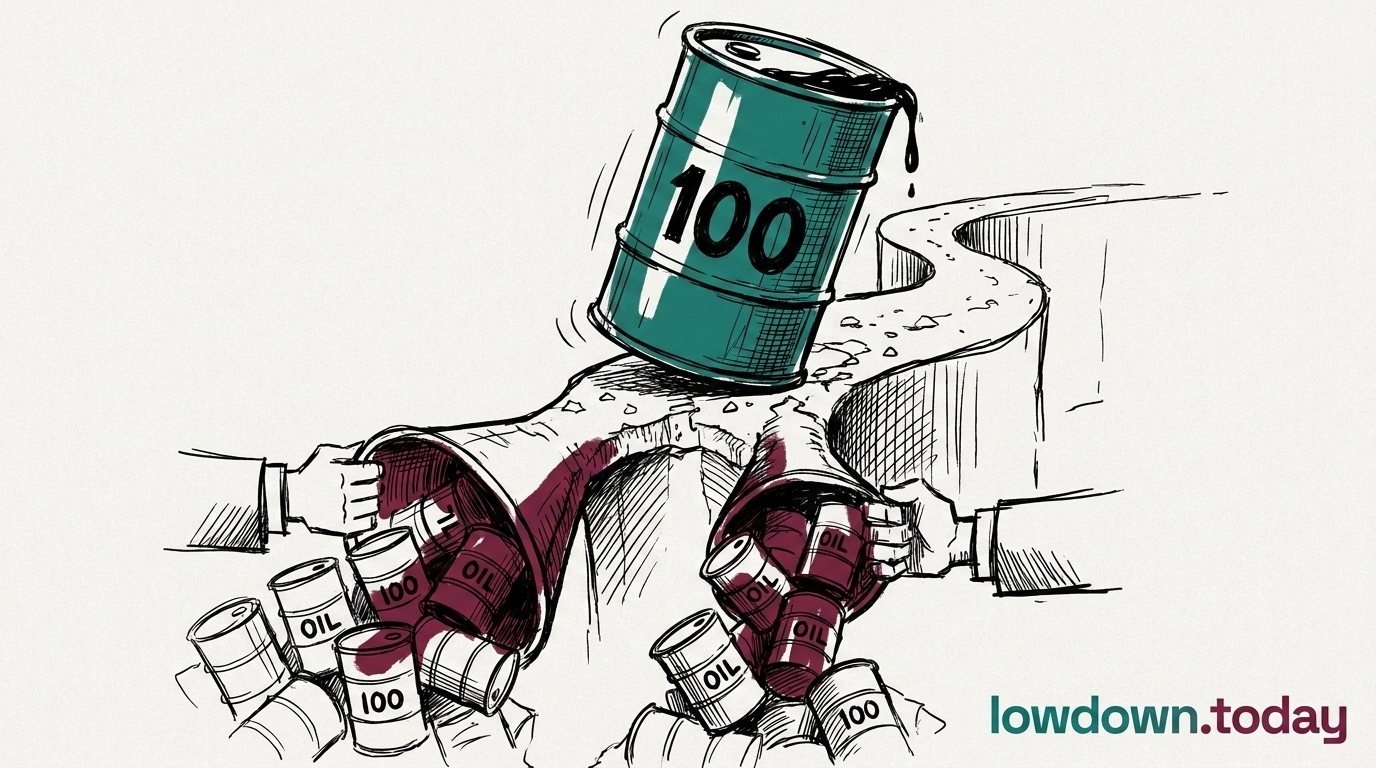
US ultra-low-sulphur diesel jumped near $154 a barrel on 8-10 July as Russian loadings collapsed to 234 kbd, a crack answering to lost supply, not war risk.

ConflictDeveloping
Key takeaway

Diesel is dear because Russia stopped exporting it, a shortage set to outlast the oil war-scare.

US ultra-low-sulphur diesel jumped to about $154/bbl on 8-10 July, a roughly $80/bbl crack over WTI, according to a single trade wire 1. The crack, a refiner's margin from turning a barrel of crude into diesel, had already blown out in Europe, where it held near $46 in early July after Novak's full Russian export ban .

Russian barrels, not war risk, drove the fresh leg. Diesel and gasoil loadings ran just 234 kbd for 1-10 July, against a 400 kbd June pace and an ~817 kbd 2025 average, before the formal 31 July ban even bit 2. The loadings data shows a supply loss already happening on the water, which the ban simply formalises.

That separation is the whole trade. The crack premium prices lost Russian supply; the flat-price premium prices Hormuz transit fear. They rest on different clocks and add to each other rather than substituting, which is why the crack held firm through a week the flat price round-tripped. EU Regulation 833/2014 bars the discounted Russian and Iranian barrels from reaching the European pool, so a hedge that assumes the crack and the Hormuz premium deflate together will slip when only one of them fades.

Deep Analysis

In plain English

Diesel is a fuel refined from crude oil, used mainly in trucks, ships and heavy machinery. The 'crack' is the extra price refiners can charge for diesel above the cost of the crude oil that goes into making it, a rough measure of how tight diesel supply is. In early July, US diesel prices jumped to about $154 a barrel, roughly $80 more than the cost of the crude used to make it, a very wide gap. At the same time, Russia's diesel and fuel-oil shipments dropped sharply, to about a third of last year's average pace, even before a formal Russian export ban (announced by deputy prime minister Alexander Novak) takes effect on 31 July.

Deep Analysis
Root Causes

The diesel crack's outsized widening traces to a supply mechanism distinct from the Hormuz risk driving crude: Russian diesel and gasoil loadings fell to 234 kbd for 1-10 July, down from a 400 kbd June pace and roughly 817 kbd across 2025, even before Novak's formal 31 July export ban takes effect, meaning buyers are already losing Russian barrels ahead of the legal deadline.

The European pool has no substitute source, since Regulation 833/2014 already excludes Russian and Iranian diesel from the bloc, so any further loss of Russian volume has nowhere else to draw from within Europe.

What could happen next?
  • Consequence

    The diesel premium is stacking on top of, rather than substituting for, the Hormuz-driven crude risk premium, meaning European and US diesel buyers face two separate cost pressures simultaneously.

  • Risk

    If Russian loadings do not recover once Novak's ban formally binds on 31 July, the diesel crack could widen further from its already elevated 8-10 July level.

First Reported In

Update #16 · Brent hit $79; the structure said no

ts2.tech· 13 Jul 2026
Read original
Different Perspectives
India
India
India buys more Saudi crude than any other country and has 2.5 million nationals working in the kingdom, so a $100 Brent and a live strike on Saudi tankers reach New Delhi through both fuel bills and remittance risk. Neither channel has an alternative route the way Saudi Arabia's own pipeline does.
Qatar
Qatar
Qatar co-authored the four-mediator ten-day ceasefire proposal alongside Egypt, Pakistan and Oman, centred on resuming Hormuz navigation, while separately pursuing its dated compensation claim against Iran at the UN Security Council filed on 21 July. Doha is mediating and litigating in the same week.
Israel
Israel
Israeli intelligence, reported by the Wall Street Journal, assesses Iran moved thousands of centrifuges and part of its roughly 440kg enriched-uranium stock into Pickaxe Mountain after the June 2025 strikes on its three main nuclear sites. Some of the US refuelling aircraft now deploying to the region are bound for Israeli bases and Ramon Airport.
Houthis
Houthis
Yahya Saree announced the missile and drone strikes on the Encelia and Layla on 22 July as enforcement of the embargo his forces had declared by radio warning alone two days earlier. Six vessels already turned back on the broadcast; the strike shows Houthi forces will use weapons once warnings stop working.
Saudi Arabia
Saudi Arabia
Saudi Arabia's state news agency confirmed only a fire on the Encelia's bow, with the crew safe; the Layla strike remains unconfirmed by Riyadh. The kingdom built its Petroline pipeline specifically to bypass Hormuz through the Red Sea, so the tanker fire lands on the route Riyadh had already spent billions escaping.
United States
United States
Washington is weighing both ten-day proposals but wants a longer truce than either offers, and moved F-16 and F-35 jets plus refuelling aircraft into the region while it decides. That deployment, not Trump's Pickaxe Mountain remarks, is the measurable US action, buying options for the day talks fail rather than betting on them.