Skip to content
You can now search across every topic, entity and event.What's new
Iran Conflict 2026
19JUL

UK pledges £1.1bn AI hardware plan

3 min read
14:05UTC

Science Secretary Liz Kendall set out a £1.1bn AI Hardware Plan at London Tech Week on 8 June, splitting it across a national supercomputer, chip purchasing and a domestic-startup demand pledge.

ConflictDeveloping
Key takeaway

Britain chose national build with a £1.1bn plan, but the power grid that paused Stargate UK still binds it.

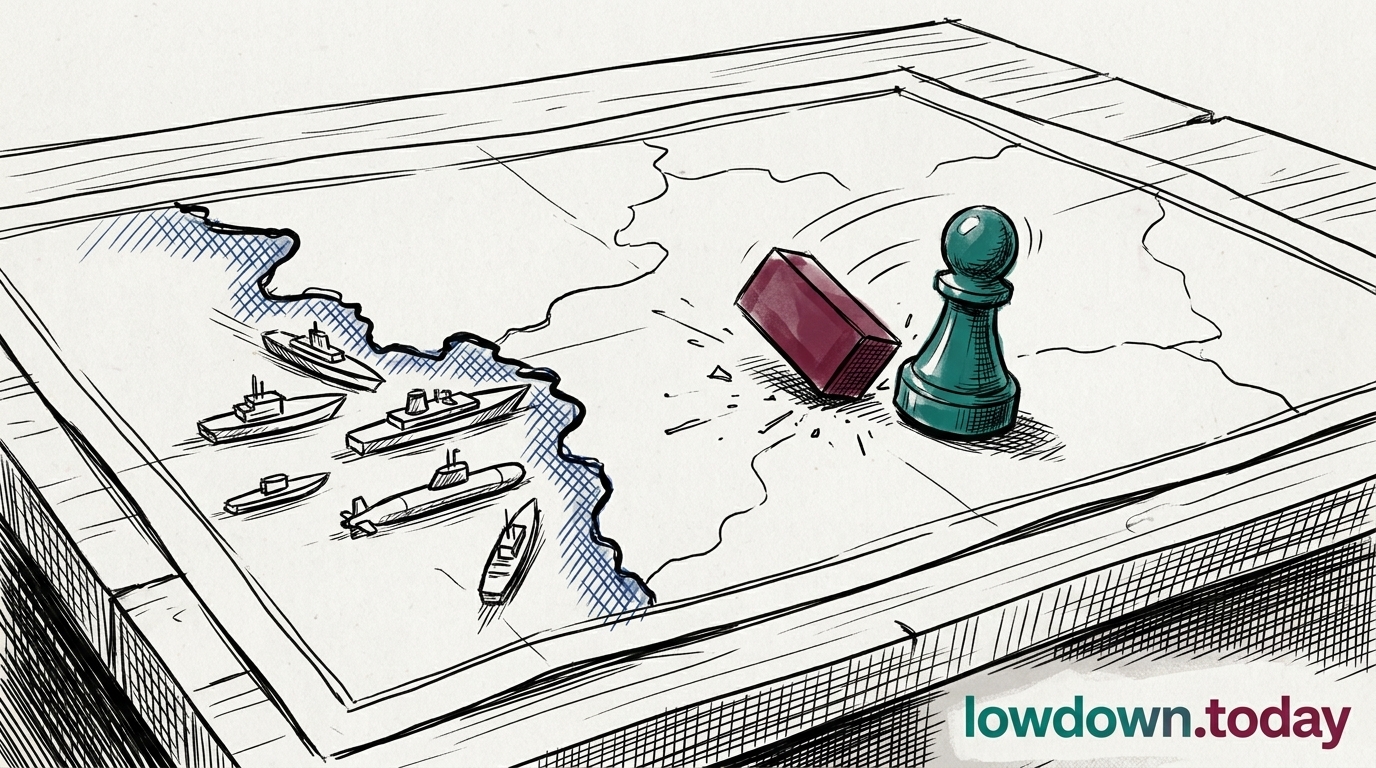
The UK announced a £1.1bn AI Hardware Plan at London Tech Week on Monday 8 June, set out by Science Secretary Liz Kendall 1. The money splits three ways: £750m for a national AI supercomputer due to run from 2030, £400m for advanced chip purchasing, and roughly £120m to seed startup hardware, including a £150m advance commitment to buy novel chips from British firms through a British Business Bank vehicle. Kendall called AI "the defining currency of economic and hard power in today's world" 2.

This is the inverse of the EU's alliance-buy model. Where Brussels pledged to purchase US silicon, London is trying to manufacture domestic demand by guaranteeing itself as a customer for British startup chips. Counting the £500m Sovereign AI Unit , the £250m cloud procurement and this plan, UK sovereign-AI spending has reached about £1.85bn in eight weeks, with the second Sovereign AI wave closing on 5 June .

OpenAI paused its Stargate UK compute build over energy costs and grid connection queues , and any national supercomputer due in 2030 meets the same queue. A guaranteed customer can pull a chip startup through its first orders, but it cannot conjure a grid connection the network operator has not scheduled. The demand-side bet and the EU's supply-side alliance both leave that bottleneck untouched.

Deep Analysis

In plain English

Britain has committed just over £1 billion to build its own AI hardware capacity. The biggest chunk, £750 million, goes toward a national AI supercomputer that will not be ready until 2030. A further £400 million covers buying AI chips in the near term, including £150 million worth of inference chips this summer. The most innovative part is a £150 million commitment to buy chips in advance from British startups before those chips even exist. The idea is that if a British company knows the government will buy its chip, it can raise the money to design and build it. The risk is that designing a chip takes five or more years and costs tens of millions of pounds, and no amount of pre-commitment solves the UK's power-grid problem: building an AI data centre in Britain still takes up to eight years to connect to the electricity network, the same constraint that led OpenAI to pause its own UK data centre {{EVREF:/t/european-tech-sovereignty/3/openai-takes-88500-sq-ft-in-london-pauses-stargate-uk/}}.

Deep Analysis
Root Causes

The UK's absence from the Pax Silica founding architecture (Japan, South Korea, India and Australia joined before the EU) means London has no collective chip-purchasing leverage and must build domestic demand signals independently. The hardware plan is therefore a response to the UK's bilateral position as a mid-sized sovereign buyer with no foundry capacity of its own.

DSIT cannot rely on EU procurement frameworks such as CADA or EuroHPC after Brexit and must create its own demand instruments instead. The British Business Bank vehicle for the advance-customer commitment is the nearest UK equivalent to a European Investment Bank mechanism, but it operates on a commercial rather than strategic-subsidy mandate, which limits the risk tolerance available for early-stage hardware bets.

What could happen next?
  • Opportunity

    The £150m advance-customer commitment via British Business Bank creates a first sovereign demand signal for UK chip designers, potentially anchoring one or two Arm-ecosystem startups through their first tape-out cycle.

    Medium term · Reported
  • Risk

    The 2030 national supercomputer timeline faces the same grid-connection queue that caused OpenAI to pause Stargate UK (ID:2725); a three-to-eight-year connection delay could push first operations to 2033 or later.

    Medium term · Assessed
  • Consequence

    The UK's demand-side model (advance-purchase commitments) diverges from the EU's supply-side alliance model (Pax Silica bulk buy), meaning London and Brussels are testing incompatible sovereignty architectures simultaneously with no coordination mechanism.

    Long term · Reported
First Reported In

Update #8 · Sovereignty law adopted; $40bn US chip buy

Computing· 10 Jun 2026
Read original
Different Perspectives
International Group of P&I Clubs
The Group has kept its Hormuz war-risk exclusion in force through the entire shipping recovery, even as London hull war-risk premiums fell to about 2% of vessel value. A burning LNG carrier off Limah is now the fresh case for holding that line, with mutual pooling meaning one hit reprices the strait for every owner at once.
Jordan
Jordan
Jordan's government said no threats existed at Aqaba hours before Iranian missiles landed there, and has not addressed the IRGC's claim that Jordanian civilians and soldiers supplied targeting intelligence for the strike. Amman hosts forces it does not command and is saying as little as it can.
United States (CENTCOM)
The Pentagon named two of the seventeen American dead, 1st Lieutenant Tyler Feehan and Private Isabella Gonzales, both killed at Jordan's Muwaffaq Salti Air Base, days after its Amman embassy had warned citizens away from Aqaba's airport and seaport. Washington is naming its own cost while flagging threats it declines to attribute publicly.
Iran
Iran
Iran said on Monday it disabled two oil tankers crossing the Strait of Hormuz without its permission, asserting a right to license passage through the strait it borders. Tehran named neither vessel, and CENTCOM had already denied a comparable Iranian claim on 18 July.
Qatar
Qatar
Qatar moved from summoning Iran's deputy ambassador on 8 July to a dated written claim at the UN Security Council thirteen days later, citing Resolution 2817 and reserving its Article 51 right of self-defence. Doha is building a permanent record while still hosting CENTCOM's forward headquarters and mediating with Tehran.
CENTCOM
CENTCOM
CENTCOM confirmed a third American service member died in northern Iraq on 19 July clearing unexploded ordnance from a downed Iranian drone, and recovered unidentified remains at Muwaffaq Salti Air Base in Jordan. The Pentagon has framed its Khuzestan strikes as degrading IRGC capacity, a rationale that stretches to explain a reactor foundation with no nuclear material in it.