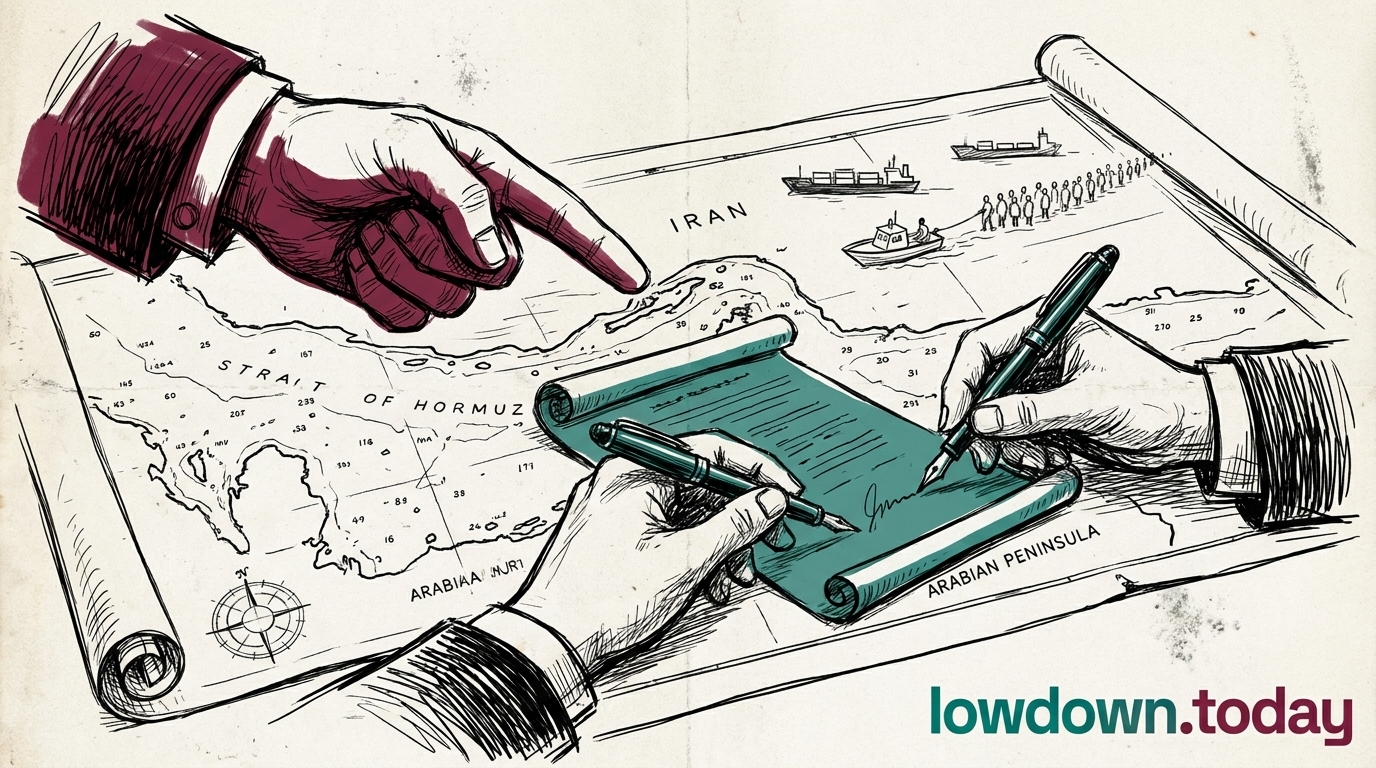
Brent Crude rose to $85–90 per barrel, up from approximately $73 before the campaign — a rise of 16 to 23 per cent in three days. The price had opened at $82.37 on 1 March and has climbed steadily as the strait of Hormuz closure enters its fourth day. Gold held at a record $5,362 per ounce . Dow futures fell 300 points and the Nikkei dropped 2% .
The driver is physical, not speculative. Vessel traffic through the strait has fallen 70 per cent, with more than 150 tankers anchored in open Gulf waters. CMA CGM, Maersk, and four other major carriers have suspended all transits. Roughly 20 million barrels per day normally pass through — one-fifth of the world's traded oil. OPEC+'s 220,000 barrel-per-day increase replaces 1.1 per cent of that volume.
Goldman Sachs projects oil averaging $98 near-term, rising to $110 in a high-disruption scenario. JPMorgan forecast $120–130 if prolonged . Goldman raised its US recession probability estimate to 25%; prediction market Kalshi briefly priced it at 35%. JPMorgan Asset Management identified a sustained Hormuz closure as the variable separating a contained price shock from a supply crisis reaching European and Asian consumers.
The 1973 Arab Oil Embargo — the closest historical precedent to a sustained Gulf supply disruption — quadrupled oil prices over six months and triggered a global recession. The critical variable then was not the initial spike but duration. At $85–90, the market is pricing in a resolution. Goldman and JPMorgan are pricing in the possibility that one does not come.


