Skip to content
Welcome, thoughtbot's Giant Robots listeners!Start here
Iran Conflict 2026
23JUN

TRON wallets attach to Central Bank of Iran

3 min read
11:42UTC

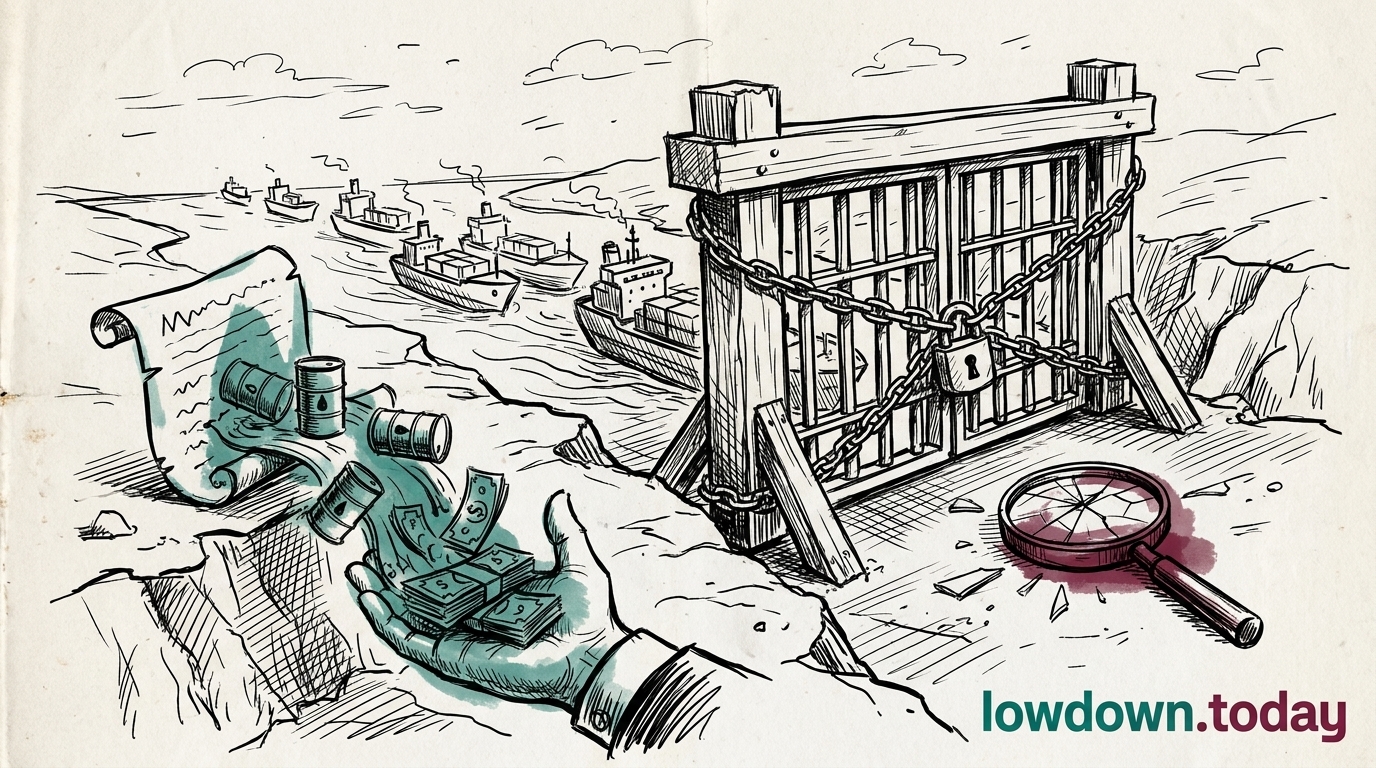
OFAC issued General License V for Hengli wind-down with no published deadline and added two TRON blockchain wallet addresses to the Central Bank of Iran SDN entry, the first crypto attachment to an Iranian state institution in the 2026 war.

ConflictDeveloping
Key takeaway

Crypto wallets and an open-ended wind-down extend OFAC's reach into exchanges and customers globally.

OFAC issued General License V on 24 April authorising a wind-down period for Hengli Petrochemical transactions with no published deadline, and added two TRON blockchain wallet addresses to the Central Bank of Iran SDN entry⁠1. The crypto addition is the first for any Iranian state institution since the war began on 28 February, moving sanctions enforcement from financial rails onto blockchain infrastructure for the first time at the state-institution level.

The missing deadline on General License V is the live compliance question for every Hengli customer globally. Wind-down transactions are permitted, but absent a fixed date, compliance teams cannot calculate the moment authorised activity converts to a violation. The contrast with India Ports Global's position is stark: Chabahar operators face a hard 26 April waiver cliff, while Hengli's customers have no cliff at all: only enforcement signals rather than text.

The TRON network is the dominant rails for USDT stablecoin transfers and a well-documented sanctions evasion channel. Attaching these two wallet addresses to the Central Bank of Iran's SDN entry means any US person or US-regulated exchange that has processed them historically now faces retroactive screening obligations. These are the first wallet addresses on the SDN line for an Iranian state institution, narrowing the technical gap between shadow-fleet enforcement and crypto-layer enforcement to a single press release.

Deep Analysis

In plain English

When the US sanctions a company, it sometimes allows existing customers a short period to wind down their contracts legally, rather than immediately cutting off every transaction. This is called a 'general licence'. The unusual feature of Friday's licence is that it gives no end date, which leaves Hengli's customers in legal limbo: they do not know when they must stop. The separate action adding TRON wallet addresses to Iran's Central Bank entry is technically significant. TRON is a blockchain network, similar to Ethereum, that is widely used in Asia for moving money without going through banks. Previous US sanctions on Iranian crypto activity targeted private actors. Adding wallets to the state-owned Central Bank entry means the US is now treating the Central Bank of Iran's digital assets with the same legal framework as its dollar-denominated foreign reserves, which have been frozen since 1979. TRM Labs and Chainalysis, the main firms that track cryptocurrency sanctions compliance, will now flag any transaction touching these wallet addresses as a sanctions risk.

Deep Analysis
Root Causes

The TRON wallet addition reflects a structural gap in Iran's sanctions architecture that OFAC has been trying to close since 2021.

Iran's Central Bank has held its formal foreign currency reserves, primarily around $120 billion at peak, frozen under US sanctions since the 1979 hostage crisis. Cryptocurrency offers a parallel reserve mechanism: wallets that no third-party custodian controls and that bypass the dollar-clearing system entirely.

TRON specifically has been favoured by Iranian actors because USDT (Tether's stablecoin) runs primarily on TRON, allowing dollar-denominated transactions without touching US banking infrastructure.

General License V carries no published deadline, replicating a mechanism OFAC used during the 2012 Bank of Kunlun designation. An open-ended wind-down period creates legal pressure on Hengli's customers to self-certify their exit timeline, which generates compliance documentation OFAC can audit later to establish whether transactions after a self-declared exit date were wilful violations.

What could happen next?
  • Precedent

    The Central Bank of Iran TRON wallet designation establishes that OFAC will treat state-institution blockchain addresses as equivalent to frozen foreign-currency reserves, regardless of the technical difficulty of enforcement.

  • Risk

    Exchanges operating TRON-based USDT transactions globally face automated compliance flags from Chainalysis and TRM Labs feeds starting immediately, regardless of whether they have any direct Iran exposure.

First Reported In

Update #79 · Islamabad 3 collapses; Witkoff grounded, talks stall

US Department of the Treasury· 25 Apr 2026
Read original →
Causes and effects
This Event
TRON wallets attach to Central Bank of Iran
The crypto addition and the open-ended wind-down extend OFAC's enforcement reach to US-regulated exchanges and create compliance uncertainty for every Hengli customer.
Different Perspectives
Office for Budget Responsibility
The OBR's 28 October forecast assumed $82 oil for 2026 and 2027, from market prices for the ten working days to 19 August, and blamed dearer wholesale energy on the war without naming Iran. It expects CPI inflation close to 4% in early 2027 even at that price.
Hengaw, Kurdish rights group
Hengaw reported the 3 November hangings of Amirhossein Maleki and Amirhossein Ebrahimi in Isfahan, saying Ebrahimi was tortured into confessing and that nine of 12 people sentenced to death in the case have now been hanged. Iran's judiciary holds that the defendants killed members of the security forces.
FINTRAC, Canada's financial intelligence unit
FINTRAC worked with the US Treasury on the 6 November designation of eight money services businesses in British Columbia, Ontario and Quebec. Treasury says the businesses still operate, some under new names, so closing them falls to Ottawa.
Abdul Qadir al-Dakhil, Governor of Nineveh
Al-Dakhil cancelled three Mosul International Airport contracts on 7 November over alleged links to armed groups, after meeting Prime Minister Ali al-Zaidi in Baghdad. He named no group or company, and said the contracts will go to international companies.
Kuwait
Kuwait
Kuwait condemned the Houthi missile fired towards the Madinah region on 5 November and restated its support for Saudi Arabia, the Qatar News Agency reported. Its state tanker company, Kuwait Oil Tankers Company, is among the Gulf state fleets on Iran's expanded Hormuz list.
Scott Bessent, US Treasury Secretary
Treasury designated an alleged Chandigarh false-flag network on 4 November and eight Canadian exchangers on 6 November, while State sanctioned alleged MANPADS intermediaries. None of the actions touches an oil buyer; they target the paper, cash and procurement around Iran's trade.

Written with AI from Lowdown's published reporting. Not individually reviewed by an editor. Editorial standards.
