Skip to content
You can now search across every topic, entity and event.What's new
Iran Conflict 2026
23JUN

Italy moves on ISAB before 27 June clock

3 min read
11:42UTC

Italy's energy minister signalled on 4 June that Rome will conditionally approve Ludoil's purchase of the 320kbd ISAB refinery, the first concrete movement on a sale that has survived six OFAC rollovers.

ConflictDeveloping
Key takeaway

Italy's conditional ISAB approval clears one gate, but OFAC's missing transaction licence still blocks the sale before 27 June.

Italy's energy minister signalled on 4 June that the government is set to grant conditional Golden Power approval for Ludoil's acquisition of ISAB, the 320kbd Priolo Gargallo refinery in Sicily, subject to final conditions and antitrust review. 1 ISAB is one of the Mediterranean's largest refineries and a strategic supply asset for Italy, which is why Rome's foreign-investment screen sits over the deal. This is the first concrete movement on a sale that has survived six OFAC rollovers of the underlying licence.

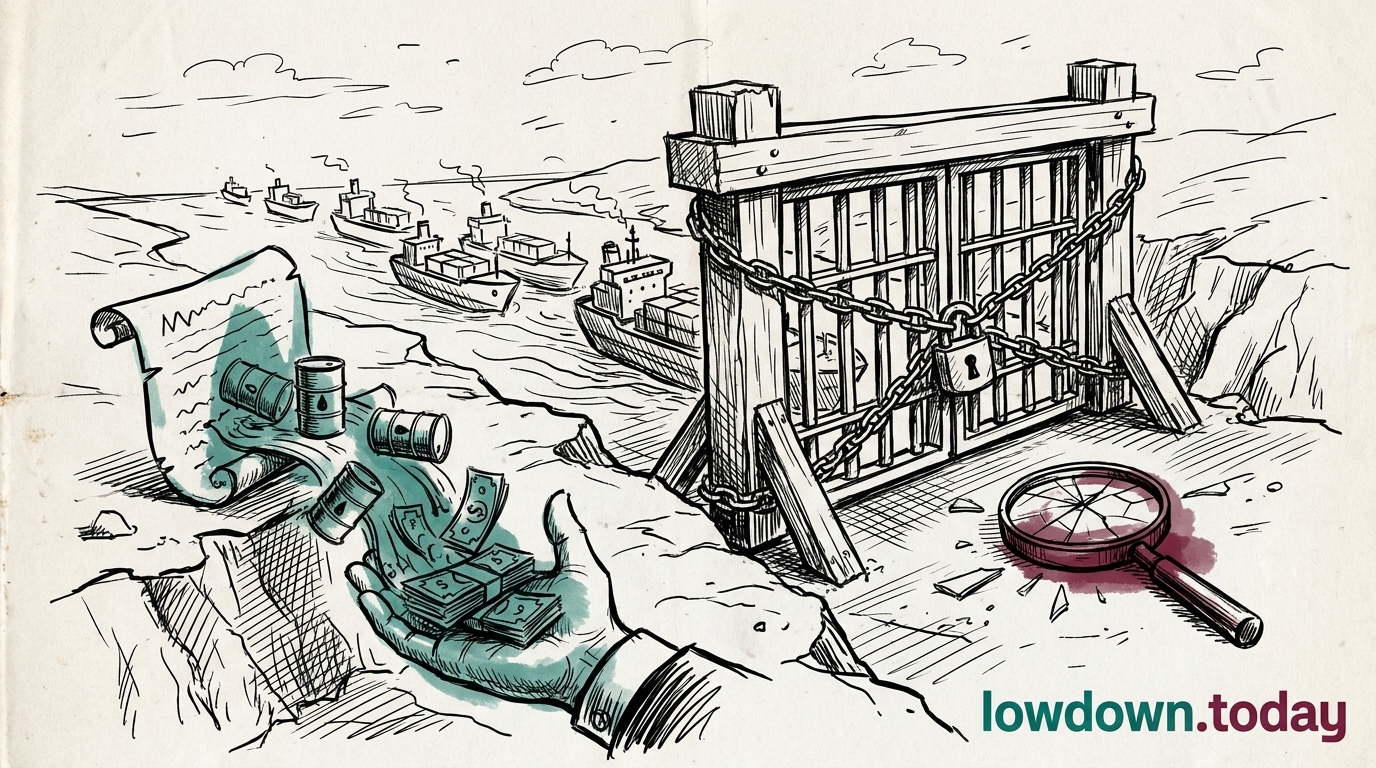
Golden Power is Italy's regime for vetting or blocking foreign acquisitions of strategic assets, and a conditional approval lowers the risk of an Italian veto without closing anything. The transaction still depends on the US sanctions calendar. GL 131F authorises only negotiation of the sale through 27 June , and OFAC has issued no separate transaction licence, so no funds can yet change hands.

Two gates therefore stand between Ludoil and ISAB, and they answer to different masters. Rome can condition or block the deal under Golden Power independently of any US licence, while Washington controls whether money can legally move at all. Italy secured a 30-day EU derogation for ISAB back in 2012 and could seek one again if 27 June approaches with no OFAC transaction licence in hand, a procedural escape hatch that would buy time without resolving the underlying sanctions question.


Deep Analysis

In plain English

ISAB is Sicily's largest oil refinery, owned by Lukoil, a Russian company that has been placed on the US sanctions list. Because of those sanctions, a company called Ludoil wants to buy ISAB, which would allow the refinery to continue getting normal financing and crude oil rather than operating under a permanent cloud of sanctions uncertainty. Italy has a legal process called Golden Power that lets the government approve, block, or add conditions to foreign buyers acquiring important national assets. Italy signalled it is willing to give conditional approval for Ludoil to buy the refinery. However, the US Treasury's sanctions office (OFAC) also needs to issue a separate permission before any money can actually change hands, and that permission has not been granted yet. Both Italy's approval and the US permission must arrive before 27 June, when the current authorisation to even negotiate the deal expires.

What could happen next?
  • Risk

    If the OFAC transaction licence does not arrive before 27 June, GL 131F lapses and the Lukoil-ISAB sale requires a seventh OFAC extension (GL 131G), forcing another month of sanctions-perimeter procurement uncertainty for ISAB's crude buyers and product offtakers.

    Immediate · Assessed
  • Consequence

    A completed Ludoil-ISAB acquisition removes the Urals/Iranian crude discount that Lukoil accessed as feedstock, raising ISAB's effective crude cost by approximately $20-25/bbl and compressing the new owner's refining margin relative to Lukoil-era economics.

    Medium term · Assessed
  • Opportunity

    Italy's 2012 EU derogation precedent gives Rome a ready-made fallback tool if 27 June arrives without an OFAC transaction licence: a 30-day EU derogation from Russian sanctions would buy a seventh extension window without requiring a new GL 131G from OFAC.

    Short term · Reported
First Reported In

Update #7 · Distillate deficit deepens as runs max out

La Sicilia· 11 Jun 2026
Read original
Different Perspectives
Shipping and insurance industry
UKMTO counted about 20 US-facilitated Hormuz transits a day to 11 September against only 6 visible on AIS, with traffic still around 90% below the 138-a-day pre-war baseline. War-risk underwriters cannot price hulls they cannot see, or resolve whether the tanker El Gaia hit a mine, as Iran claims, or a missile and drone, as CENTCOM says.
European refiners
European refiners
European refiners, including Poland's Orlen, absorbed a roughly $26 gap between Dated Brent at $130.80 on 15 September and ICE Brent futures settling at $103.87 on 18 September, a spread that widened from $13.45 on 9 September rather than newly opening. Their futures hedges no longer cover what they now pay for physical barrels.
Saudi Arabia
Saudi Arabia
Saudi Aramco zeroed European term customers' October allocations and rerouted roughly 60 million barrels to Asia through Ras Tanura and Sohar, using Red Sea and Gulf terminal capacity built years ago to cut Hormuz exposure. Riyadh reallocated existing supply rather than negotiating a shortfall with Europe.
Qatar
Qatar
Qatar's energy minister Saad al-Kaabi told Bloomberg at the Qatar Economic Forum on 20 September that Bessent's two-year Hormuz-obsolescence forecast is wrong, and that Doha has deliberately built no bypass pipeline. Qatar's gas exports run through one waterway by choice, not oversight.
Iran (foreign ministry and Majlis)
Iran's foreign ministry and 130 Majlis deputies moved toward NPT withdrawal this week, with lawmaker Hossein-Ali Haji Deligani filing a triple-urgency bill on 20 September that Speaker Qalibaf has not yet scheduled. Tehran treats treaty membership as leverage still on the table, not yet spent.
Russia and China
Russia and China
Moscow and Beijing vetoed the Panel of Experts' renewal, maintaining Resolution 2231 lapsed in October 2025 and the 2025 snapback was never validly triggered, so the sanctions architecture the Panel enforces has no current legal standing. Both governments frame the veto as upholding law, not shielding Tehran.



