Skip to content
You can now search across every topic, entity and event.What's new
Iran Conflict 2026
23JUN

Hormuz tanker count back to pre-war

2 min read
11:42UTC

Thirty-five tankers cleared the Strait of Hormuz on 2 July, the first pre-war-range count of the war, per Morgan Stanley data, as Brent held in the low $70s through the mourning week.

ConflictDeveloping
Key takeaway

Hormuz tanker traffic is back to roughly normal numbers, easing war-risk premiums and steadying oil prices.

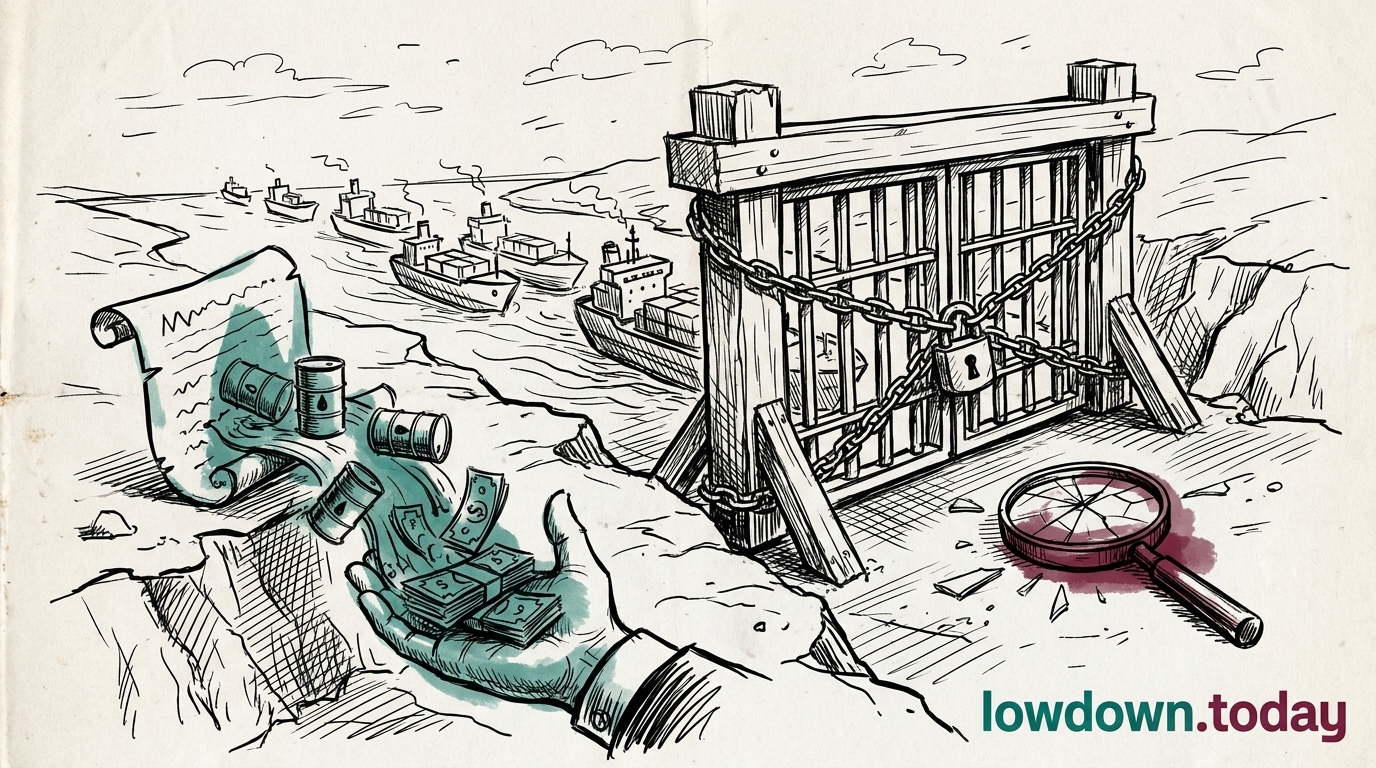
Thirty-five oil and gas tankers cleared the Strait of Hormuz on 2 July, the first time the daily vessel count has returned to its pre-war range, according to Morgan Stanley data cited by Al Jazeera 1. the strait is a 33km channel carrying about a fifth of the world's traded oil, and the number of owners willing to make the passage tracks confidence more directly than any single day's throughput. That count is a different measure from the single-day record set on 25 June, when the strait moved 20 million barrels in 24 hours ; one counted barrels, this counts hulls.

Brent Crude held in the low $70s through the mourning week, essentially flat across three consecutive sessions of roughly 1% declines. Al Jazeera ties the drift to progress in US-Iran talks on maritime passage. Seven-day averages still sit below the same week last year, and the war premium that once pushed Brent above $116 has gone .

Thirty-five hulls in a single session say more than any ministerial claim about reopening, because insurers price war-risk cover off how many ships actually sail, not off a one-day barrel record. For a European or Asian buyer, that count moves the premium on each cargo, and those premiums feed straight through to the pump.


Deep Analysis

In plain English

Thirty-five oil and gas tankers passed safely through the Strait of Hormuz on 2 July, matching the roughly 35-a-day rate that was normal before the war started in February. That sounds like good news, and Brent crude, the global oil price benchmark, has stayed calm in the low $70s through the week as a result. But normal ship traffic does not mean normal insurance. Many shipping companies sending vessels through are doing so without the standard war-risk cover that usually protects a tanker owner if it is attacked, because insurers and Iran's own transit rules still do not agree on the paperwork.

Deep Analysis
Root Causes

London's Protection and Indemnity clubs cut hull war-risk premiums from a five per cent peak to around two per cent of vessel value by late June, but that remains twenty times the pre-conflict baseline of 0.1 per cent, so tankers transiting today pay an insurance cost structure that has not caught up with the traffic figures.

The US Development Finance Corporation's $40 billion Chubb-backed Hormuz reinsurance facility has had zero uptake since launch, blocked by the conflict between Iran's Persian Gulf Strait Authority registration requirement and OFAC compliance rules for London P&I clubs. That regulatory deadlock, not a lack of capital, is what keeps formal war-risk cover unavailable even as ships sail anyway.

What could happen next?
  • Consequence

    A vessel count matching pre-war rates without matching insurance cover means individual shipowners, not the market as a whole, are absorbing the war-risk exposure on each transit.

  • Risk

    Zero uptake on the $40 billion DFC-Chubb reinsurance facility leaves no formal backstop if a single high-profile strike interrupts the current run of calm transits.

First Reported In

Update #146 · Iran's new leader wounded, not just hiding

Al Jazeera· 5 Jul 2026
Read original
Different Perspectives
Turkiye
Turkiye
Erdogan followed the Pakistani delegation to Jeddah for an instrument that has not been signed. Ankara's entry widens Saudi Arabia's defence architecture beyond the existing Pakistan pact, adding a second non-Gulf military partner mid-conflict.
Oman
Oman
Muscat is the corridor's broker but has published nothing about the arrangement Fars describes on its behalf. The account leaves Oman administering outbound traffic only, a narrower role than the shared route its mediation has rested on since 1979.
Pakistan
Pakistan
Islamabad sent Sharif, Munir and Dar to Jeddah to widen a defence commitment it has honoured in cheaper registers since March, when Dar invoked the Saudi mutual defence pact. Jeddah tests whether that hedge becomes a binding trilateral instrument with Turkiye.
United States
United States
Washington rejected the Majlis Hormuz bill outright while CENTCOM's own tally kept climbing to 49 vessels redirected since 14 July. Both instruments tightened in the same week Trump promised the strait would reopen soon.
Iran
Iran
Iran's foreign ministry is selling a phased Hormuz corridor through Oman and denying any percentage cargo tariff, while its own Majlis is legislating fines to 20% and a bar on Israeli-linked cargo. The two accounts, from the same government, do not agree with each other.
Saudi Arabia
Saudi Arabia
Riyadh published a target forecast, not an attribution, for the campaign it says the Najran strike previewed. That keeps an Article 51 case available while it formalises a trilateral defence architecture with Pakistan and Turkiye.



