Skip to content
Welcome, thoughtbot's Giant Robots listeners!Start here
Iran Conflict 2026
21JUN

Two supertankers hit on the way out

2 min read
17:51UTC

The Saudi-operated Sidr and South Korea's Senegal Prosperity were struck minutes apart by unidentified projectiles off Khasab, both running with their transponders switched off. Nobody has claimed the attack.

ConflictDeveloping
Key takeaway

Two dark tankers were struck off Khasab minutes apart, and nobody has claimed the attack.

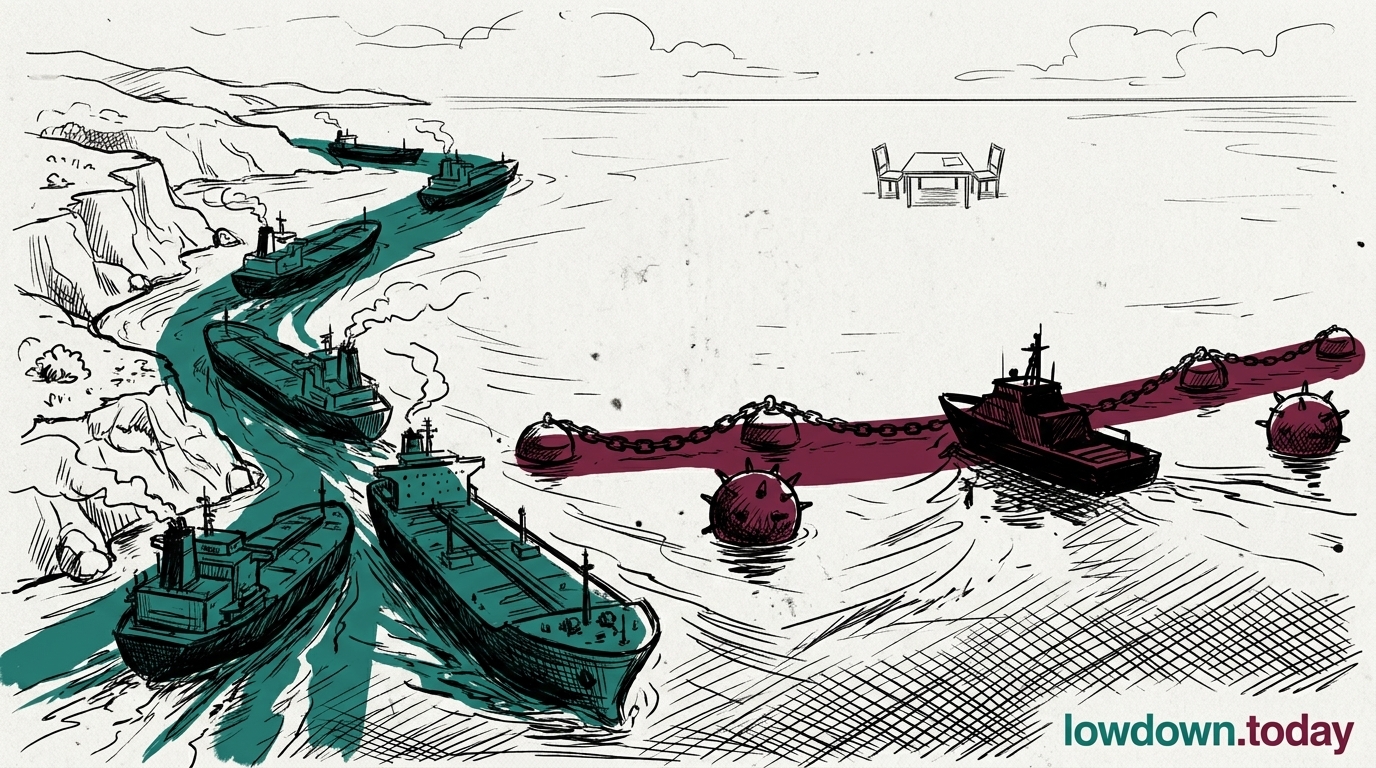
Late on Tuesday 1 September the Sidr, a very large crude carrier operated by Saudi Arabia's Bahri, and the Senegal Prosperity, operated by South Korea's Sinokor, were struck by unidentified projectiles minutes apart as they left the strait of Hormuz, northeast and east of Khasab in Oman⁠1. Both were running with their automatic identification transponders switched off, the equipment that broadcasts a vessel's position to other traffic and to shore. The Sidr anchored near the Omani coast afterwards. No party claimed responsibility, and no casualty figure or damage assessment has been published.

Switching off a transponder buys concealment at a price. A tanker that stops broadcasting is harder for a targeting cell to find and harder for a rescue coordinator to reach, and it drops out of the commercial tracking datasets that everyone outside the two militaries relies on to describe this waterway. Owners have been making that trade since the spring; the consequence is that the ships most exposed to attack are the ones least visible in any independent count of traffic.

A projectile struck a Hormuz-transiting vessel on 18 August, killing one crew member, and three Emirati tankers were attacked in three days the week before that. What separates this pair is the flag on the paperwork: a Saudi state-linked operator and a South Korean one, hit on the same evening, on the exit leg of a corridor the escorting command had called clear.

Attribution has not followed any of these attacks, and an unclaimed strike buys something a claimed one does not. It puts risk on the whole approach without committing anyone to the escalation that an admitted attack on a Saudi state-linked hull would carry.

Deep Analysis

In plain English

Two big oil tankers, one Saudi-operated and one South Korean, were hit by unidentified projectiles minutes apart as they left the strait of Hormuz. Both had switched off the transponder that broadcasts a ship's position, so nobody could easily track where they were. Nobody has claimed responsibility for the attack. That matters because an unclaimed strike leaves no one to hold accountable, and no clear signal about who might be hit next.

Deep Analysis
Root Causes

The automatic identification system that lets a tanker be tracked by port authorities and rescue services is the same signal that would let an attacker find it. A vessel transiting a contested strait faces a choice with no safe option: broadcast and be locatable, or go dark and be unable to summon help quickly if hit.

Neither ship's operator has published why its transponder was off, so this desk cannot say whether the choice was standing wartime practice or an instruction issued for this transit alone.

First Reported In

Update #175 · Iran says it re-mined the cleared lanes

Insurance Journal, crediting Bloomberg· 3 Sept 2026
Read original →
Different Perspectives
Office for Budget Responsibility
The OBR's 28 October forecast assumed $82 oil for 2026 and 2027, from market prices for the ten working days to 19 August, and blamed dearer wholesale energy on the war without naming Iran. It expects CPI inflation close to 4% in early 2027 even at that price.
Hengaw, Kurdish rights group
Hengaw reported the 3 November hangings of Amirhossein Maleki and Amirhossein Ebrahimi in Isfahan, saying Ebrahimi was tortured into confessing and that nine of 12 people sentenced to death in the case have now been hanged. Iran's judiciary holds that the defendants killed members of the security forces.
FINTRAC, Canada's financial intelligence unit
FINTRAC worked with the US Treasury on the 6 November designation of eight money services businesses in British Columbia, Ontario and Quebec. Treasury says the businesses still operate, some under new names, so closing them falls to Ottawa.
Abdul Qadir al-Dakhil, Governor of Nineveh
Al-Dakhil cancelled three Mosul International Airport contracts on 7 November over alleged links to armed groups, after meeting Prime Minister Ali al-Zaidi in Baghdad. He named no group or company, and said the contracts will go to international companies.
Kuwait
Kuwait
Kuwait condemned the Houthi missile fired towards the Madinah region on 5 November and restated its support for Saudi Arabia, the Qatar News Agency reported. Its state tanker company, Kuwait Oil Tankers Company, is among the Gulf state fleets on Iran's expanded Hormuz list.
Scott Bessent, US Treasury Secretary
Treasury designated an alleged Chandigarh false-flag network on 4 November and eight Canadian exchangers on 6 November, while State sanctioned alleged MANPADS intermediaries. None of the actions touches an oil buyer; they target the paper, cash and procurement around Iran's trade.

Written with AI from Lowdown's published reporting. Not individually reviewed by an editor. Editorial standards.
