Skip to content
You can now search across every topic, entity and event.What's new
Iran Conflict 2026
21JUN

TTF round-trips back above EUR 50

2 min read
17:51UTC

TTF front-month firmed to EUR 50.50 on Monday, a 3.49% gain, on renewed Strait of Hormuz shipping risk rather than any European supply tightness.

ConflictDeveloping
Key takeaway

TTF's move above EUR 50 priced Gulf shipping risk, not European scarcity, and could unwind on de-escalation.

TTF front-month gas, Europe's benchmark hub price, settled around EUR 50.00/MWh on Thursday 9 July, eased to EUR 48.80 on Friday 10 July, then firmed to EUR 50.50 by Monday 13 July, a 3.49% gain on the session, per Trading Economics 1. The move round-tripped the benchmark back over EUR 50 after a mid-week dip, and it came stronger than it left.

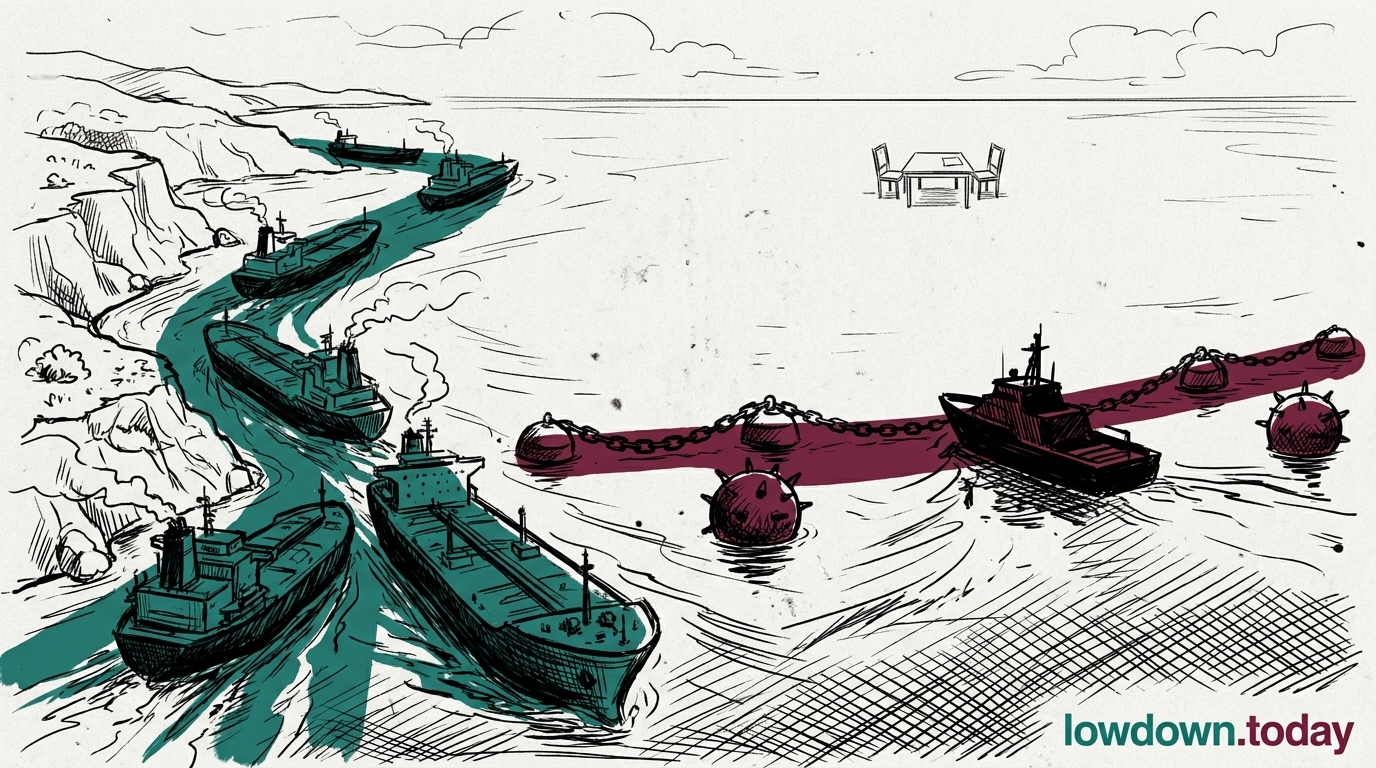
Nothing in the French power story pushed it. The bid came from renewed US-Iran military tension over Strait of Hormuz LNG shipping, the same risk channel that drove TTF's 13% climb to EUR 50.10 a week earlier when QatarEnergy withdrew Ras Laffan supply on 9 July and extended its Asian force majeure into August 2. the strait carries a fifth of global oil and a meaningful slice of LNG through a 33km chokepoint, so any escalation there reprices European gas regardless of what the continent's own storage is doing.

That split matters for anyone trading the gas-power relationship. French curtailment lifted power on a domestic weather event; TTF lifted on a Gulf chokepoint four thousand miles away. The two legs ran on separate clocks in the same week, which means a Hormuz de-escalation could unwind the gas premium quickly without touching the French power story at all.


Deep Analysis

In plain English

TTF is the main price that European gas buyers pay, set at a trading hub in the Netherlands. Since Europe stopped buying much pipeline gas from Russia, it now depends more on gas shipped in on tankers from places like Qatar, which means the price reacts to anything that threatens those ships. Over 9-13 July the price went up, down, then up again, ending close to where it started but slightly higher. None of that had to do with Europe actually running short of gas, its storage was comfortable and Norwegian supply was recovering. It was traders reacting to Gulf shipping-risk headlines rather than any real shortage.

Deep Analysis
Root Causes

Europe's post-2022 pivot away from Russian pipeline gas left TTF far more exposed to LNG-cargo routing than it was a decade ago, so any risk to Gulf shipping lanes now moves the European benchmark even when no cargo has actually been redirected or delayed.

That exposure is compounded by QatarEnergy's reduced Ras Laffan throughput (running near 35% of the 77 MTPA nameplate per ), which removes the buffer capacity that would otherwise let the market shrug off a few days of shipping-risk headlines.

First Reported In

Update #26 · Gas and power decouple as French heat bites

Trading Economics· 13 Jul 2026
Read original
Different Perspectives
Hengaw
Hengaw
The Norway-based monitoring group reported the Urmia executions of Omid Behzad and Pouria Safvat, the only source to do so, consistent with its documented pattern of recording far more executions than the Iranian state acknowledges. Iran's government has not confirmed either execution.
Shipping and insurance underwriters
War-risk premiums price the Houthi campaign because the group announces its targets in advance, but a reopening Trump has promised without a published text gives underwriters no benchmark to reprice Hormuz cover against. Insurers want a text before they move rates, not a promise.
Houthi movement
Houthi movement
Spokesman Yahya Saree claimed strikes on two tankers in the Red Sea and Gulf of Aden on 5 August, only one of which UKMTO could confirm. The group's campaign against shipping continues on its own schedule, independent of any Hormuz arrangement further north.
Oman
Oman
Muscat has brokered the coordinates both Tehran and Washington's wire sources now describe differently, but has published no account of its own. Oman's position depends on treating Hormuz as a shared route, which is not what Iran is currently describing.
United States Central Command
CENTCOM raised its interdiction tally from 35 to 44 redirected vessels and disclosed its first boardings on 3 August, the day before Trump promised a reopening. The command's own enforcement record does not yet reflect the release the President has described.
Iran's Foreign Ministry
Spokesman Esmaeil Baghaei described the agreed Hormuz coordinates as a wholly new corridor under Iranian management, not a split of the existing route, days after his own deputy rejected Oman's lane proposal. Tehran wants the arrangement read as a change of ownership, not a compromise on access.



