Skip to content
You can now search across every topic, entity and event.What's new
Iran Conflict 2026
21JUN

Physical spreads split from the prompt

4 min read
17:51UTC

Three European spreads moved bearish in the same 11 June session while the prompt held flat, isolating the residual escalation premium as the only bid no physical signal corroborates.

ConflictDeveloping
Key takeaway

Three bearish spreads against a flat prompt size the Iran premium no physical reading will back.

Three European physical spreads diverged from the prompt in a single session on 11 June 2026. The Central European basis compressed against TTF, EU storage kept injecting, and the JKM-TTF inter-basin arb widened to $2.368/MMBtu from $1.225 the week to 1 June , every one of them bearish on north-west European gas 1. JKM is the Asian LNG spot benchmark; a wider arb pulls flexible Atlantic cargoes east, away from European terminals, rather than toward them.

The settled prompt held flat against that stack. TTF, Europe's benchmark hub, has stayed above €50 for four sessions, and the refusal to fall is the anomaly worth pricing. With three physical signals pointing below the benchmark and the prompt static, the divergence isolates the residual escalation premium as the only bid no physical reading supports. The basis convergence covered in the lede note shows the same calm from the regional angle; here it is the inter-basin arb and the storage build saying sell while the curve will not.

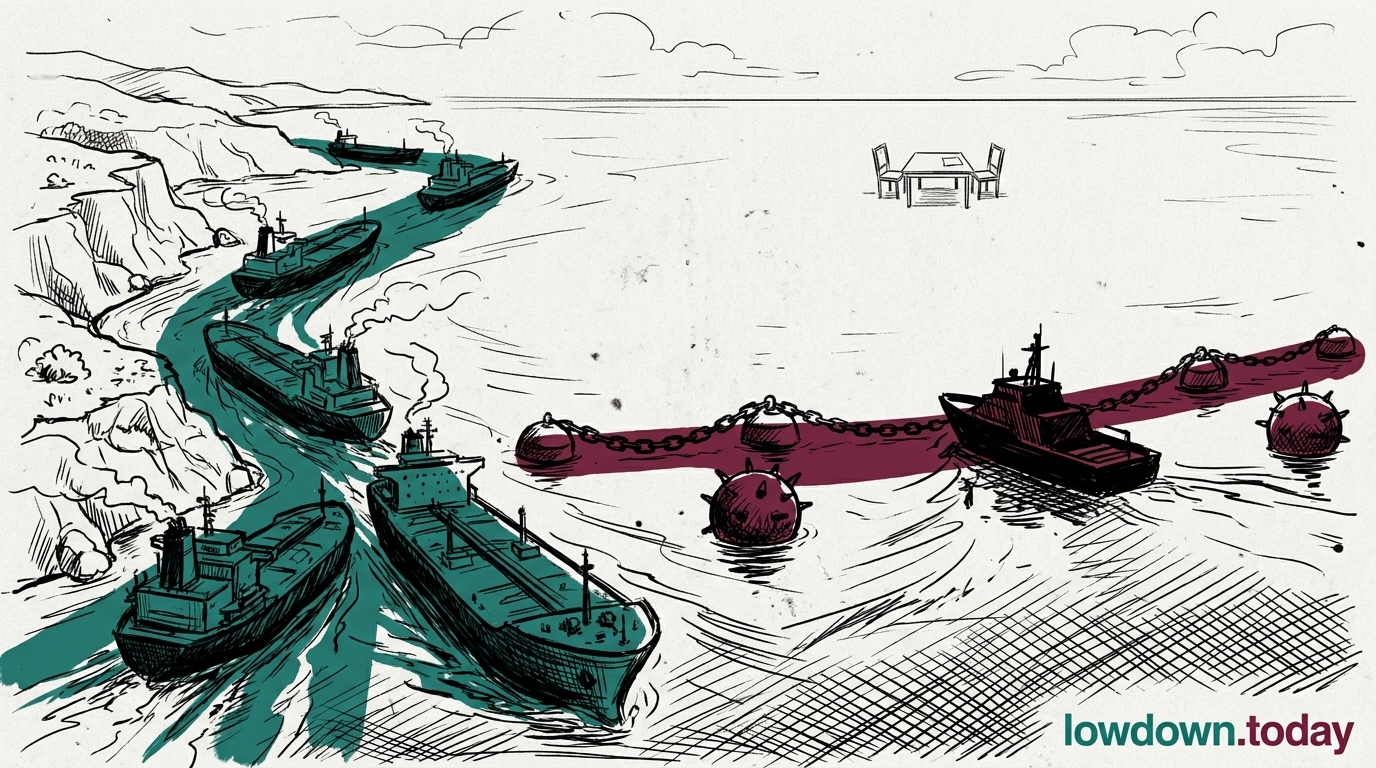
The escalation premium traces to the US strike wave on Iranian soil on 9-10 June , a cross-topic development rather than a European supply event. CENTCOM denied Iran's claim of striking a US warship and US vessels kept transiting under escort, but commercial throughput through the Strait of Hormuz sits at roughly 2% of pre-crisis levels 2. the strait has been effectively shut for months, so that disruption is already carried in the strip; what the prompt is now adding is incremental mine-laying and naval-escalation risk, not initial closure risk.

For this desk the molecules still point the other way. The same €50 line a single deal headline knocked 8.1% off in May is holding on a premium that no spread will validate, which marks it as a diplomatic level rather than a physical floor.


Deep Analysis

In plain English

Gas prices in Europe have been holding above a key threshold of €50 per megawatt-hour even though several physical signals suggest prices should actually be falling. EU storage facilities are being filled, the price gap between Central European and benchmark gas has nearly closed, and more Asian buyers are pulling gas cargoes eastward rather than toward Europe. The main reason prices are staying high is tension around the Strait of Hormuz, the narrow waterway in the Gulf through which a large share of global liquefied natural gas travels. US military strikes on Iran on 9-10 June added fresh anxiety about whether the strait could close further or escalate. Traders are keeping a risk premium in the price to cover that scenario, even though the molecules themselves are not currently in short supply in Europe.

What could happen next?
  • Risk

    If Iran-US escalation extends the Hormuz disruption through July 2026, the storage injection deficit (42.8% on 10 June against a 67% November target at current pace) compounds with the Atlantic cargo routing shift east, removing the market's two physical safety valves simultaneously and exposing the EUR 50 ceiling to upside breakout.

    Short term · Assessed
  • Opportunity

    The divergence between bearish physical spreads and a bid TTF prompt creates a relative-value short in TTF prompt against a long Winter-27 Cal position: if the Iran premium fades, prompt falls toward the physical-implied EUR 47-48 level while the winter strip holds on storage-deficit risk.

    Short term · Suggested
  • Consequence

    The JKM-TTF arb at USD 2.368/MMBtu routing Atlantic cargoes east means European LNG import volumes in June-July will run below year-ago levels, widening the injection-season supply gap that mandate-driven EBN, CRE, and ARERA purchases are already struggling to close.

    Short term · Assessed
First Reported In

Update #17 · The 17 June ban is priced as paperwork

Trading Economics· 11 Jun 2026
Read original
Different Perspectives
Shipping and insurance industry
UKMTO counted about 20 US-facilitated Hormuz transits a day to 11 September against only 6 visible on AIS, with traffic still around 90% below the 138-a-day pre-war baseline. War-risk underwriters cannot price hulls they cannot see, or resolve whether the tanker El Gaia hit a mine, as Iran claims, or a missile and drone, as CENTCOM says.
European refiners
European refiners
European refiners, including Poland's Orlen, absorbed a roughly $26 gap between Dated Brent at $130.80 on 15 September and ICE Brent futures settling at $103.87 on 18 September, a spread that widened from $13.45 on 9 September rather than newly opening. Their futures hedges no longer cover what they now pay for physical barrels.
Saudi Arabia
Saudi Arabia
Saudi Aramco zeroed European term customers' October allocations and rerouted roughly 60 million barrels to Asia through Ras Tanura and Sohar, using Red Sea and Gulf terminal capacity built years ago to cut Hormuz exposure. Riyadh reallocated existing supply rather than negotiating a shortfall with Europe.
Qatar
Qatar
Qatar's energy minister Saad al-Kaabi told Bloomberg at the Qatar Economic Forum on 20 September that Bessent's two-year Hormuz-obsolescence forecast is wrong, and that Doha has deliberately built no bypass pipeline. Qatar's gas exports run through one waterway by choice, not oversight.
Iran (foreign ministry and Majlis)
Iran's foreign ministry and 130 Majlis deputies moved toward NPT withdrawal this week, with lawmaker Hossein-Ali Haji Deligani filing a triple-urgency bill on 20 September that Speaker Qalibaf has not yet scheduled. Tehran treats treaty membership as leverage still on the table, not yet spent.
Russia and China
Russia and China
Moscow and Beijing vetoed the Panel of Experts' renewal, maintaining Resolution 2231 lapsed in October 2025 and the 2025 snapback was never validly triggered, so the sanctions architecture the Panel enforces has no current legal standing. Both governments frame the veto as upholding law, not shielding Tehran.



