Skip to content
You can now search across every topic, entity and event.What's new
Iran Conflict 2026
17JUN

Oil swings $30 in a single session

2 min read
09:37UTC

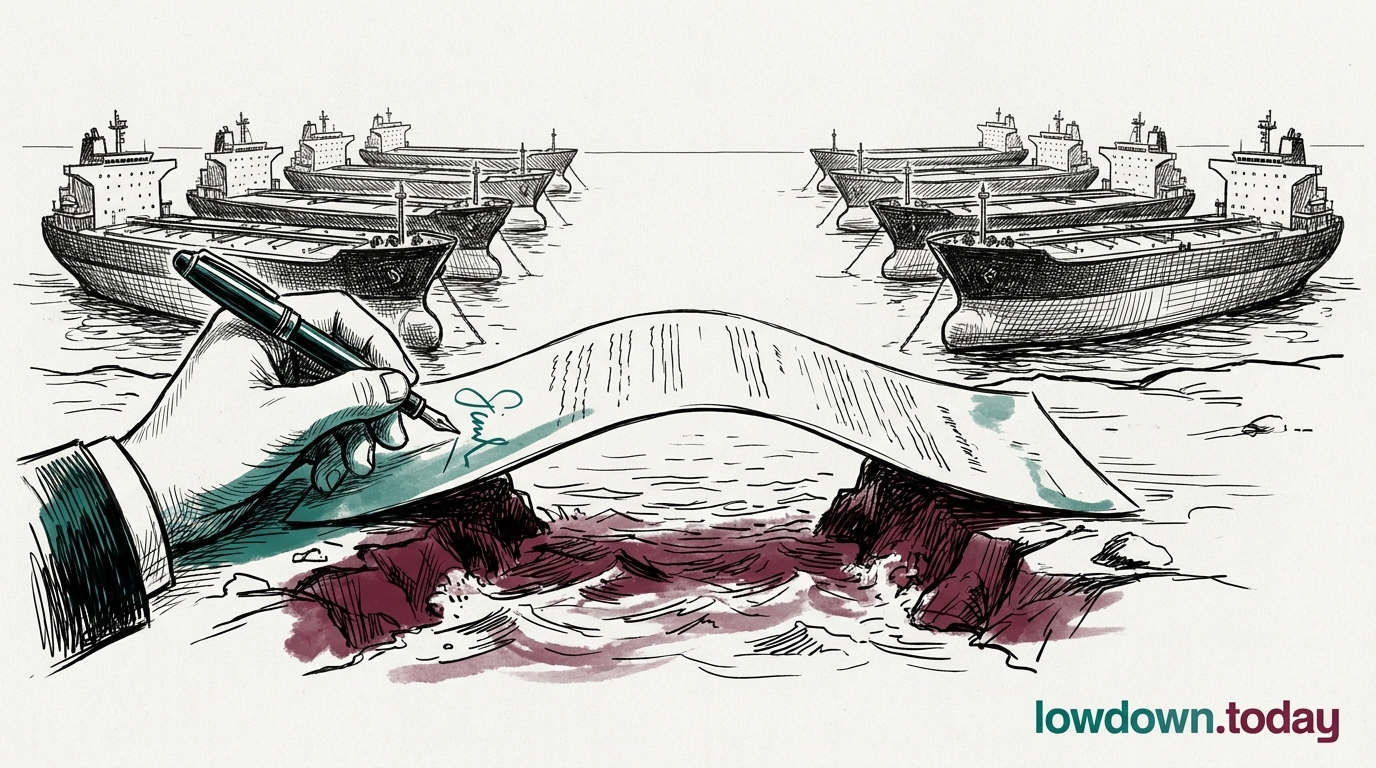
Brent hit $119.50 — the highest since 2012 — then crashed below $90 on a single presidential comment. The most volatile crude session in decades reveals a market trading on words, not barrels.

ConflictDeveloping

Brent Crude hit $119.50 per barrel on Monday morning — the highest since 2022 and a 77% rise from $67.41 on 27 February, the day the war began. WTI reached $119.48. By the US close, Brent had settled at $98.96, sinking below $90 in after-hours trading. WTI settled at $94.77. The $30 intraday reversal was driven by Trump's 'very soon' language on ending the war and profit-taking on overcrowded long positions.

The $30 swing dwarfs normal oil market volatility. Brent's average daily range through 2025 was approximately $2. Even during the 2020 pandemic price collapse, intraday moves rarely exceeded $10. Last Friday, US crude futures posted a 35.63% weekly gain — the largest since the contract began trading in 1983 . Qatar's energy minister warned of $150 per barrel if Hormuz remains closed . The market touched $119 and flinched — but the flinch was triggered by a presidential remark, not by any change in the physical supply picture. Brent had been at $116.08 just three days ago , itself a 72% rise in under two weeks. The 1990 Iraqi invasion of Kuwait doubled oil prices over two months; this war achieved the same effect in ten days and then gave back a third of it in an afternoon.

The underlying supply disruption has not changed. Tanker traffic through Hormuz remains down approximately 70%. Kuwait's force majeure removed 300,000 barrels per day from export markets. Combined with Iraq's curtailments of approximately 1.5 million barrels per day, roughly 3.5 million barrels per day of Gulf production capacity is shut in or unable to reach market. No tanker insurance has been restored. No diplomatic off-ramp for Hormuz has materialised. The fundamental imbalance — supply removed, demand unchanged — is identical to what it was at $119 in the morning. What moved was sentiment, and sentiment moved on words.

The question for Tuesday's Asian open is whether $90 or $100 becomes the new floor. If $90 holds, the oil shock remains a market event — painful but absorbable for import-dependent economies, even those already strained (South Korea's KOSPI triggered two circuit breakers in four sessions, . If $100 holds, it crosses into macroeconomic damage: compressed industrial margins, inflationary pressure on food and transport costs across Asia and Europe, and political pressure on governments to release strategic petroleum reserves or seek bilateral supply deals outside The Gulf. The market is not pricing oil. It is pricing the probability that one man's 'very soon' means what it says.


First Reported In

Update #31 · Iran moves to heavy warheads; China deploys

Euronews· 10 Mar 2026
Read original
Different Perspectives
Lloyd's Market Association
War-risk underwriters price the Houthis' Red Sea attacks because the group announces its targets in advance, but the unclaimed Damietta drone gives insurers a hit with no author to price against. An attack nobody claims costs shipping more than one that is claimed, since premiums are set against a known pattern, not raw damage.
US Central Command
US Central Command
CENTCOM has announced no strike on Iran since resuming bombing on 30 July within hours of an IRGC salvo on Jordan, and centcom.mil did not respond to requests to confirm any pause. The command has gone quiet before while a larger operation was being weighed, so silence alone proves nothing about what it has or has not done.
Hengaw
Hengaw
Hengaw recorded at least 67 executions in Iran during July, of which the state acknowledged only eight, and reported the 1 August execution of protest detainee Arvin Kheirkhahan at Shahrud with no advance notice to his family. A family's first notice of a death sentence is now usually the instruction to collect a body.
Egypt
Egypt
Egypt's government asked media on 2 August to report the Damietta attack accurately, named no author, and said no findings will be published before its own investigation concludes. Cairo holds the debris and jurisdiction over an attack on its own soil, and naming a culprit now would pull it into a dispute it has avoided for five months.
Iran's Foreign Ministry
Araghchi called the Hormuz talks with Oman final-stage on 2 August, four days after his own deputy rejected Oman's lane proposal, and denied the Damietta drone strike as an Israeli false flag while two Iranian officials privately claimed it for Tehran. Iran's public position now contradicts itself on both files at once.
Bahrain and Kuwait
Bahrain and Kuwait
Bahraini and Kuwaiti aircraft flew their own strikes on Iranian depots in July with Emirati air cover behind them, and Ynetnews reports some Gulf capitals wanted the 2 August strike to proceed rather than stop. States that have already taken fire see a closing window on Iranian weakness, not a reason to pause.



