Skip to content
Foundations rebuilt, and the first new thing is here: search across every topic, entity, and event.Try search
Iran Conflict 2026
11JUN

India's Chabahar waiver lapses on Sunday

4 min read
09:17UTC

India's only sanctions exemption for its Iranian port investment expires at 00:01 EDT on Sunday 26 April. No substitute text has been published.

ConflictDeveloping
Key takeaway

Three India-US-Iran pressure points converge on one desk before Sunday's waiver lapse.

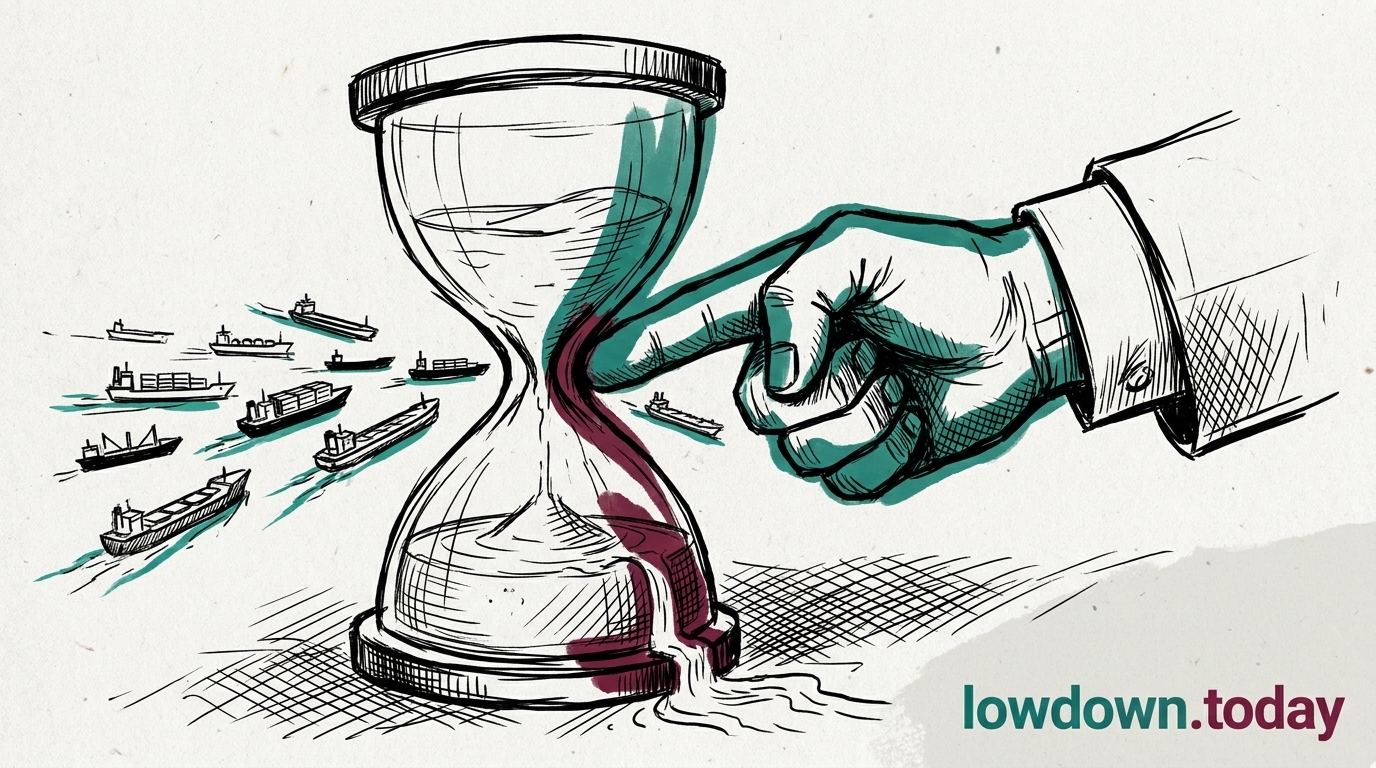
India's Chabahar port sanctions waiver lapses at 00:01 EDT on Sunday 26 April 2026, roughly two days from publication. India's Ministry of External Affairs (MEA) confirmed on Friday that it is "engaging with US" on renewal; no text has been published 1. The waiver is Delhi's sole US sanctions exemption covering investment in the Iranian port built around the 2016 trilateral agreement, which carries Afghan and Central Asian trade through a route that bypasses Pakistan.

The deadline stacks on two unresolved India files. Foreign Secretary Vikram Misri's office has now held public silence for nine days on the 15 April Shamkhani network designations, which named five Indian nationals and eight India-registered firms . On 22 April the IRGC seized the tanker Epaminondas, carrying cargo bound for Mundra port in Gujarat, and the MEA engaged Tehran quietly the following day while still refusing public comment on the Treasury list .

Three US-Iran pressure points converge on one desk over the weekend. Indian crews are at sea under IRGC fire; Indian firms sit on a live OFAC designation list; Indian port rights lapse at the weekend. For Indian charterers with cargo bound for Mundra or Chennai, a waiver lapse translates to secondary sanctions exposure on ships already afloat, because the statute does not distinguish between cargoes booked before expiry and after.

The structural beneficiary of any Indian pullback is Chinese carriage. Delhi has used Chabahar as the anchor of a triangulation that worked only because the US carved a bespoke exemption out of the broader Iran sanctions architecture; let it lapse and the triangulation collapses into two bilateral disputes, India-US over sanctions and India-Iran over ship safety, with Chinese-flagged shipping the default replacement. Every additional day Misri stays silent on Treasury designations while demanding IRGC restraint is a day Mumbai and Chennai operators cannot price their next cargo.

Deep Analysis

In plain English

India built a port in Iran called Chabahar as part of a deal to give Afghanistan and Central Asian countries a trade route that bypasses Pakistan. The US allowed this, despite its sanctions on Iran, through a special waiver. That waiver runs out on Sunday 26 April at midnight US time. If the waiver is not renewed in time, any Indian company or shipping firm that uses the port after that point faces potential US sanctions. This matters especially because India is already dealing with two other Iran-related crises at the same time: its sailors are being fired on by Iranian gunboats in the Gulf, and its firms have just been named on a US sanctions list. The Indian foreign ministry is quietly trying to get the waiver extended but has not announced any deal.

What could happen next?
  • Consequence

    A waiver lapse without substitute text forces Indian charterers to choose between completing cargoes already at sea and accepting secondary-sanctions exposure, or abandoning the cargo and the charter, with insurance claims contested in post-war litigation.

  • Risk

    China, which operates under CENTCOM's separate carve-out for Hormuz transits, gains a structural advantage in Iranian crude access if India's Chabahar channel closes, deepening Beijing's share of Iran's post-war reconstruction trade.

First Reported In

Update #78 · Allies flagged, adversaries listed, nothing signed

The Hindu· 24 Apr 2026
Read original
Different Perspectives
Oil markets / Lloyd's underwriters
Futures markets priced CENTCOM's strikes-complete statement as a de-escalation signal and pushed Brent down 1.7 per cent to $94.71, even as the IRGC declared Hormuz closed. Lloyd's war-risk premiums held elevated because institutional de-listing requires a UN Security Council resolution that Russia and China have just shown they will block.
Pakistan (mediator)
Pakistan (mediator)
Interior minister Mohsin Naqvi carried dual civilian and military letters to Mojtaba Khamenei in Tehran on 6-7 June with no public response. The IRGC's Hormuz closure on 11 June shows the corps is acting independently of the channel Pakistan is using, making the mediation structurally unable to produce a binding commitment without direct IRGC access.
Russia and China
Russia and China
Russia and China voted against GOV/2026/40 at the IAEA Board, following through on the blocking position coordinated with Grossi in Geneva on 5 June; both states continue to oppose Western institutional pressure on Iran at every multilateral venue.
E3 and IAEA (UK, France, Germany)
The E3 co-sponsored IAEA resolution GOV/2026/40, adopted 21-3-10 on 10 June, demanding Iran disclose 440.9 kg of unaccounted HEU and admit inspectors to four denied facilities. The 10 abstentions and Russia-China noes leave any Security Council referral without a viable enforcement path.
IRGC / Iran military command
The corps declared Hormuz closed to all traffic on 11 June and claimed two vessels struck, overriding the MoU its own civilian negotiators were pursuing through Pakistan. The closure order used the Persian Gulf Strait Authority apparatus to convert a toll mechanism into a military prohibition.
Trump administration / CENTCOM
CENTCOM completed a second day of strikes on Tehran, Sirik and Minab, rejected the IRGC Hormuz closure as inconsistent with observed transit, and said strikes were complete. Hegseth framed the bombing explicitly as the negotiation: the method is coercive deal-making with no stated pause threshold.