Skip to content
Briefings are running a touch slower this week while we rebuild the foundations.See roadmap
Iran Conflict 2026
11JUN

Houthis threaten to close Bab al-Mandeb

2 min read
09:17UTC

A senior Houthi official described closing the Red Sea strait as one stage in a deliberate escalation ladder.

ConflictDeveloping
Key takeaway

Dual-chokepoint pressure is now an active threat, not a theoretical scenario.

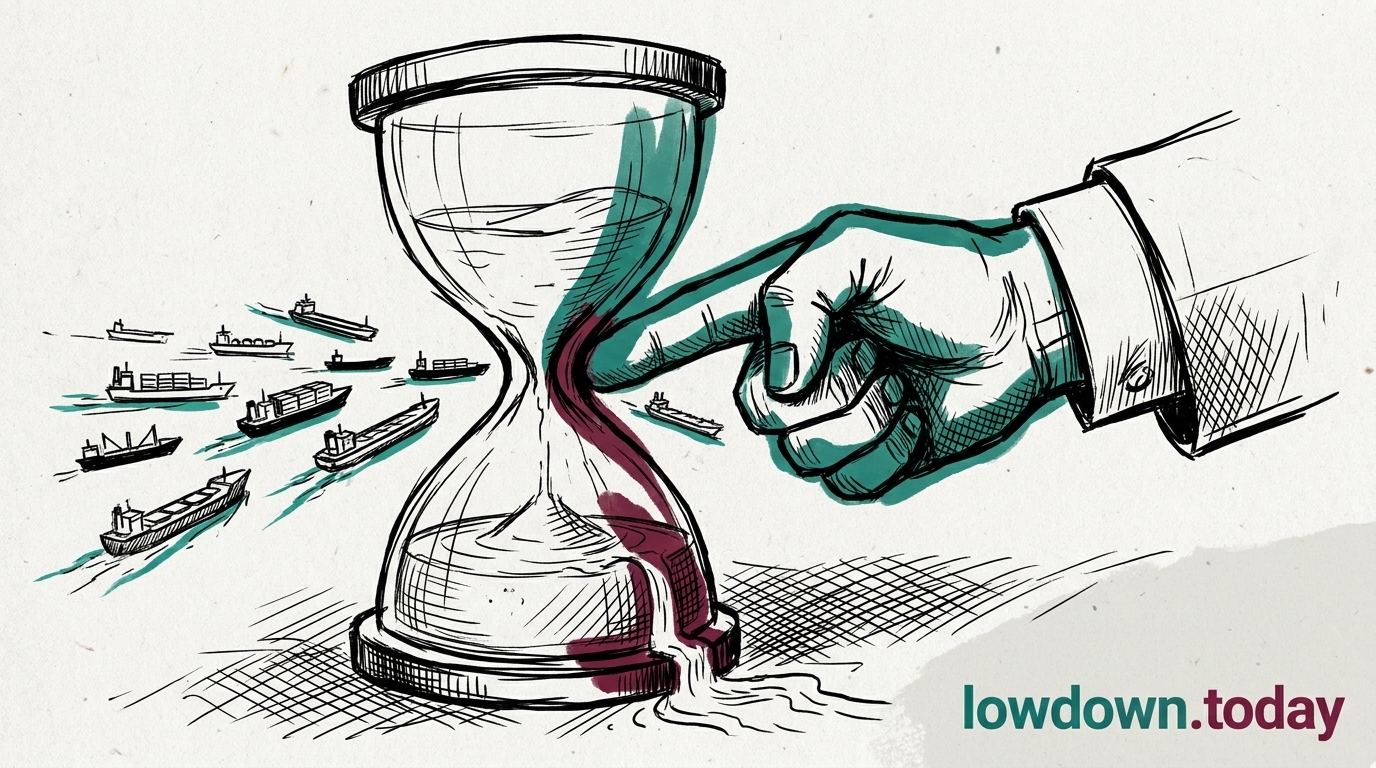
Mohammed Mansour, Houthi deputy information minister, told reporters: "We are conducting this battle in stages, and closing the Bab al-Mandeb strait is among our options." 1 Roughly 30% of Israeli imports and 6-7 million barrels per day of oil, approximately 7% of global supply, pass through the strait.

Mansour's language mirrors Iranian diplomatic formulations around Hormuz in the war's first week. The framing is a staged escalation ladder, not a single decision. Yahya Saree announced three formal red lines before the missile attack: US and Israeli use of the Red Sea for strikes, growing third-country participation, and escalating attacks on the "Axis of Resistance."

The IEA stated explicitly that its 400 million barrel emergency release "cannot substitute for the transit route itself" . Iran's Hormuz traffic control already routes vessels through a narrow corridor past Larak Island under IRGC escort; the Majlis toll bill would codify that system into domestic law. If both chokepoints tighten further, no reserve release addresses the shortfall.

Deep Analysis

In plain English

Bab al-Mandeb is a narrow sea passage between Yemen and East Africa. Almost all the oil and cargo that moves between Asia and Europe passes through it. Around 6-7 million barrels of oil cross every day. A senior Houthi official said on 28 March that closing this strait is one of their options as the war continues. They already have missiles and drones on Yemen's coastline. Iran already controls the other major oil route, the Strait of Hormuz. If the Houthis block Bab al-Mandeb as well, there would be no alternative route for most of the world's oil. Emergency reserves would run out in weeks; there is no spare capacity to replace both routes at once.

Deep Analysis
Root Causes

The structural driver is the Houthis' geographic positioning. Yemen's Tihama coast overlooks Bab al-Mandeb's 29-kilometre narrows. Anti-ship missiles already deployed there can reach any vessel in the strait. Unlike Hormuz, there is no second passage: cargo cannot route around Bab al-Mandeb without circumnavigating Africa, adding 6,000 nautical miles and roughly 20 days per voyage.

The Houthis' leverage exists regardless of Iranian direction because the geography is permanent. Tehran did not create this chokepoint; it merely held the group back from using it.

What could happen next?
  • Risk

    Dual chokepoint closure would exceed IEA emergency reserve capacity; no government has a contingency plan for simultaneous Hormuz restriction and Bab al-Mandeb closure.

  • Consequence

    Any ceasefire negotiation must now include Houthi participation or Bab al-Mandeb remains at risk regardless of what Iran agrees.

First Reported In

Update #50 · Houthis join; Iran holds two chokepoints

Axios· 28 Mar 2026
Read original
Different Perspectives
Oil markets and Lloyd's of London
Brent fell to $89.25 on ceasefire probability, not new barrels, with traders voting for Trump's deed over Tehran's denial. Lloyd's has not repriced Hormuz war-risk cover because its trigger requires a UN Security Council resolution or government certification, so tanker insurance costs remain elevated regardless of the spot move.
Pakistan and Qatar mediators
Pakistan's Mohsin Naqvi was in Tehran for his second visit in under a week, using the Pakistan-Qatar channel that delivered April's ceasefire after an identical public-denial cycle. The channel carries both civilian and military buy-in from Islamabad, the only configuration Iran's split command cannot dismiss as a partial signal.
India
India
India summoned the US Deputy Chief of Mission after three Indian sailors were killed aboard MT Settebello, the first formal grievance from a major non-belligerent directed at US enforcement. Indian seafarers supply roughly 12 per cent of the global maritime workforce; their presence on third-flag Gulf tankers is structurally inevitable regardless of bilateral diplomacy.
Islamic Revolutionary Guard Corps (IRGC)
The IRGC declared Hormuz closed on 11 June while civilian negotiators were on the same mediation channel, then issued no public comment on the MoU framework. Its silence on the framework, rather than any foreign ministry statement, is the operative approval signal; the corps' unilateral Hormuz closure shows it did not treat the diplomatic track as binding on its operations.
Iran foreign ministry (Baghaei)
Esmail Baghaei told IRNA that reports of a finalised deal were 'merely speculation' and that Iran had 'not yet made a final decision'. The denial is structurally identical to Iranian foreign ministry statements during the April ceasefire talks, which produced a binding text within 48 hours of the same language.
Trump administration / CENTCOM
Trump cancelled the third strike day and called the MoU 'very strong' and almost ready to sign, while CENTCOM kept tanker enforcement running in the same 24-hour window. The administration is simultaneously withdrawing the military pressure it claims drove the deal and sustaining the enforcement campaign it is trying to trade away.