Skip to content
Briefings are running a touch slower this week while we rebuild the foundations.See roadmap
Iran Conflict 2026
8JUN

Pakistan urged US to protect Iran envoys

2 min read
09:58UTC
ConflictDeveloping

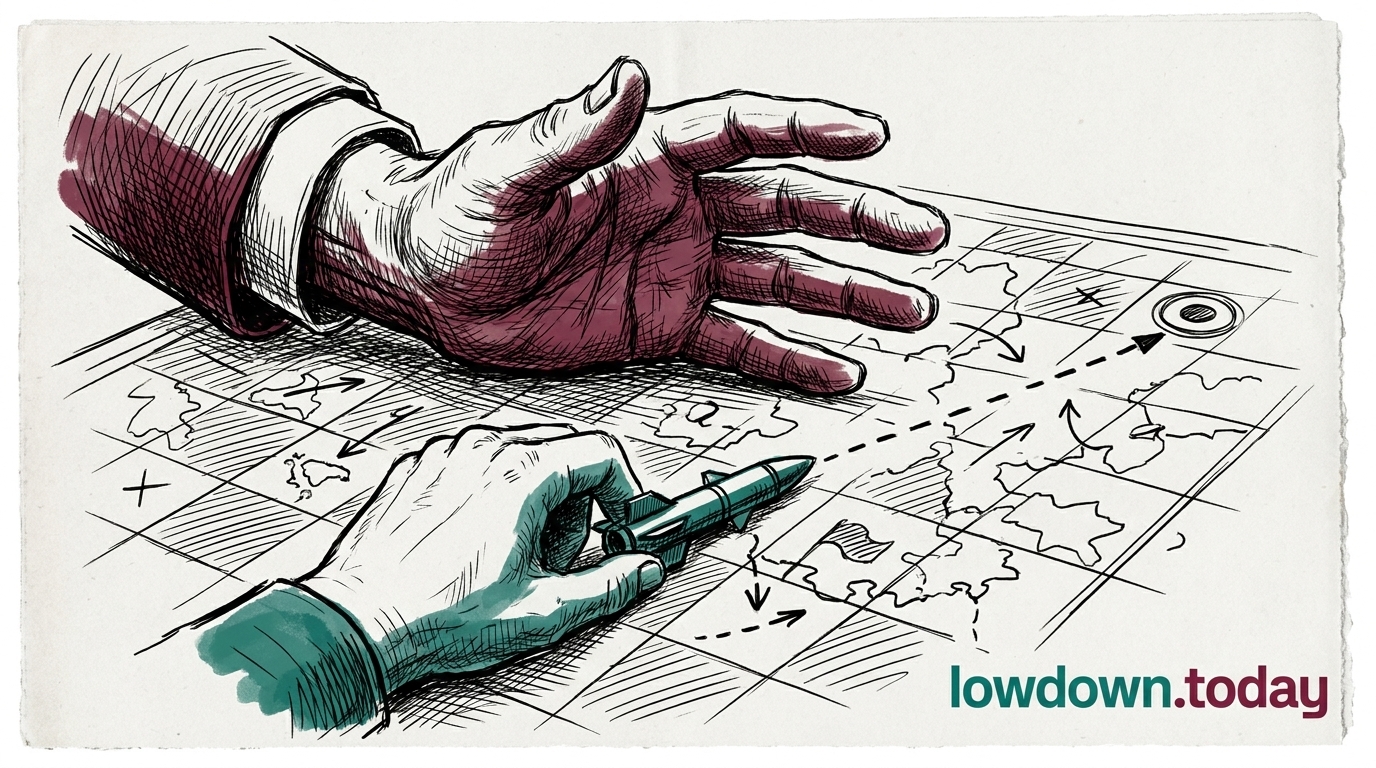
The Wall Street Journal confirmed, via US officials, that Pakistan asked the US to press Israel to remove Foreign Minister Abbas Araghchi and Parliamentary Speaker Mohammad Bagher Ghalibaf from a joint US-Israeli assassination target list, and that the US complied, temporarily. 1 Both officials were 'temporarily removed from a Joint US-Israeli Target List for several days' while Trump explored indirect talks, per US officials speaking to the Journal.

Iran had categorically denied any negotiations and Ghalibaf had dismissed talks as an attempt to 'escape the quagmire' . Yet Pakistan had already positioned itself as intermediary and confirmed it was relaying a 15-point US proposal . The public disclosure that the kill list is jointly operated, and that Washington can override Israeli targeting for diplomatic reasons, transforms targeted killing from a military tactic into a bargaining instrument.

Israel killed Tangsiri on the same day those protections were secured. The two events are not contradictory but they establish a hierarchy: the man managing the Hormuz blockade was expendable; the men who might negotiate its end were not. Iran now knows which of its officials the US considers necessary for talks and which it will allow Israel to kill. That knowledge reshapes Iranian internal power dynamics in ways that are difficult to predict but almost certainly corrosive to internal cohesion.

The political risk for the protected officials is also real: Araghchi and Ghalibaf can now be accused by hardliners of collaboration with Washington, given that their protection from the joint list is now public knowledge. The confirmation creates a domestic political vulnerability that may constrain their room to negotiate even if they wished to.

Deep Analysis

In plain English

The US and Israel share a list of Iranian officials they plan to kill. Pakistan asked the US to take two Iranian politicians off that list temporarily so peace talks could proceed, and the US agreed. The fact that this list exists, is jointly managed by Washington and Tel Aviv, and responds to diplomatic pressure from Islamabad is now confirmed public knowledge. For Iran, this means that the diplomatic protection of its officials can be revoked by Washington at any time, which makes trusting the talks considerably harder. For Israel's critics, it confirms that Washington has more control over Israeli targeting than it publicly admits.

Deep Analysis
Root Causes

The structural cause is the collision between two requirements: maintaining credible military deterrence (which requires unpredictability) and conducting diplomacy (which requires protected channels).

Public confirmation of the list's existence makes both functions harder. Targets know the criteria; adversaries know the constraints.

First Reported In

Update #49 · Hormuz toll into law; Tangsiri killed

Al Jazeera· 27 Mar 2026
Read original
Different Perspectives
Bahrain / Gulf partners
Bahrain's PAC-3 interceptor magazine sits at 87% depletion after absorbing IRGC salvos aimed at US bases; no resupply is scheduled before 2027, concentrating the intercept burden on US assets and Israeli Iron Dome and Arrow-3.
IAEA / Vienna process
IAEA officials cited proliferation concerns over 440.9 kg of HEU unaccounted for after 97 days without inspector access; the Board session that opened 8 June cannot retroactively close the evidentiary gap its own resolution documents.
China
China
China absorbed the Shanghai Qianye designation by OFAC and opposes censure at the IAEA Board, arguing the verification gap was created by strikes rather than Iranian non-compliance, a framing it shares with Russia to protect the non-Western bloc's Board votes.
Russia
Russia
Putin reaffirmed at SPIEF on 6 June his offer to hold Iran's uranium stockpile as custodian, a proposal the IAEA's 97-day verification gap now renders undeliverable: no one can transfer or confirm a stockpile that has not been inspected.
United States / Trump administration
Trump publicly asked Netanyahu not to retaliate and described a deal as 95% done; Rubio then acknowledged enrichment terms could take months. The 24-hour gap between the request and the Mahshahr strike removes the credible-restraint argument from US diplomatic leverage with Tehran.
Israel / Netanyahu government
Netanyahu struck the Mahshahr complex and missile sites inside Iran within 24 hours of Trump's public no-retaliation request, a second kinetic override of US counsel that confirms Israel will not allow Tehran to dictate the terms of the exchange.