Skip to content
Briefings are running a touch slower this week while we rebuild the foundations.See roadmap
Iran Conflict 2026
6JUN

Two financial EOs, zero Iran instruments

3 min read
12:17UTC

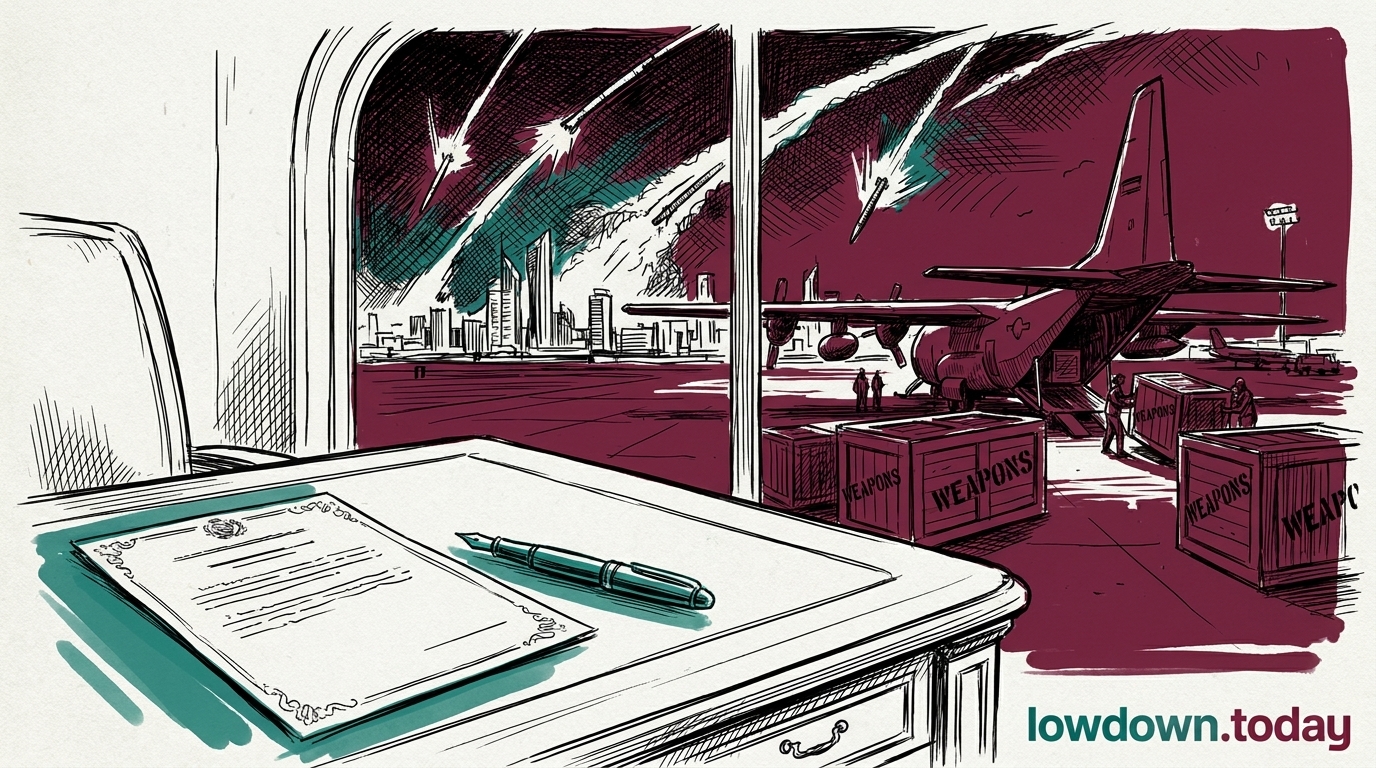
The White House signed two financial-sector executive orders on 19 May, on fintech and financial-system integrity. None touched Iran, the IRGC or Hormuz. The streak of zero Iran-specific presidential instruments extends through Day 84.

ConflictDeveloping
Key takeaway

Eighty-four days, no signed Iran instrument from Trump. The verbal and documentary tracks have separated.

Donald Trump signed two financial-sector executive orders on Tuesday 19 May, per the White House Presidential Actions index 1. One covered fintech regulation, the other financial-system integrity. Neither order touched Iran, the Islamic Revolutionary Guard Corps (IRGC) or the strait of Hormuz. With Tuesday through Thursday adding no further presidential instruments on Iran, the streak of zero Iran-specific signed acts extends across the entire 19-22 May window.

The documentary absence sits alongside an active verbal posture. Trump has called the ceasefire "on massive life support", rejected Tehran's 10-point counter-proposal, and his cabinet has named Hormuz tolls as a deal-killer this week. None of those positions have been encoded in a sanctions designation, an executive order, a national-security memorandum or any other instrument the federal government keeps a paper trail for. Trump has spoken about Iran for 84 days while signing nothing.

The practical effect runs through delegated authority. The agencies that need a presidential instrument to act, primarily Treasury for sanctions and Defence for force-posture changes, retain only the standing authorities they had before the war. The 11 May OFAC round operated under existing terrorism designations rather than a fresh executive order. Hegseth's 12 May Article 2 doctrine sits on constitutional argument, not on a signed directive the chamber could test. Trump's verbal track is rich; his documentary track on Iran is empty.

Trump's says-versus-does scoreboard reads simply. Says: ceasefire on life support, Hormuz toll a deal-killer, ten-point counter-proposal a piece of garbage. Does: two financial EOs unrelated to Iran. Eleven weeks of that pattern has hardened into the White House position itself. A White House that wanted Iran-specific authority would have signed it; the absence is the policy.

Deep Analysis

In plain English

Every few days, the US President can sign executive orders; formal legal documents that give instructions to government departments. Since the Iran war began, the White House has signed two executive orders a week on average, covering topics like trade, finance, immigration and technology. None of them have been about Iran. Not one has named the Iranian government, the Iranian military, or the Strait of Hormuz as a target. This is surprising given what Trump has said. He has called the ceasefire 'on life support', rejected Iran's counter-proposals, and had Defence Secretary Hegseth testify to Congress on 12 May that the strikes were legally justified. None of those statements appear in any signed order, memorandum, or executive instrument in the White House's public record. Why does it matter? Because US government departments; especially the Treasury, which handles financial sanctions; generally need a fresh presidential order to take new action. Without one, they keep using older legal authorities from before the war. The gap between Trump's public statements and his signed documents on Iran is now 84 days and counting.

What could happen next?
  • Consequence

    The agencies that need presidential instruments to act; primarily Treasury for sanctions and Defence for force-posture changes; retain only standing pre-war authorities. The 11 May and 19 May OFAC rounds both operated under pre-existing terrorism designations. Fresh designations targeting new categories (Chinese state refiners, European shipping intermediaries) would require a signed order that does not exist.

  • Precedent

    If the Iran campaign ends without a single signed presidential instrument, it will establish; as a practical precedent; that the United States can conduct a military campaign, maintain economic sanctions, and manage a diplomatic negotiation for over three months on pre-existing statutory authorities and verbal executive direction alone. That precedent expands future executive branches' room for uninstrumented engagement.

First Reported In

Update #105 · Khamenei keeps the uranium; House pulls the vote

White House Briefing Room· 22 May 2026
Read original
Causes and effects
This Event
Two financial EOs, zero Iran instruments
Trump's verbal track on Iran continues; the documentary track does not. The gap between what the President says about Tehran and what the President signs about Tehran is now a measurable absence.
Different Perspectives
Israel
Israel
The IDF struck a Lebanese army unit on 6 June, killing a colonel, and privately told Moscow that shelling near Bushehr was accidental, per Putin's SPIEF disclosure. Israel is advancing in Lebanon past an unenforced ceasefire text while maintaining a back-channel to Russia on nuclear-site deconfliction.
Lebanon
Lebanon
President Aoun told CNN on 5 June that Iran uses Lebanon as a bargaining chip and urged Hezbollah toward diplomacy; on 6 June an IDF strike killed a Lebanese army colonel on the Khardali-Nabatieh road. The Lebanese state is publicly rejecting Iranian tutelage while the army sustains casualties from Israeli fire and the Washington framework remains unenforced.
Bahrain
Bahrain
Bahrain's US Fifth Fleet headquarters was among the targets in the 5-6 June two-country salvo; its PAC-3 magazine stands at 87 per cent depletion with an 18-month resupply gap and no comparable arms sale has been announced. The state is defending a critical US regional command on a thinning interceptor stock.
Kuwait
Kuwait
Kuwait received a $1.98bn US counter-drone sale approval on the same day IRGC missiles targeted its bases; it expelled two Iranian diplomats on 4 June and filed a formal protest. The arms approval gives Kuwait a future capability but leaves a 6-18 month delivery gap that the salvo tempo is already pressing.
Russia
Russia
Putin reaffirmed Russia's offer to hold Iran's 440.9 kg HEU at SPIEF on 6 June, said Russia is not arming Iran, and disclosed that both the US and Israel privately told Moscow that shelling near Bushehr was accidental. The restatement casts Moscow as the only remaining mediator both sides call, a position serving Russian interests whatever the nuclear file produces.
Iran
Iran
The IRGC, per Iranian state media, fired seven ballistic missiles at US bases in Kuwait and Bahrain, the largest two-country salvo of the war, and framed the launches as lawful retaliation; Foreign Minister Araghchi rejected Aoun's bargaining-chip accusation and Velayati warned Beirut against diplomatic naivety. Tehran has sent no HEU counter-proposal since Araghchi confirmed no progress on 4 June.