Skip to content
Briefings are running a touch slower this week while we rebuild the foundations.See roadmap
Iran Conflict 2026
6JUN

Pentagon war bill balloons to $200bn

2 min read
12:17UTC

Nineteen days into the campaign, the Defence Department requested four times its original estimate — enough for roughly 140 more days at the current burn rate.

ConflictDeveloping

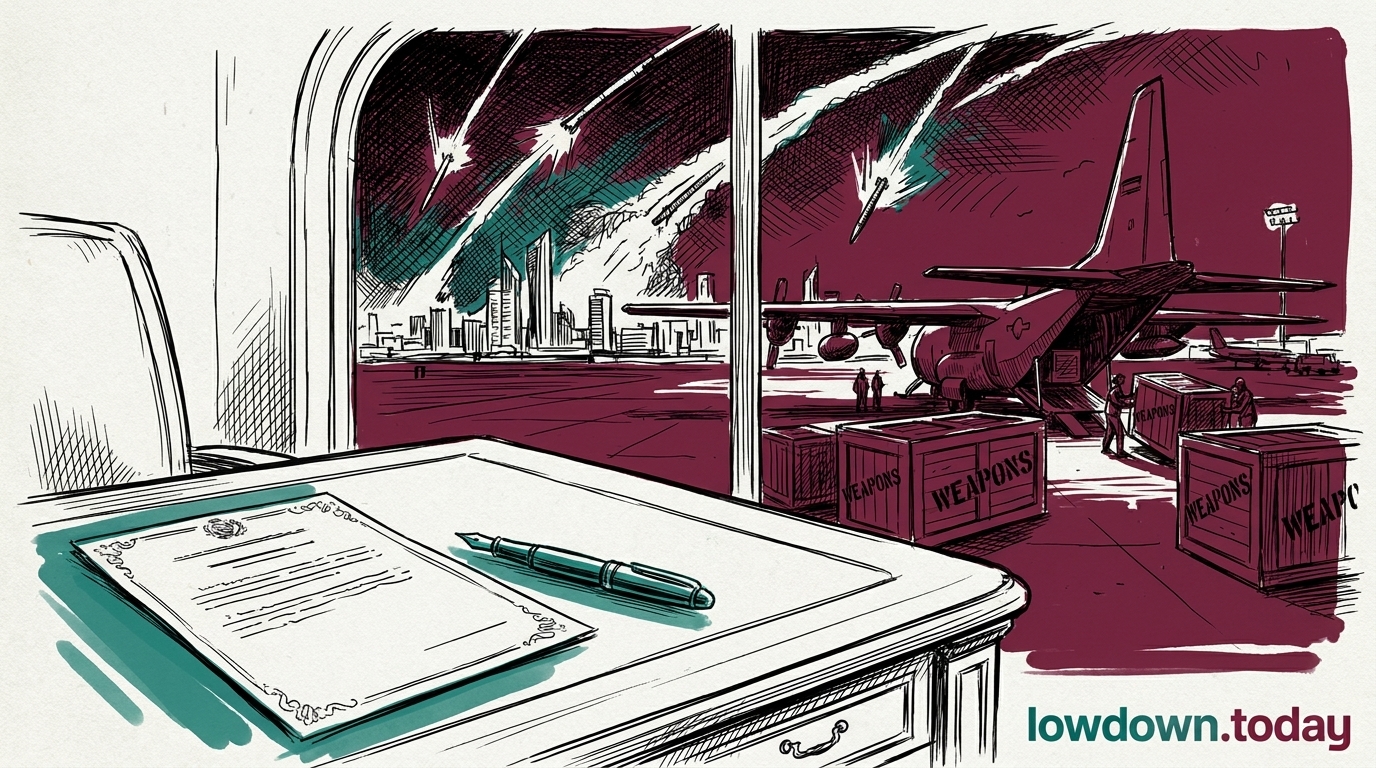
The Pentagon asked the White House on 19 March to approve a $200 billion congressional war funding request for the Iran campaign — four times its original estimate 1. Defence Secretary Hegseth said the figure 'could move' 2. Fortune calculated the sum covers approximately 140 more days of operations at the current daily burn rate 3.

CSIS had estimated the operation's cost at nearly $900 million per day as of mid-March . At that rate, $200 billion covers roughly 222 days. Fortune's lower figure of 140 days implies the daily cost has risen since that estimate — consistent with the escalation pattern since then: the expenditure of 5,000-pound GBU-72 penetrator munitions against underground missile storage , the diversion of 10,000 Merops AI interceptor drones from Ukraine stockpiles that will need replacing , and Hegseth's own characterisation of 19 March as 'the largest strike package yet, just like yesterday was' 4. Each day has cost more than the last.

Hegseth declined to set 'a definitive time frame' for the war at the same briefing. But a funding request sets one implicitly. If Congress approves $200 billion and The Administration exhausts it in 140 days — roughly early August — a second supplemental requires a return to Capitol Hill, where CNN reported Republican leaders already 'do not believe they have the votes' within their own caucus 5. The IDF's disclosed operational planning extends to Passover in mid-April, with contingencies 'three weeks beyond that' . The Pentagon's funding horizon stretches months further. The gap between Israel's planning window and America's fiscal commitment is itself a question neither government has addressed: which partner's timeline governs?

The request also exposes a structural gap in The Administration's war rationale. Trump's stated objective — popular revolution inside Iran — is one he has conceded faces the problem that Iranian civilians 'don't have weapons' . There is no doctrine for costing Regime change by air power, because no such campaign has succeeded. Hegseth's formulation at the briefing — 'it takes money to kill bad guys' 6 — is a political line, not a strategy. Senator Murkowski's demand for a White House strategy outline before voting is, in fiscal terms, the minimum any appropriations process requires: a connection between expenditure and a defined end state. The Pentagon has provided a number. It has not provided a theory of victory to justify it.


First Reported In

Update #42 · Iran hits four countries; Brent at $119

Washington Post· 20 Mar 2026
Read original
Causes and effects
This Event
Pentagon war bill balloons to $200bn
The $200 billion request quadruples the original estimate 19 days into the campaign, implicitly setting a timeline the administration refuses to state. It faces uncertain passage in a Congress where the president's own party lacks the votes, potentially capping the war's duration by fiscal constraint rather than strategic choice.
Different Perspectives
Israel
Israel
The IDF struck a Lebanese army unit on 6 June, killing a colonel, and privately told Moscow that shelling near Bushehr was accidental, per Putin's SPIEF disclosure. Israel is advancing in Lebanon past an unenforced ceasefire text while maintaining a back-channel to Russia on nuclear-site deconfliction.
Lebanon
Lebanon
President Aoun told CNN on 5 June that Iran uses Lebanon as a bargaining chip and urged Hezbollah toward diplomacy; on 6 June an IDF strike killed a Lebanese army colonel on the Khardali-Nabatieh road. The Lebanese state is publicly rejecting Iranian tutelage while the army sustains casualties from Israeli fire and the Washington framework remains unenforced.
Bahrain
Bahrain
Bahrain's US Fifth Fleet headquarters was among the targets in the 5-6 June two-country salvo; its PAC-3 magazine stands at 87 per cent depletion with an 18-month resupply gap and no comparable arms sale has been announced. The state is defending a critical US regional command on a thinning interceptor stock.
Kuwait
Kuwait
Kuwait received a $1.98bn US counter-drone sale approval on the same day IRGC missiles targeted its bases; it expelled two Iranian diplomats on 4 June and filed a formal protest. The arms approval gives Kuwait a future capability but leaves a 6-18 month delivery gap that the salvo tempo is already pressing.
Russia
Russia
Putin reaffirmed Russia's offer to hold Iran's 440.9 kg HEU at SPIEF on 6 June, said Russia is not arming Iran, and disclosed that both the US and Israel privately told Moscow that shelling near Bushehr was accidental. The restatement casts Moscow as the only remaining mediator both sides call, a position serving Russian interests whatever the nuclear file produces.
Iran
Iran
The IRGC, per Iranian state media, fired seven ballistic missiles at US bases in Kuwait and Bahrain, the largest two-country salvo of the war, and framed the launches as lawful retaliation; Foreign Minister Araghchi rejected Aoun's bargaining-chip accusation and Velayati warned Beirut against diplomatic naivety. Tehran has sent no HEU counter-proposal since Araghchi confirmed no progress on 4 June.



