Skip to content
Briefings are running a touch slower this week while we rebuild the foundations.See roadmap
Iran Conflict 2026
4JUN

Kuwait expels two of Iran's diplomats

2 min read
11:25UTC

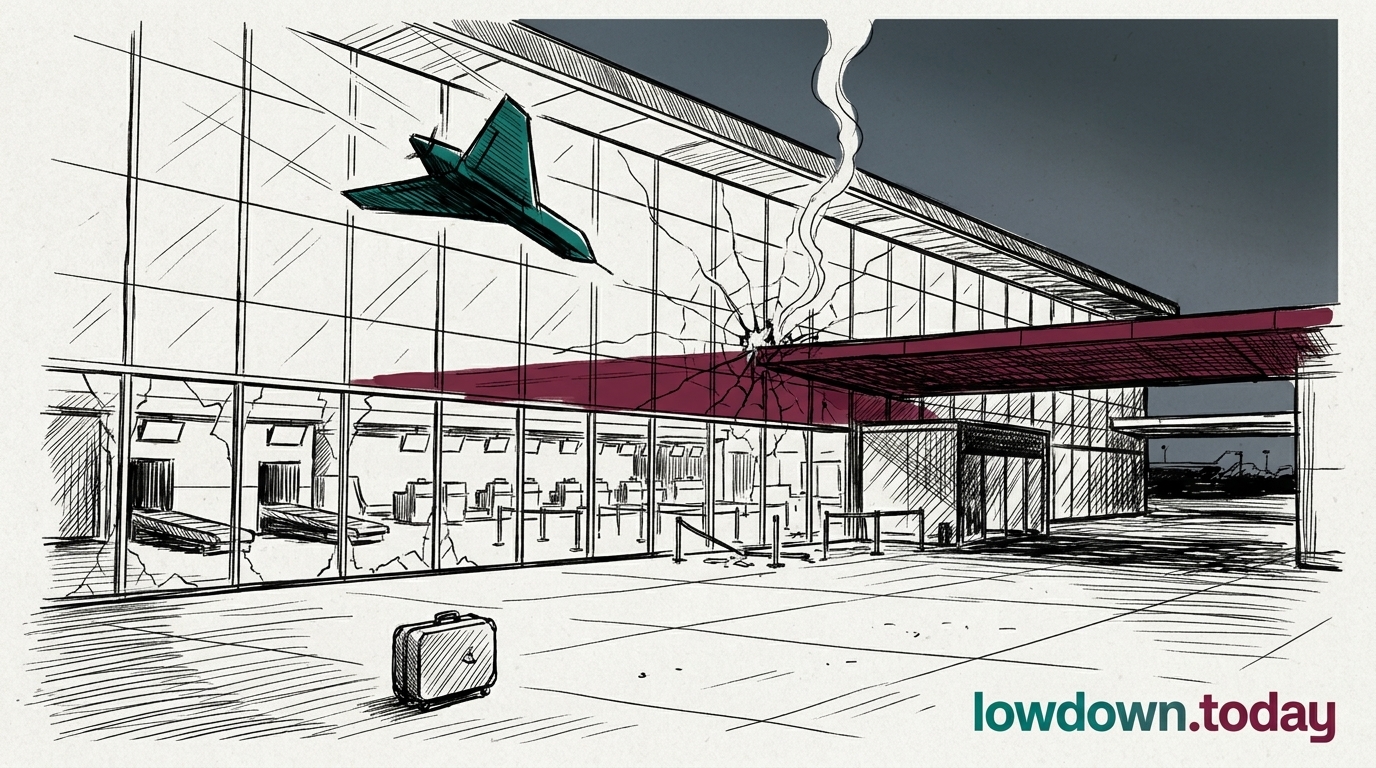
Kuwait declared two members of Iran's diplomatic mission persona non grata within 24 hours of the airport strike, summoning Tehran's charge d'affaires and handing over a formal protest note.

ConflictDeveloping
Key takeaway

Kuwait expelled two Iranian diplomats inside a day, and the UAE is now pushing for a unified Gulf response.

Kuwait declared two members of Iran's diplomatic mission persona non grata within 24 hours of the Kuwait International Airport drone strike , summoning Tehran's charge d'affaires and handing over a formal protest note 1. Declaring a diplomat persona non grata, an unwelcome person, is the standard formal route a state uses to expel foreign envoys.

The Arab League, the United Arab Emirates (UAE), Qatar, Egypt and Bahrain all condemned the strike. The UAE's diplomatic adviser went further, calling for a unified Gulf response to Iranian aggression. That echoes the five-state letter the Gulf wrote to the International Maritime Organization rejecting Iran's Strait Authority , the last time the region tried to answer Tehran with one voice rather than six.

Kuwait's move follows the same 24-hour reflex as its Article 51 self-defence invocation after the earlier Ali Al Salem strike . Expelling diplomats is Kuwait's strongest formal step since the conflict began, and unlike an intercepted missile it leaves a standing diplomatic injury that has to be repaired rather than absorbed.

Deep Analysis

In plain English

Within 24 hours of the airport strike, Kuwait formally expelled two Iranian diplomats and handed a written protest to Iran's top remaining diplomat in Kuwait City. This is called a persona-non-grata declaration: it tells specific individuals they are no longer welcome in the country and must leave. The Arab League (a grouping of 22 Arab states) and several Gulf neighbours, including the UAE, Qatar, Egypt, and Bahrain, all publicly condemned the attack. Kuwait expelled two officials rather than closing the entire Iranian embassy. That choice keeps a line of communication open while putting Iran on formal record as the aggressor. The UAE separately called for a unified Gulf response, meaning it wants Gulf states to coordinate rather than each handle the situation on their own.

Deep Analysis
Root Causes

Kuwait's territory hosts CENTCOM pre-positioning, making non-response to a civilian-terminal strike indefensible within the coalition. Simultaneously, Kuwait maintains a larger Shia citizen population than any other Gulf monarchy except Bahrain, creating domestic sectarian exposure if it moves to full rupture with Tehran. The 24-hour, two-diplomat calibration threads both constraints.

The UAE call for a unified Gulf response reflects a separate structural logic. Abu Dhabi lost its OPEC+ leverage after formally exiting the organisation on 1 May 2026 and now needs multilateral Gulf cover to avoid bilateral Iranian targeting. A collective condemnation architecture lets the UAE signal cohesion without assuming the front-line exposure Kuwait already bears.

Escalation

Kuwait's response signals that Gulf states are moving from ad hoc condemnations toward a coordinated framework. The UAE's specific call for a unified Gulf response after the attack, combined with the Arab League statement, constitutes the most coordinated collective Gulf posture since the five-state IMO letter. No collective-defence trigger has yet been pulled, but the diplomatic infrastructure for one is being assembled.

What could happen next?
  • Consequence

    Two Iranian diplomats expelled within 24 hours constitutes the strongest Kuwaiti formal response of the conflict and creates a diplomatic baseline that further IRGC strikes would force Kuwait to escalate beyond.

  • Risk

    If the IRGC strikes Kuwait again, Kuwait faces binary choice between full diplomatic rupture and appearing to accept repeated attacks, either of which carries severe domestic and coalition costs.

First Reported In

Update #117 · Iran's drone finds Kuwait's arrivals hall

Gulf News· 4 Jun 2026
Read original
Causes and effects
This Event
Kuwait expels two of Iran's diplomats
A diplomatic expulsion is harder to walk back than a missile exchange, and the UAE has begun pressing for a collective Gulf response.
Different Perspectives
China
China
Beijing's MOFCOM Blocking Rules constrain OFAC enforcement on the mainland; China has not corroborated Trump's verbal account of any bilateral summit, and the rial's failure to hold its Rubio bounce, combined with the IRGC's stablecoin rail closure, increases Chinese yuan-denominated oil-payment exposure through Hormuz.
Israel
Israel
IDF Chief Zamir said on 3 June there is no ceasefire for his forces even as Israel signed the Washington Lebanon framework requiring Hezbollah withdrawal south of the Litani; a UNIFIL peacekeeper was killed by mortar near Marjayoun on the same day, exposing the gap between the diplomatic framework and a ground advance that has not stopped.
Bahrain
Bahrain
The IRGC struck Bahrain on 3 June as its sirens sounded and its PAC-3 magazine neared exhaustion; excluded from Rubio's 2 May emergency resupply, Bahrain received a 50-round Federal Register notice on 1 June on an 18-month delivery timeline, meaning it is defending the US Fifth Fleet headquarters on the last rounds it has.
Qatar
Qatar
Qatar offered $6bn under OFAC Licence L-2 restrictions and sent Ghalibaf's delegation home empty-handed; the $6bn ceiling is a legal constraint, not a negotiating floor, and Rubio's no-sanctions-relief testimony means Qatar cannot revise it without White House action that has not been requested.
Kuwait
Kuwait
Kuwait expelled two Iranian diplomats within 24 hours of the airport strike, the strongest and fastest Kuwaiti diplomatic move of the conflict, while keeping the full mission in place to preserve a communication channel; it has now invoked Article 51 self-defence, filed a formal protest, and expelled diplomats, exhausting its formal toolkit short of full rupture.
United States
United States
Trump narrated a weekend deal while the channel Rubio described under oath, Khamenei's written-only couriers with a 3-to-5-day lag, cannot answer at that speed; CENTCOM called the airport strike deliberate, calculated and unjustified. The House 215-208 vote gave Congress its first on-record war-powers position against the deployment Trump has run without a signed instrument for 96 days.