Skip to content
Briefings are running a touch slower this week while we rebuild the foundations.See roadmap
Iran Conflict 2026
3JUN

TRON wallets attach to Central Bank of Iran

3 min read
09:04UTC

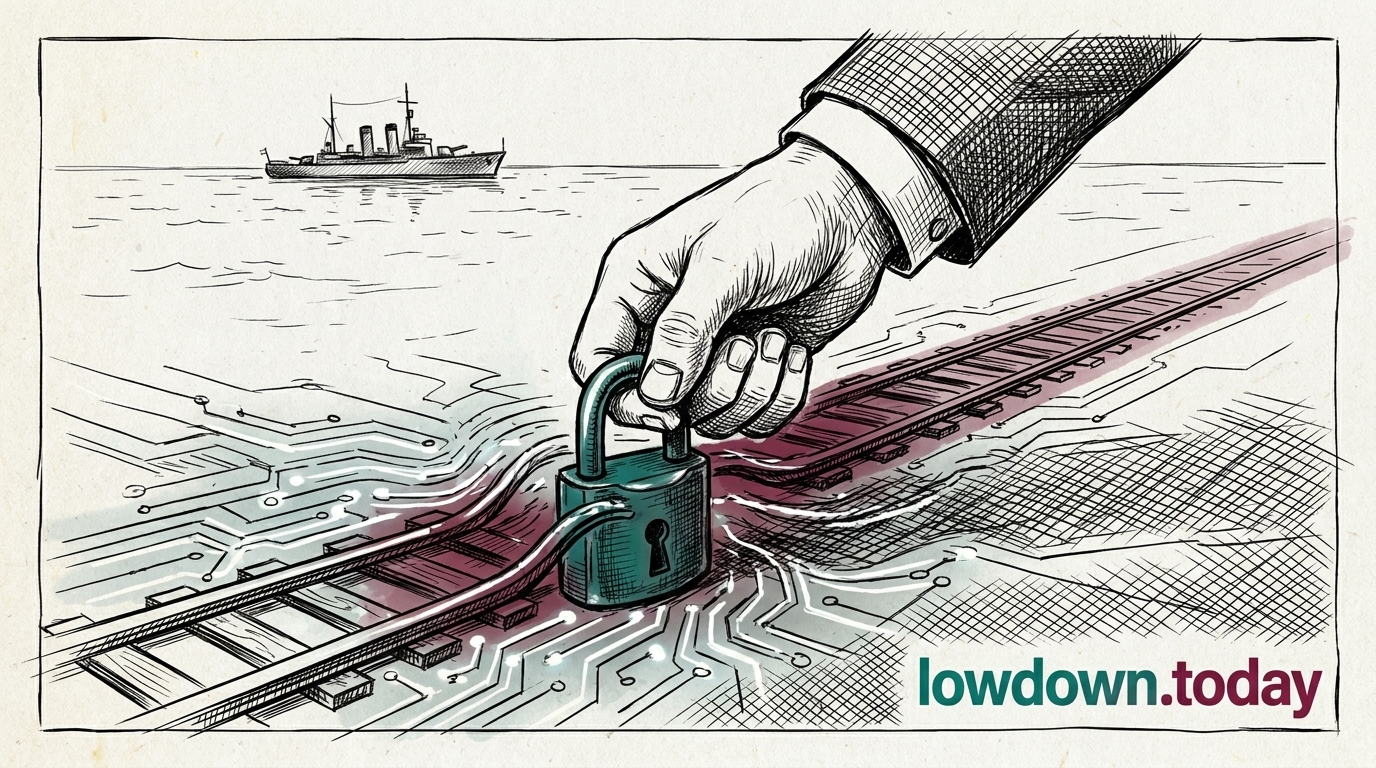
OFAC issued General License V for Hengli wind-down with no published deadline and added two TRON blockchain wallet addresses to the Central Bank of Iran SDN entry, the first crypto attachment to an Iranian state institution in the 2026 war.

ConflictDeveloping
Key takeaway

Crypto wallets and an open-ended wind-down extend OFAC's reach into exchanges and customers globally.

OFAC issued General License V on 24 April authorising a wind-down period for Hengli Petrochemical transactions with no published deadline, and added two TRON blockchain wallet addresses to the Central Bank of Iran SDN entry 1. The crypto addition is the first for any Iranian state institution since the war began on 28 February, moving sanctions enforcement from financial rails onto blockchain infrastructure for the first time at the state-institution level.

The missing deadline on General License V is the live compliance question for every Hengli customer globally. Wind-down transactions are permitted, but absent a fixed date, compliance teams cannot calculate the moment authorised activity converts to a violation. The contrast with India Ports Global's position is stark: Chabahar operators face a hard 26 April waiver cliff , while Hengli's customers have no cliff at all: only enforcement signals rather than text.

The TRON network is the dominant rails for USDT stablecoin transfers and a well-documented sanctions evasion channel. Attaching these two wallet addresses to the Central Bank of Iran's SDN entry means any US person or US-regulated exchange that has processed them historically now faces retroactive screening obligations. These are the first wallet addresses on the SDN line for an Iranian state institution, narrowing the technical gap between shadow-fleet enforcement and crypto-layer enforcement to a single press release.

Deep Analysis

In plain English

When the US sanctions a company, it sometimes allows existing customers a short period to wind down their contracts legally, rather than immediately cutting off every transaction. This is called a 'general licence'. The unusual feature of Friday's licence is that it gives no end date, which leaves Hengli's customers in legal limbo: they do not know when they must stop. The separate action adding TRON wallet addresses to Iran's Central Bank entry is technically significant. TRON is a blockchain network, similar to Ethereum, that is widely used in Asia for moving money without going through banks. Previous US sanctions on Iranian crypto activity targeted private actors. Adding wallets to the state-owned Central Bank entry means the US is now treating the Central Bank of Iran's digital assets with the same legal framework as its dollar-denominated foreign reserves, which have been frozen since 1979. TRM Labs and Chainalysis, the main firms that track cryptocurrency sanctions compliance, will now flag any transaction touching these wallet addresses as a sanctions risk.

Deep Analysis
Root Causes

The TRON wallet addition reflects a structural gap in Iran's sanctions architecture that OFAC has been trying to close since 2021.

Iran's Central Bank has held its formal foreign currency reserves, primarily around $120 billion at peak, frozen under US sanctions since the 1979 hostage crisis. Cryptocurrency offers a parallel reserve mechanism: wallets that no third-party custodian controls and that bypass the dollar-clearing system entirely.

TRON specifically has been favoured by Iranian actors because USDT (Tether's stablecoin) runs primarily on TRON, allowing dollar-denominated transactions without touching US banking infrastructure.

General License V carries no published deadline, replicating a mechanism OFAC used during the 2012 Bank of Kunlun designation. An open-ended wind-down period creates legal pressure on Hengli's customers to self-certify their exit timeline, which generates compliance documentation OFAC can audit later to establish whether transactions after a self-declared exit date were wilful violations.

What could happen next?
  • Precedent

    The Central Bank of Iran TRON wallet designation establishes that OFAC will treat state-institution blockchain addresses as equivalent to frozen foreign-currency reserves, regardless of the technical difficulty of enforcement.

  • Risk

    Exchanges operating TRON-based USDT transactions globally face automated compliance flags from Chainalysis and TRM Labs feeds starting immediately, regardless of whether they have any direct Iran exposure.

First Reported In

Update #79 · Islamabad 3 collapses; Witkoff grounded, talks stall

US Department of the Treasury· 25 Apr 2026
Read original
Causes and effects
This Event
TRON wallets attach to Central Bank of Iran
The crypto addition and the open-ended wind-down extend OFAC's enforcement reach to US-regulated exchanges and create compliance uncertainty for every Hengli customer.
Different Perspectives
Lloyd's of London underwriters
Lloyd's held its Hormuz war-risk rate at $10-14 million per voyage; underwriters need a UN Security Council resolution or formal PGSA de-listing before repricing, not a Senate testimony. The PGSA remains on the SDN list under EO 13224, so any vessel transiting a nominally reopened strait still deals with a sanctioned counterparty.
Saudi Arabia and Gulf states
Brent crude at $95-97 on 2-3 June reflects Gulf producers benefiting from the conflict premium; a genuine Hormuz deal would likely cut that premium by $10-15 per barrel. Riyadh's $87 per barrel budget breakeven means the current price is comfortable, reducing the Gulf's urgency to push for a rapid settlement.
China
China
OFAC's Nobitex designation leaves China's informal bilateral currency-swap lines with Iran as the CBI's remaining rial-defence mechanism; Chinese financial institutions face secondary-sanctions risk if they interact with successor wallets. Beijing's MOFCOM Blocking Rules protect mainland refineries from direct designation but do not shield informal swap-line counterparties.
Lebanon / Hezbollah
Lebanon / Hezbollah
Lebanon's Washington delegation demanded full Israeli withdrawal and the return of 1.2 million displaced; Hezbollah deployed an FPV drone that killed an Israeli soldier at Yohmor while talks ran, demonstrating it can impose costs even at Israel's deepest penetration point. Lebanon's government cannot deliver the Hezbollah disarmament guarantee Israel demands.
Israel / Benjamin Netanyahu
Israeli forces seized Beaufort Castle above the Litani on 1-2 June and advanced to within 10 km of the Zaharani river while ceasefire delegations sat in Washington; the advance ran entirely outside the Beirut-only truce Netanyahu accepted on 1 June. Each kilometre taken raises Israel's withdrawal price before any permanent text is signed.
Iran: Foreign Ministry and domestic population
Araghchi rang six capitals in 48 hours to reopen talks the SNSC had suspended, calling the IRGC line 'speculation'; at home, 37 political prisoners were executed since 19 March while students marched in Tehran, Mashhad and Hamadan. The diplomatic thaw has not eased the state's wartime repression tempo.