Skip to content
Welcome, thoughtbot's Giant Robots listeners!Start here
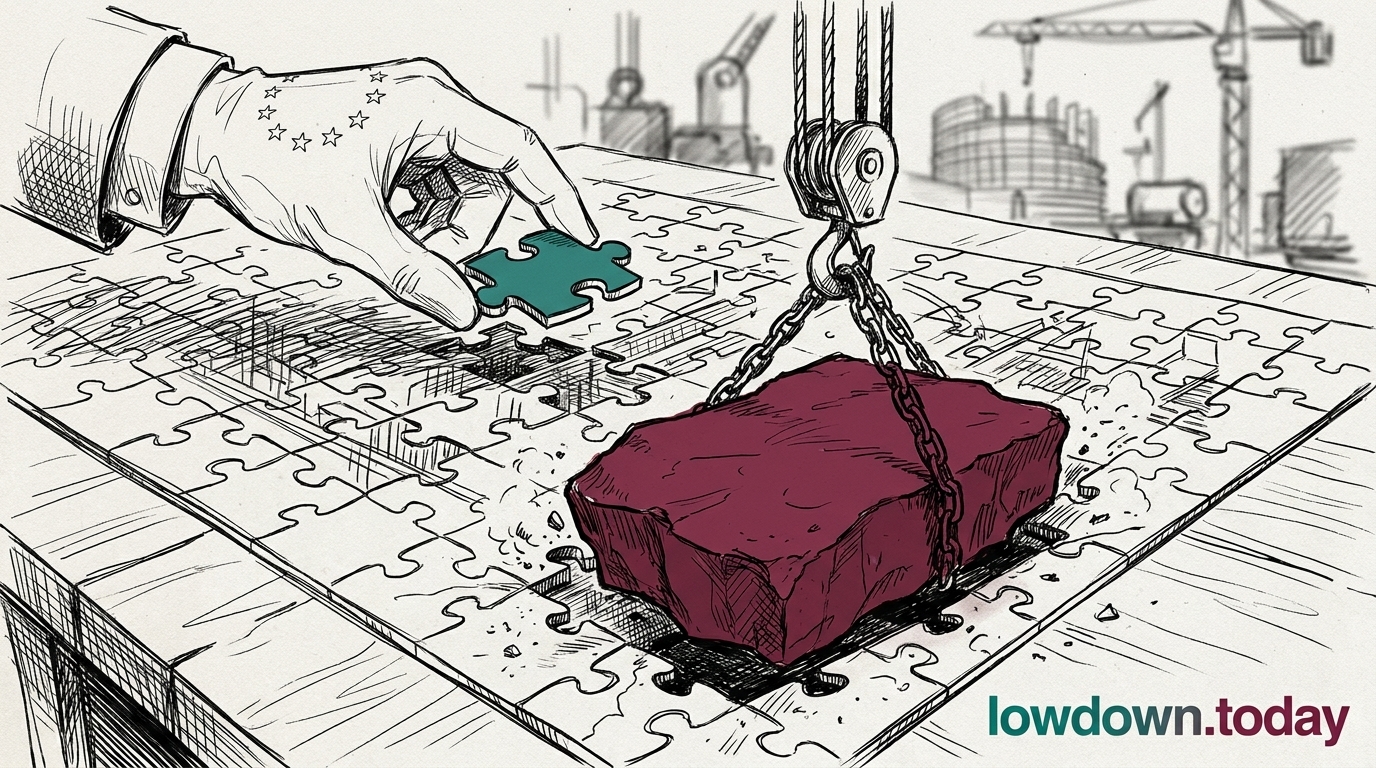
European Tech Sovereignty
10JUN

Lebanon toll nears 1,000; 20 more killed

3 min read
10:31UTC

Israeli strikes killed more than 20 across Lebanon on Tuesday, including six in a central Beirut apartment building, as displacement passed one million — exceeding the 2006 war's total in half the time.

TechnologyDeveloping
Key takeaway

Lebanon's displacement already matches the entire 2006 war's peak — in three fewer weeks.

Israeli strikes across Lebanon on Tuesday killed more than 20 people. Six died in a central Beirut apartment building⁠1 — not in Dahieh, the Southern Suburb where Hezbollah's infrastructure is based, but in the city centre. During the 2006 war, Israeli air strikes on Beirut were largely confined to Dahieh. Tuesday's attack crossed that geographic boundary.

Lebanon's cumulative death toll has reached approximately 968, up from 912–921 the day before. Since 2 March, the country has averaged roughly 57 deaths per day — exceeding the 2006 war's rate of 35 per day across 34 days. Displacement has passed 1,049,000, including more than 300,000 children. The 2006 war displaced approximately one million across its full duration; this conflict passed that figure in seventeen days.

The destruction of the last Litani River bridges on the same day sealed the civilian population of southern Lebanon into an active combat zone. Two Israeli armoured divisions are operating south of the river, and Israel has stated its intention to seize all territory below the Litani. During the 1982–2000 occupation, the Litani marked the northern boundary of the security zone. The same geography now forms a closed perimeter with no major road north.

ACLED has counted 565 Hezbollah attack waves against Israel since 2 March⁠2 — the war runs in both directions. But the civilian toll does not: Israel's cumulative dead stand at 17; Lebanon's approach a thousand.


Deep Analysis

In plain English

Over a million people — roughly one in five Lebanese — have been forced from their homes in under three weeks. Lebanon had no functioning government or economy before this conflict began, meaning the infrastructure to shelter, feed, and treat displaced people essentially does not exist. The 300,000-plus displaced children face interrupted schooling, trauma, and acute disease risk in temporary shelters with no state backstop.

Deep Analysis
Synthesis

ACLED's count of 565 Hezbollah attack waves since 2 March implies approximately 30 attacks per day — a sustained operational tempo suggesting Hezbollah is not conserving munitions. If stockpiles are finite and Israeli interdiction of the Litani bridge routes cuts resupply, the question of when Hezbollah reaches a capacity threshold becomes analytically more significant than any single day's casualty count.

Root Causes

Lebanon's inability to respond diplomatically or militarily reflects the post-2019 state collapse: a paralysed Parliament, a military dependent on external donors for fuel, and a Hezbollah autonomous military operating in a governance vacuum. The absence of a sovereign interlocutor removes the mechanism by which Lebanon could negotiate a separate exit from the conflict.

Escalation

The Beirut apartment strike marks a geographic and symbolic expansion — central Beirut was largely spared in 2006. Strikes in residential Beirut signal either deliberate civilian pressure or degraded targeting precision; both dynamics drive escalatory political pressure domestically and internationally.

What could happen next?
  • Risk

    Lebanon's pre-existing state collapse means secondary mortality from disease and malnutrition among displaced persons may exceed direct conflict deaths.

    Short term · Assessed
  • Consequence

    Israeli interdiction of Litani bridge routes now threatens Hezbollah's resupply capacity, potentially creating a military capability ceiling within weeks.

    Immediate · Assessed
  • Precedent

    Residential Beirut strikes remove the tacit geographic boundary observed in 2006, lowering the threshold for urban targeting in any future Lebanon conflict.

    Long term · Suggested
  • Risk

    Growing Shiite community anger at Hezbollah could destabilise the group's political wing even while its military operations continue.

    Medium term · Suggested
First Reported In

Update #41 · South Pars struck; Iran hits Qatar's LNG

ACLED· 19 Mar 2026
Read original →
Causes and effects
This Event
Lebanon toll nears 1,000; 20 more killed
Lebanon's death rate exceeds the 2006 war's daily pace, displacement has surpassed that conflict's total in half the time, and the destruction of the last Litani bridges has sealed civilians into a zone where two Israeli armoured divisions are operating.
Different Perspectives
European Centre for International Political Economy
ECIPE found nine states gave about 97% of awarded cloud lots to home providers from 2018 to 2025, and every sovereignty-framed lot went to a domestic supplier. The think tank reads sovereignty clauses as a home-bias tool that narrows competition, with a 46% sole-bidder rate on a small sample.
Mistral AI
Mistral AI
Mistral opened a Munich industrial AI hub on 28 September with BMW and Siemens Energy work, and Germany's digital minister Karsten Wildberger praised it on the launch page. The French lab gains a German ministerial endorsement while its 21 October Nvidia partnership ties the work to US accelerators.
AWS European Sovereign Cloud
AWS will run its Brandenburg region for several hours on 24 October cut off from the AWS global backbone, with an EU-resident team. AWS says the test follows BSI's C3A criteria and will give regulators and customers verifiable evidence of separation.
Greenland government
Greenland signed a joint declaration with the EU and Denmark in September and received Virkkunen on 24 and 25 September. The Arctic Strategy now backs a cable linking Greenland directly to Europe, an alternative to Greenland Connect, which lands in Canada and Iceland.
Greek government
Greek government
Kyriakos Mitsotakis inaugurated DAEDALUS at Lavrion on 19 October, a €36m machine on Nvidia GH200 chips that anchors the PHAROS AI Factory. Athens paid 65% through Greece 2.0, making national recovery money the main funder of an EU AI Factory.
ASML
ASML
ASML reported record quarterly sales of €11.66bn and said planned supply for 2027 and 2028 will not fully meet demand. It plans about 30% more capacity in 2027, and some customers want to book for 2029 and 2030.

Written with AI from Lowdown's published reporting. Not individually reviewed by an editor. Editorial standards.