Skip to content
Briefings are running a touch slower this week while we rebuild the foundations.See roadmap
European Tech Sovereignty
27MAY

WPR cliff is 1 June, not 1 May

3 min read
15:19UTC

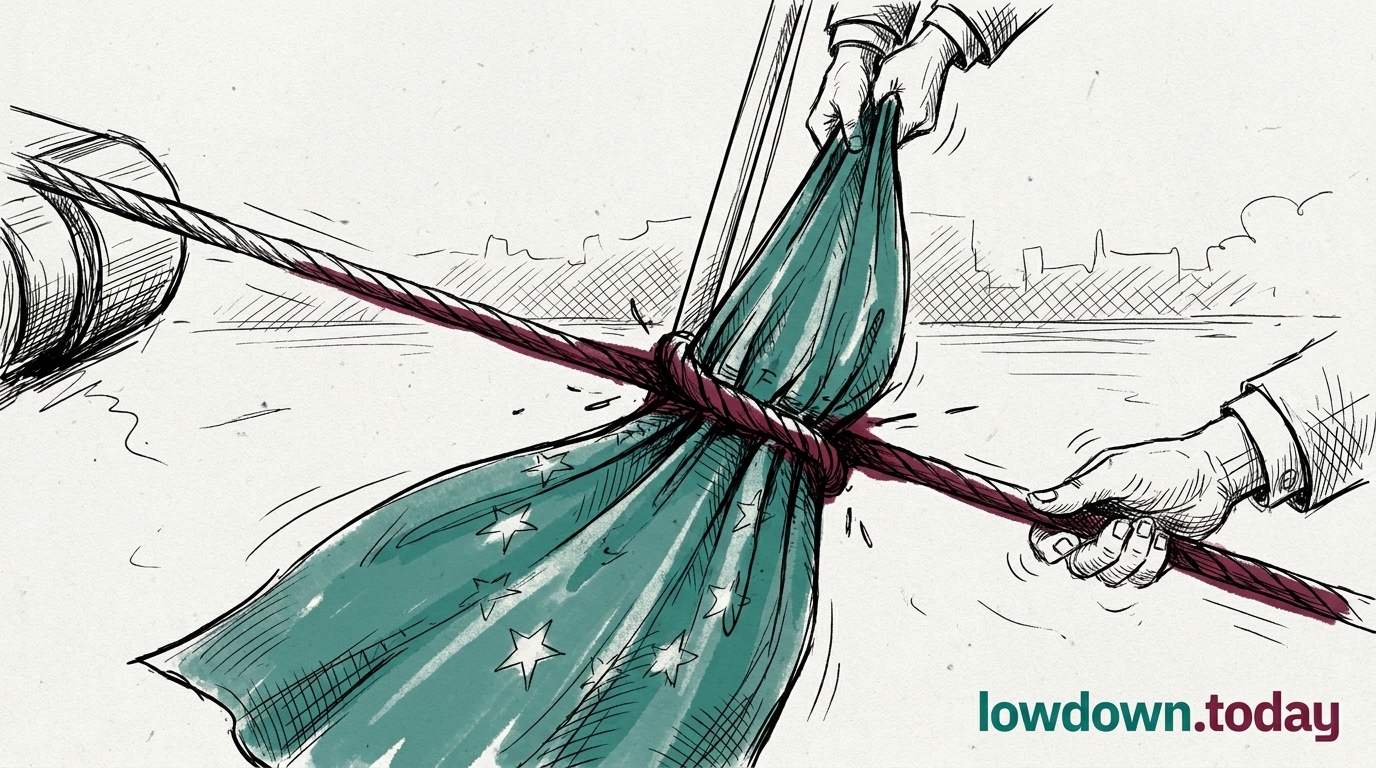
Chuck Schumer scheduled a sixth War Powers Resolution vote on 29 April; Section 1544(b) of the 1973 statute extends the operative legal deadline by 30 days, putting the binding cliff at roughly 1 June.

TechnologyDeveloping
Key takeaway

Section 1544(b) shifts the binding War Powers cliff to roughly 1 June, giving Trump four more weeks of unsigned war.

Senate Majority Leader Chuck Schumer announced on 29 April that he would bring a sixth challenge to the uninstrumented Iran campaign under the WPR (the 1973 War Powers Resolution) 1. The fifth vote, taken on 22 April, failed 51-46 . Schumer's pledge converts the WPR from a single binary cliff into rolling weekly pressure ahead of the legal deadline.

That deadline is widely reported as Friday 1 May, the 60-day mark from the campaign's 28 February opening. Section 1544(b) of the WPR appends a 30-day force wind-down to the 60-day engagement limit, which the Friday-cliff reporting omits. The Office of Legal Counsel has historically read 1544(b) as permissive on troop withdrawal sequencing, not as a continuation of presidential authority; legal exposure begins not at the 60-day mark but at the moment the White House refuses to begin withdrawal. That date has not been set. The operative cliff therefore falls at roughly Monday 1 June, four weeks after the Friday number on every front page.

The procedural quirk reframes Lisa Murkowski's non-filing. She drafted an Iran AUMF (Authorisation for Use of Military Force) with Susan Collins, Thom Tillis and John Curtis as backers , , set herself a 28 April target to file , then let it slip , . Read against a Friday cliff that produces filed leverage; read against a 1 June cliff she is exactly where she wants to be. Filing the bill before the 60-day mark surrenders the negotiation; holding it through the 30-day wind-down keeps White House counsel at her staff's door. Tim Kaine is running the public side; Murkowski is running the private one.

For markets and procurement desks the practical implication is straightforward: insurance pricing, congressional staff allocation and Pentagon contingency planning need to operate on a month-long cliff, not a day-long one. The vote Schumer brings this week may force Republican defections beyond the existing four; it may fail at the 51-46 line; it may not happen until Friday morning. None of those outcomes touch the 1 June date that actually binds the President's options. Trump has four weeks to either sign something or run the war on the same uninstrumented terms it has run on since 28 February.

Deep Analysis

In plain English

In 1973, Congress passed a law limiting how long a US president can keep troops in combat without congressional approval. The limit is 60 days, after which Congress has the option to force the military to stand down. Day 60 was 1 May. But there is a lesser-known section of the same law that adds another 30 days for a wind-down period, pushing the actual deadline to around 1 June. Senator Chuck Schumer scheduled a sixth vote to force Trump to stop the Iran war or get formal congressional approval. Five previous votes have failed. Senator Lisa Murkowski has a draft war authorisation written but has not filed it. She is holding it back as a bargaining tool with the White House, so she can use the threat of filing it to extract concessions on other issues.

Deep Analysis
Root Causes

The Republican Senate caucus has 53 seats, giving the administration a structural majority that prevents the WPR concurrent resolution from reaching the floor. Schumer can call repeated votes, but the majority leader controls the floor schedule, and the five failed votes have been the result of majority procedural blocking rather than substantive defeats on the merits.

Murkowski's leverage rests on a specific Republican Senate arithmetic: the administration needs her vote and the votes of Susan Collins and Thom Tillis on unrelated domestic legislation, particularly the budget reconciliation package. Her AUMF draft is therefore a conditional asset whose value to the White House derives from its non-filing, not its filing.

The Section 1544(b) analysis is analytically significant because it was not widely understood before 29 April: most public commentary assumed the operative deadline was 1 May, when it is actually approximately 1 June. This four-week shift gives the administration additional time to negotiate or simply wait out the pressure.

What could happen next?
  • Consequence

    The 1 June Section 1544(b) deadline, not 1 May, is the operative legal cliff; the administration has four additional weeks before the pressure intensifies.

    Immediate · High
  • Risk

    Murkowski filing the AUMF could legally authorise a war already conducted without authorisation, creating constitutional ambiguity about what the authorisation retroactively covers.

    Short term · Medium
  • Precedent

    Conducting six WPR challenges without achieving a floor majority sets a precedent that the resolution cannot be enforced by a determined executive majority.

    Long term · High
First Reported In

Update #84 · Department named, war unsigned

Time· 30 Apr 2026
Read original
Different Perspectives
ASML / European tech industry
ASML's Q2 2026 guidance came in €300m below consensus as China DUV revenue collapsed 17 percentage points; the company's CEO wrote US export-control outcomes directly into 2026 guidance. European tech firms named on the USTR retaliation list alongside SAP, Siemens and Spotify face the same calculus: US trade exposure constrains what Brussels can legislate on their behalf.
France / Anne Le Henanff
Le Henanff chaired the G7 Digital Ministerial at Bercy on 29 May with CAIDA off the agenda, pivoting France's presidency to AI safety principles it had not designed the week around. France backs CAIDA but cannot override Berlin's tariff calculus, so the ministerial produced no new French-led commitment.
Germany / Federal government
Berlin's automotive sector faces up to $200bn in threatened US tariffs, a commercial exposure that dwarfs any benefit CAIDA's public-sector cloud rules would deliver to German digital firms. Federal silence inside the College of Commissioners functions as a block under consensus adoption rules without requiring a formal veto.
USTR / Ambassador Andrew Puzder
Puzder's public warning on 25 May that CAIDA is inconsistent with the EU-US trade framework was the first time Washington made its bilateral pressure visible before a Commission adoption vote rather than after. The USTR Section 301 determination on 24 July provides the enforcement backstop.
European Commission / Henna Virkkunen
Virkkunen framed the third slip as a procedural delay in finalising a 400-page text without addressing Puzder's trade-framework red line publicly. The Commission enforces existing law against Google while losing the legislative timeline on CAIDA, exposing an asymmetric position: enforcement holds; new sovereignty legislation does not.
OpenForum Europe / open-source community
The EUR 350m Sovereign Tech Fund has no Commission host, no budget line, and no commissioner's name attached six weeks after the April conference, while Germany is already paying maintainers to staff international standards bodies. The CRA open-source guidance resolves contributor liability but leaves the financial-donations grey area open with the 11 September reporting clock running.
