Skip to content
You can now search across every topic, entity and event.What's new
European Tech Sovereignty
27MAY

Iran's internet returns at 40%, by design

3 min read
15:19UTC

Iran's internet reached only 40 per cent of pre-war traffic by 28 May, NetBlocks reported, with Chinese-built hardware for a permanent, switchable blackout already installed.

TechnologyDeveloping
Key takeaway

Iran rebuilt its internet around a Chinese-built switch it can flip off at will.

Iran's internet reached only about 40 per cent of pre-war traffic by 28 May, the monitor NetBlocks reported, three days after President Masoud Pezeshkian's 25 May restoration order ended the longest national shutdown on record . 1 NetBlocks is the UK-based watchdog that measures connectivity disruptions worldwide. In practice most Iranians remain effectively offline, and those who do reconnect stay on virtual private networks, the tools that route traffic abroad to evade state filtering, expecting the next shutdown.

Mohammad Sarafraz, a member of Iran's Supreme Council of Cyberspace, confirmed that Chinese-built deep-packet-inspection hardware for a permanent, switchable blackout has been imported and installed . 2 Deep-packet inspection lets the state read and block traffic by content rather than crudely severing the line.

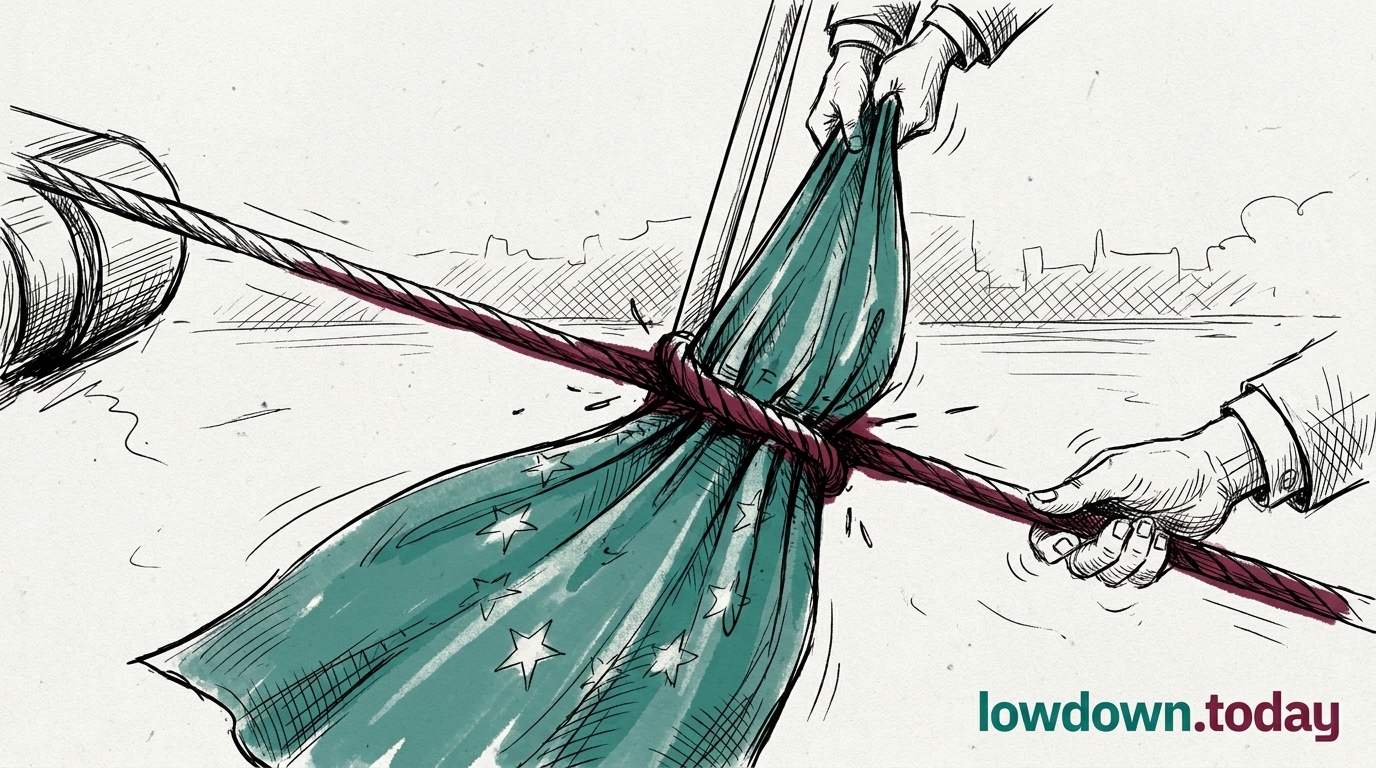
Iranians are back online inside a system that can be cut by a single decision, with the Chinese equipment already wired in. The 40 per cent figure is the visible change; the switchable hardware behind it is the durable one. Iran has compressed the timeline China used in Xinjiang, where a ten-month isolation in 2009 was followed by embedded inspection hardware, installing the architecture during the war rather than after it. The next blackout need not be an emergency dragged out for weeks. It can be a switch, and VPN use stays heavy because ordinary users assume the next cut is a matter of when, not whether. 3

Deep Analysis

In plain English

Iran's government shut off most of its internet on 28 February when the war started. President Pezeshkian ordered it restored on 25 May. Three days later, on 28 May, only about 40% of normal traffic was flowing, according to the monitoring service NetBlocks. Most people are still effectively offline, and those who can connect use VPNs because they expect the government to cut it again. A senior official called Mohammad Sarafraz confirmed that China supplied Iran with hardware that lets the government switch internet access on or off instantly, by region or across the whole country. So the restoration is partial by design, and the hardware to kill it again is already installed and running.

What could happen next?
  • Consequence

    China's DPI hardware converts Iran's internet kill-switch from an emergency measure requiring days to implement into a standing capability operable in seconds, permanently changing the information-control architecture regardless of any future civilian presidential order.

  • Risk

    VPN saturation at 35 to 40 million users, built during the 90-day blackout, means any future selective restoration will face an already-circumventing user base that is harder to track than a population encountering VPNs for the first time.

First Reported In

Update #112 · Treasury opens a second Iran sanctions front

TechTimes· 30 May 2026
Read original
Different Perspectives
United States (Google/Alphabet)
Alphabet lost its final Android appeal on 2 July with no further court to hear it, a result its Computer and Communications Industry Association allies frame as precedent, not deterrence, since the €4.1bn fine changed nothing about Google's Play Store terms across eight years of litigation.
UK Department for Science, Innovation and Technology
DSIT opened its £96m second Sovereign AI wave on 3 July, switching from April's equity stakes to fixed-price contracts because Britain has no domestic hyperscaler or Bpifrance-style lender to fund capacity another way. It is betting on buying outcomes it controls alone rather than joining an EU-wide framework.
German federal government
Berlin backed both German deliverables this week, Infineon's fab and Aleph Alpha's merger, but is finding one far harder to close than the other. It wants enforceable protective rights inside Cohere's cap table before the merger closes, a legal instrument the Bundeskartellamt has no filing to review yet.
European Commission
European Commission
The Commission banked a clean CJEU win on the eight-year Android case on 2 July, removing Google's last comparator argument before President von der Leyen rules on the far larger DMA self-preferencing fine due 27 July. Brussels treats Infineon's early Dresden delivery as proof the Chips Act mechanism works, at the node Europe already led.
Bruegel (EU industry sceptics)
Bruegel economist Mario Mariniello argued the EU sovereignty package mimics US and Chinese strategy while EU cloud providers hold roughly 15% of their home market; using nationality as a proxy for security without fixing the underlying capital and energy gaps that drive the dependency creates €86bn of migration cost without the security benefit it is sold as delivering.
France
France
France published a joint sovereignty definition with Germany at VivaTech and mobilised €13bn under Tibi Phase 3, placing SAP's partnership with Mistral as the working proof that a German enterprise-software giant running a French sovereign model inside public administration is what digital sovereignty looks like in practice.
